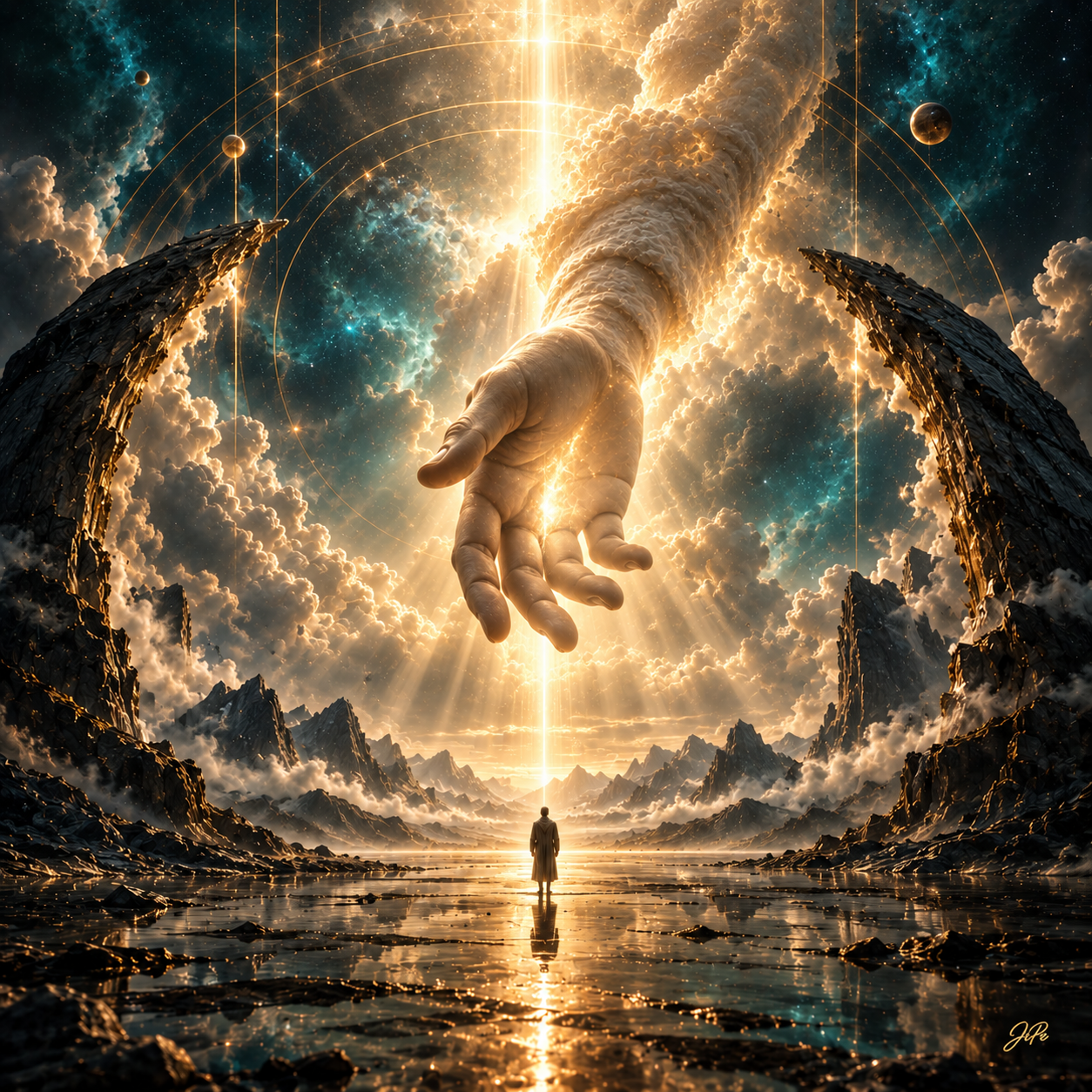
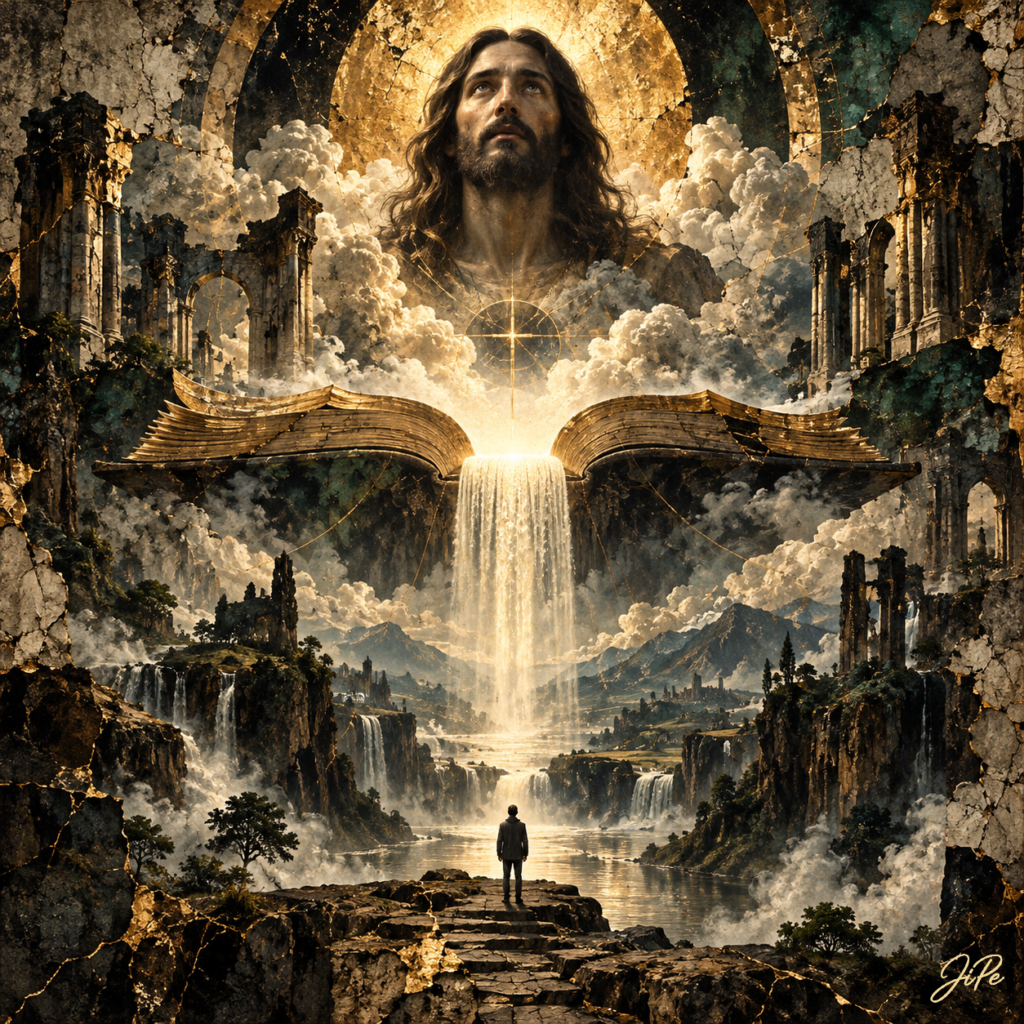
The Book of Heaven’s Secrets unfolds within an immense silence, where the boundaries between human understanding and the infinite appear momentarily uncertain. A solitary presence stands before a world of overwhelming scale, suspended between wonder and apprehension. The distance separating the individual from the luminous vastness suggests not merely physical insignificance, but the profound solitude of consciousness confronting something it may never fully comprehend.
Light descends through the composition with an almost sacred gravity, transforming the surrounding space into a realm of suspended revelation. Yet its brilliance offers no simple reassurance. The monumental expanse seems simultaneously welcoming and inaccessible, as though knowledge itself possesses a threshold that cannot be crossed without consequence. Between the fragile human presence and the immeasurable architecture of existence, an unspoken tension emerges: the desire to understand what may ultimately exceed understanding.
The title evokes the possibility of truths concealed beyond ordinary perception, while questioning whether revelation necessarily brings clarity. Perhaps certain mysteries endure not because they are deliberately withheld, but because their meaning cannot be contained within human experience. The promise of knowledge becomes inseparable from the vulnerability of those who seek it.
And within this extraordinary stillness, one uncertainty remains. If the deepest secrets of existence were finally revealed, would they bring humanity closer to the divine, or forever change what it means to be human?