The Divided Ocean

The Divided Ocean is a monumental meditation on faith, deliverance, and the profound relationship between divine presence and human vulnerability. Blending symbolic realism with visionary imagination, the painting transforms one of humanity’s oldest spiritual motifs into a timeless visual allegory that transcends any single narrative or tradition. Rather than illustrating a historical event, the work explores the universal experience of crossing from fear into hope, from uncertainty into trust, and from separation into communion with the sacred.
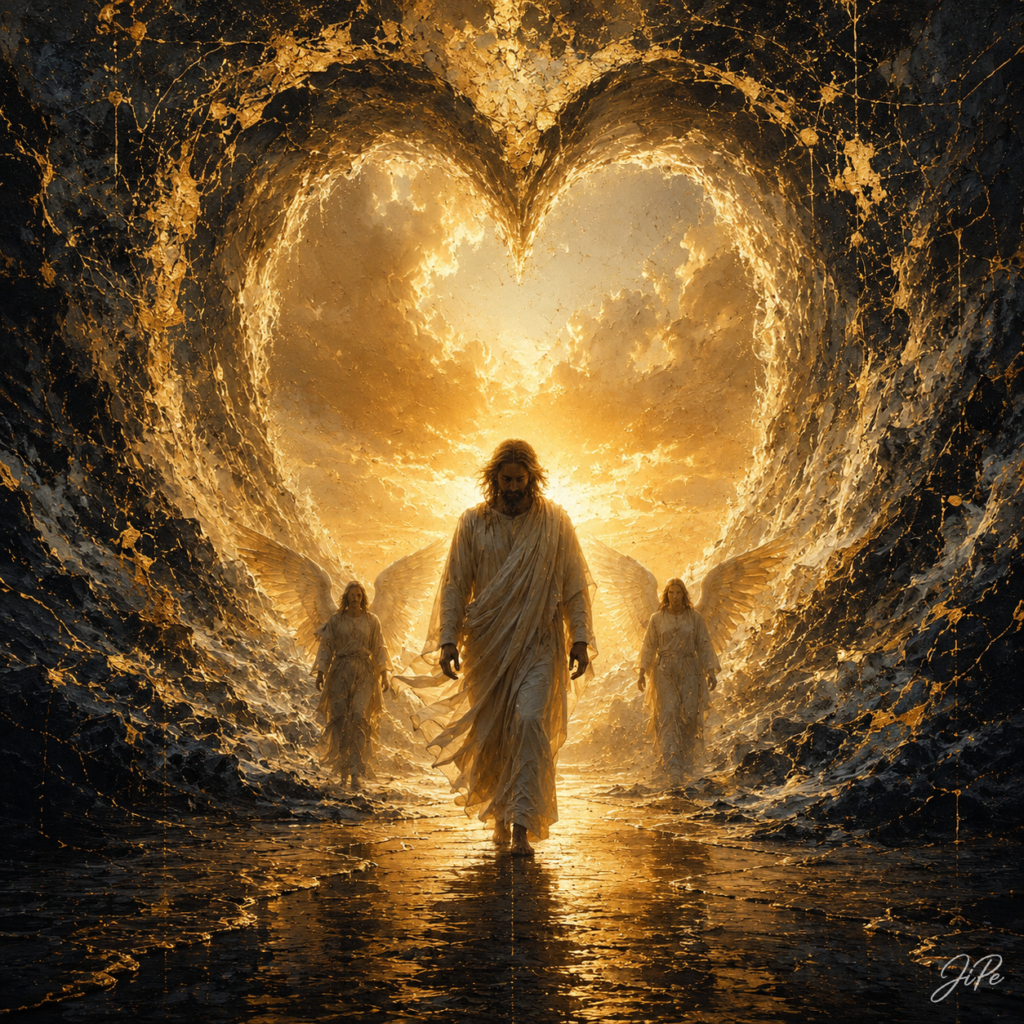
At the centre of the composition walks a solitary figure clothed in luminous white, advancing with quiet authority through an ocean that has opened into a monumental passage. His measured stride conveys neither conquest nor spectacle, but calm certainty. Behind him, two radiant angelic figures emerge from the overwhelming brilliance of light, reinforcing the impression that this journey unfolds not through human strength alone but through the unseen guidance of divine presence. Together, the three figures create a visual rhythm that speaks of protection, compassion, and unwavering purpose.
The parted sea dominates the composition with extraordinary symbolic force. Towering walls of water rise like the architecture of creation itself, curving inward until they form the unmistakable outline of a glowing heart. This transformation elevates the ocean beyond its physical identity, allowing it to become an image of divine love made visible. The sea is no longer an obstacle to overcome but a revelation—a reminder that the deepest powers of existence ultimately serve mercy rather than destruction.
The title, The Divided Ocean, carries multiple layers of meaning. On the surface, it refers to the miraculous opening of the waters. Yet beneath this narrative lies a broader reflection on every moment in which human life encounters seemingly impossible barriers. The divided ocean becomes a metaphor for grief, fear, doubt, suffering, and every circumstance that appears insurmountable until transformed by courage, hope, or grace. The painting suggests that miracles do not merely alter nature; they alter perception, revealing hidden paths where none previously seemed to exist.
Light functions as the painting’s primary narrative force. Rather than illuminating the figures from an external source, the golden radiance appears to emanate from the opening itself, flooding every surface with warmth and spiritual intensity. The dramatic contrast between the surrounding darkness and the incandescent centre creates a powerful visual metaphor for revelation emerging from uncertainty. Throughout the artist’s body of work, light consistently represents consciousness, transcendence, and divine presence, and here it reaches one of its most compelling expressions.
Gold occupies a central symbolic role throughout the composition. Flowing through the textures of the water like veins of living energy, it recalls both ancient sacred manuscripts and the luminous surfaces of Byzantine iconography. Yet this gold does not signify earthly wealth. Instead, it represents incorruptible truth, spiritual abundance, and the invisible presence that binds the material and the eternal. The shimmering fractures throughout the walls of water evoke the Japanese philosophy of kintsugi, suggesting that brokenness itself may become the vessel through which beauty and grace are revealed.
The angelic figures accompanying the central traveller are rendered with remarkable restraint. They do not dominate the composition nor distract from the journey itself. Instead, they embody silent guardianship. Their presence reminds viewers that moments of profound transformation are often accompanied by unseen forces of encouragement, wisdom, and protection. Positioned symmetrically behind the central figure, they reinforce the painting’s themes of balance, harmony, and divine accompaniment.
Compositionally, the work demonstrates exceptional architectural precision. Every visual element converges toward the radiant centre, drawing the eye naturally through the corridor of water and into the luminous heart-shaped opening beyond. The symmetry establishes a sense of cosmic order, while the fluid textures of the waves introduce movement and emotional vitality. This careful balance between geometric stability and organic motion creates a composition that feels simultaneously monumental and deeply intimate.
The richly layered surface further strengthens the painting’s emotional resonance. Thick painterly textures, luminous gold leaf-inspired details, expressive splashes, and weathered surfaces produce an object that appears both ancient and contemporary. The tactile quality invites close observation, revealing countless subtle variations in texture that mirror the complexity of the spiritual journey itself. Every crack, ripple, and reflection contributes to a sense of living material transformed by light.
From an art historical perspective, The Divided Ocean occupies a unique position between visionary symbolism, sacred contemporary realism, and monumental narrative painting. Echoes of Romantic landscape traditions coexist with influences from medieval iconography, while contemporary mixed-media aesthetics introduce a distinctly modern visual language. The work avoids literal religious illustration in favour of symbolic universality, allowing viewers from diverse cultural and spiritual backgrounds to encounter its themes through personal reflection rather than doctrinal interpretation.
Psychologically, the painting explores the transformative power of trust. The central figure walks not because every uncertainty has disappeared, but because faith enables movement despite uncertainty. The parted sea therefore becomes an external manifestation of an inner reality: when fear yields to conviction, previously impossible paths become visible. In this sense, the work speaks as much to contemporary human experience as to timeless spiritual narratives.
The monumental heart formed by the ocean introduces perhaps the painting’s most profound visual revelation. It suggests that the ultimate force governing existence is neither power nor judgement, but love. The path through the waters leads not toward domination or triumph, but toward compassion, reconciliation, and renewal. The painting quietly proposes that the deepest miracles occur not only within the external world but within the human heart itself.
Ultimately, The Divided Ocean is a meditation on hope in its purest form. It reminds us that every life encounters moments when the horizon appears closed and every direction seems impossible. Yet the work offers a vision in which even the greatest barriers may become passages, where darkness gives way to radiance, and where unseen grace accompanies every courageous step forward. Through its masterful fusion of symbolic imagery, luminous atmosphere, and emotional depth, the painting becomes not merely a depiction of a miraculous crossing, but a timeless reflection on humanity’s enduring journey toward faith, freedom, and the boundless horizon of divine love.