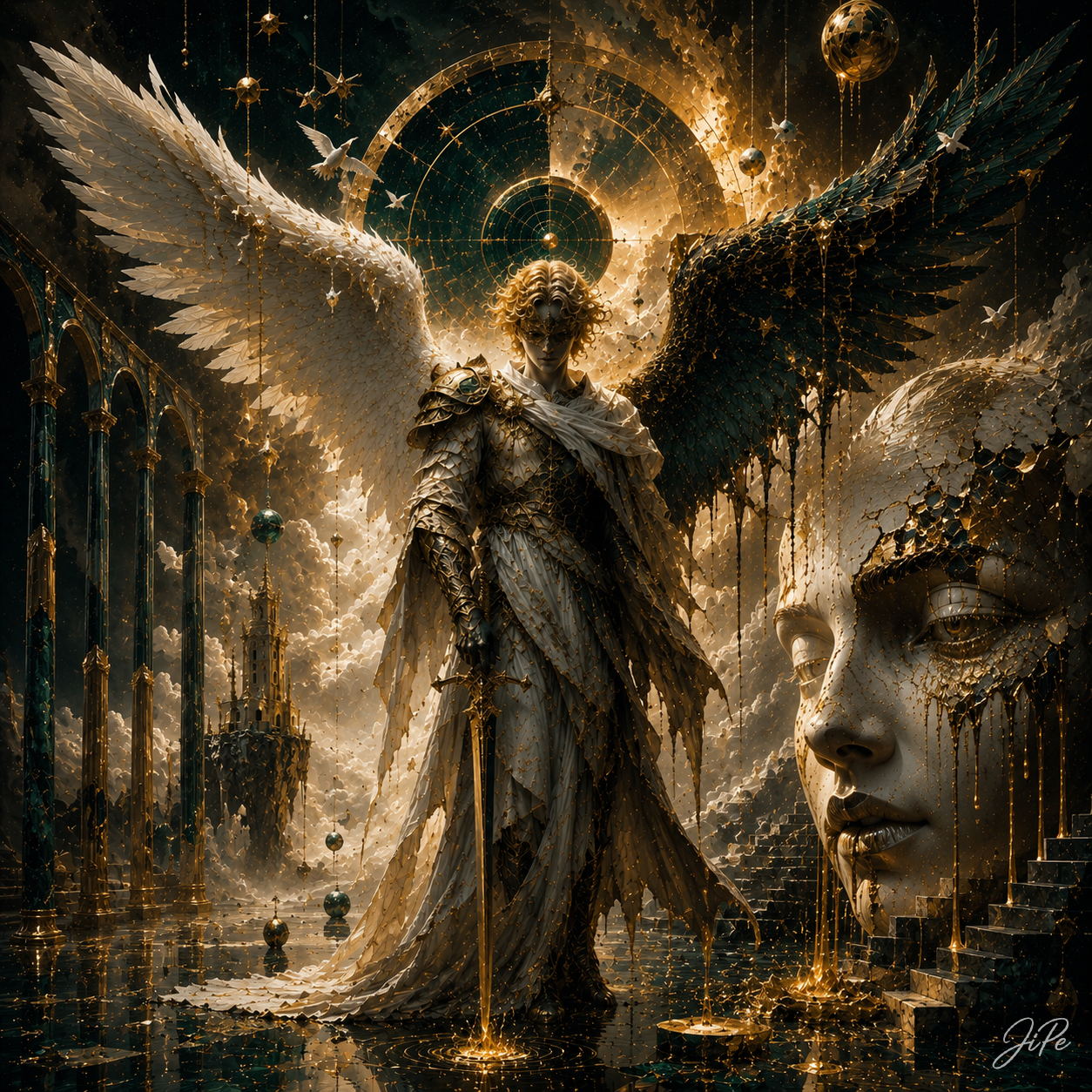
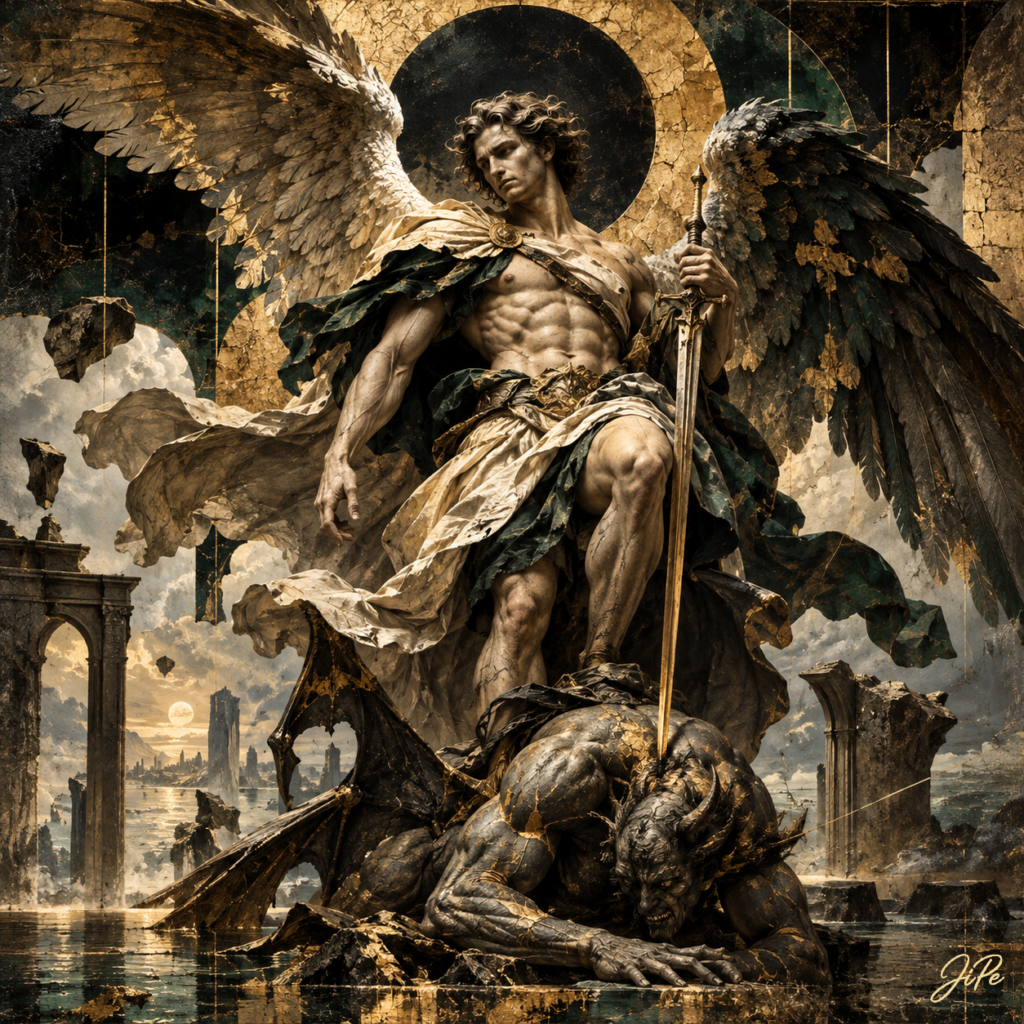
The Archangel’s Final Victory occupies the uneasy stillness that follows an act of immeasurable consequence. Suspended between triumph and exhaustion, the commanding figure possesses an authority tempered by an unexpected melancholy. His downward gaze suggests neither celebration nor absolute certainty, but an awareness that even the most decisive victory may leave something unresolved.
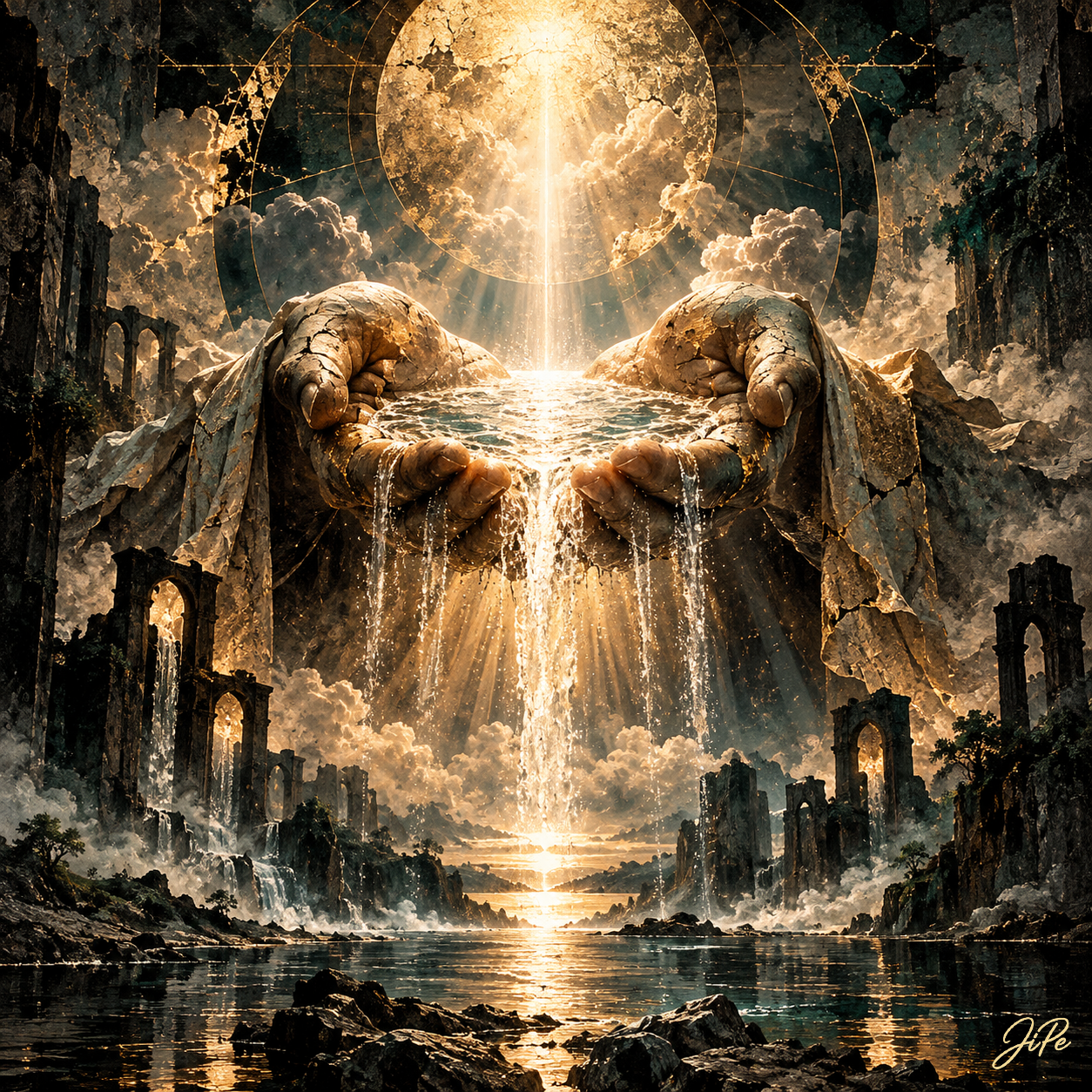
The composition unfolds across a vast, fractured world, where monumental presences confront the remnants of an order seemingly brought to its end. Light emerges through the surrounding turbulence with a solemn, almost mournful intensity. Rather than announcing deliverance, it seems to expose the fragile boundary between destruction and renewal. The contrast between celestial grandeur and earthly ruin creates a profound tension: an immense struggle has reached its conclusion, yet the silence that follows feels heavier than the conflict itself.
The title introduces the possibility of an ultimate resolution, while quietly questioning what such finality might entail. Victory implies the restoration of order, but the defeated presence complicates any simple division between justice and suffering. Power and vulnerability remain disturbingly close, suggesting that the consequences of judgment may extend beyond those upon whom it falls.
What lingers is the strange solitude of the victorious. When the last adversary has fallen and nothing remains to oppose the light, does peace finally become possible? Or does the end of conflict reveal a deeper emptiness that victory alone cannot overcome?