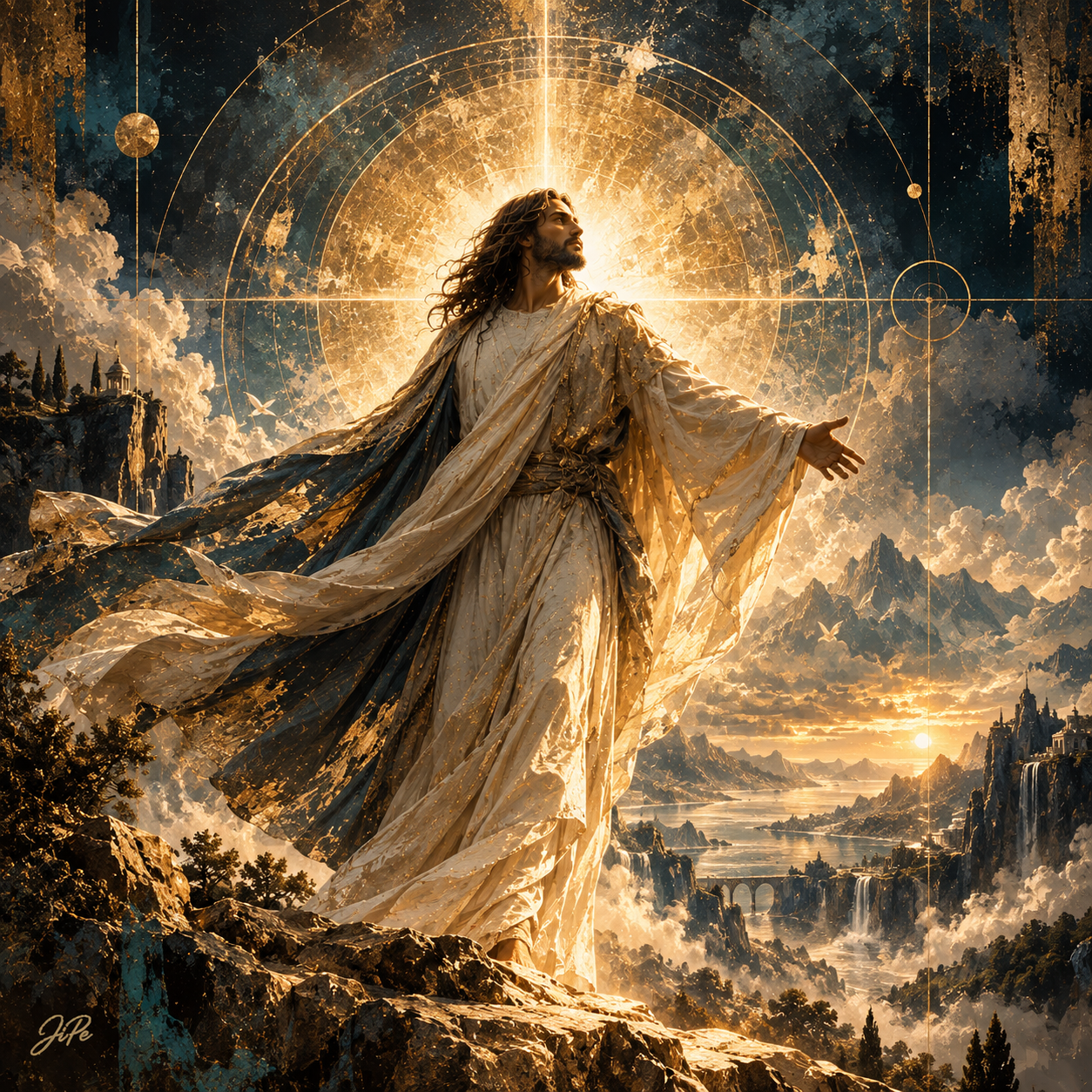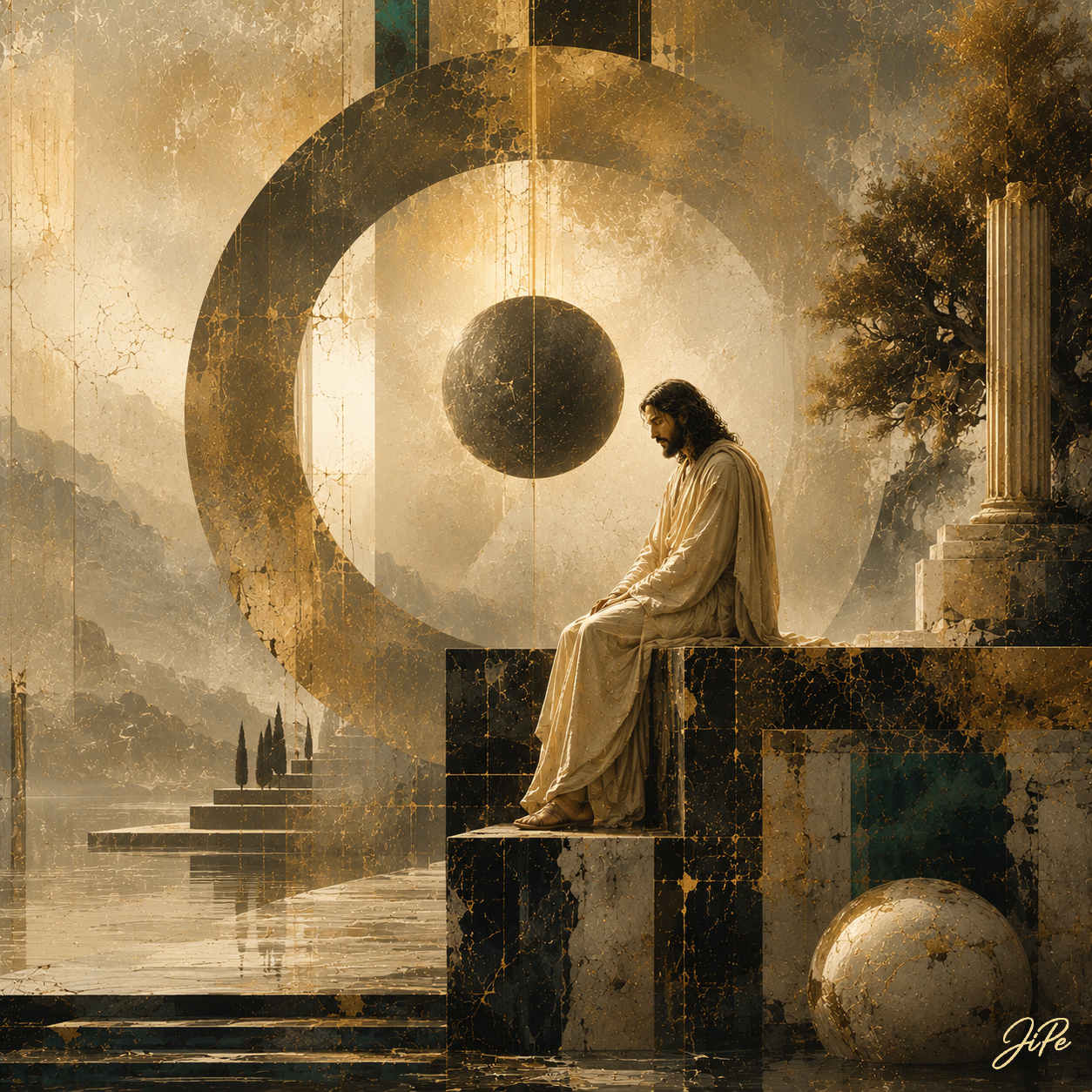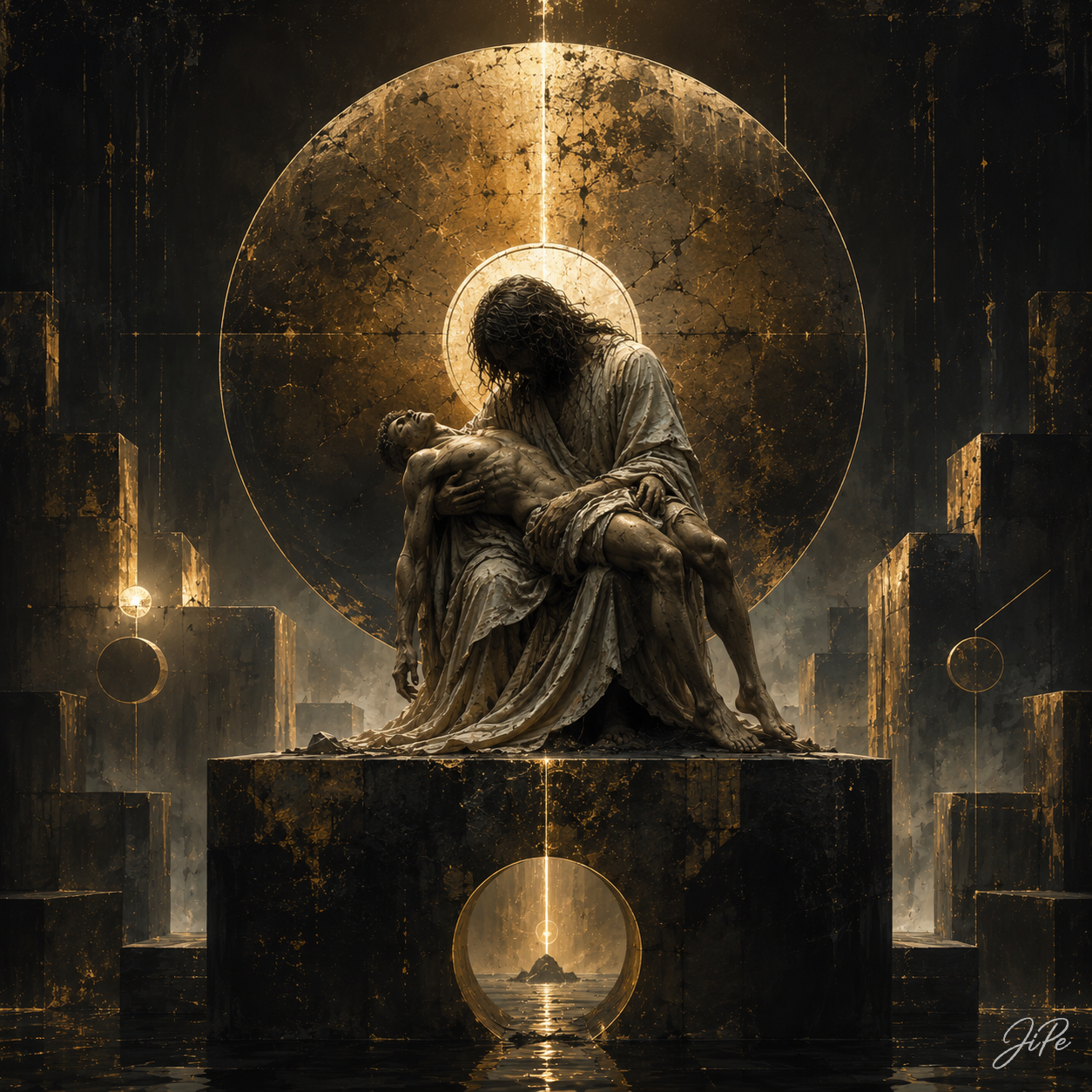
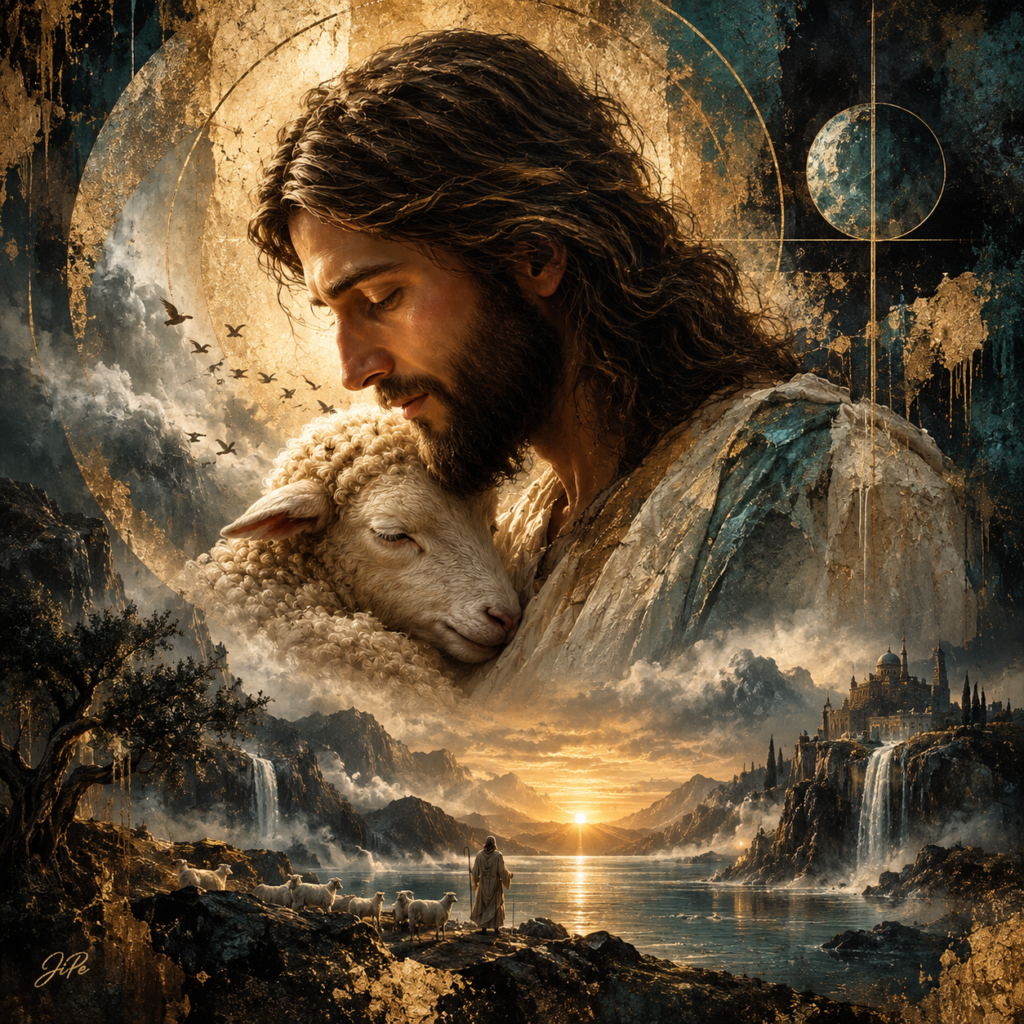
The Shepherd of Creation holds intimacy and immensity within the same silence. A gesture of tenderness occupies the work’s emotional center, while the world beneath it stretches outward into distances that seem almost beyond measure. The contrast is quietly profound: what is smallest and most vulnerable appears no less significant than the vast order surrounding it.
Here, guardianship is not expressed through dominion but through closeness. The monumental presence bends toward fragility, transforming scale from a language of power into one of care. Light gathers at the horizon rather than overwhelming the scene, suggesting continuation more than revelation. It is distant enough to remain uncertain, yet persistent enough to orient the space toward possibility.
The Shepherd of Creation opens the idea of creation beyond the moment of origin. To create may also be to sustain, to accompany, to remain attentive to what has been brought into being. Beneath the grandeur lies a quieter question about responsibility: whether true power is revealed not in possession, but in the willingness to protect what cannot protect itself.
Perhaps creation is never truly finished. Perhaps it continues wherever something fragile is held close—and entrusted, eventually, to the open world.