
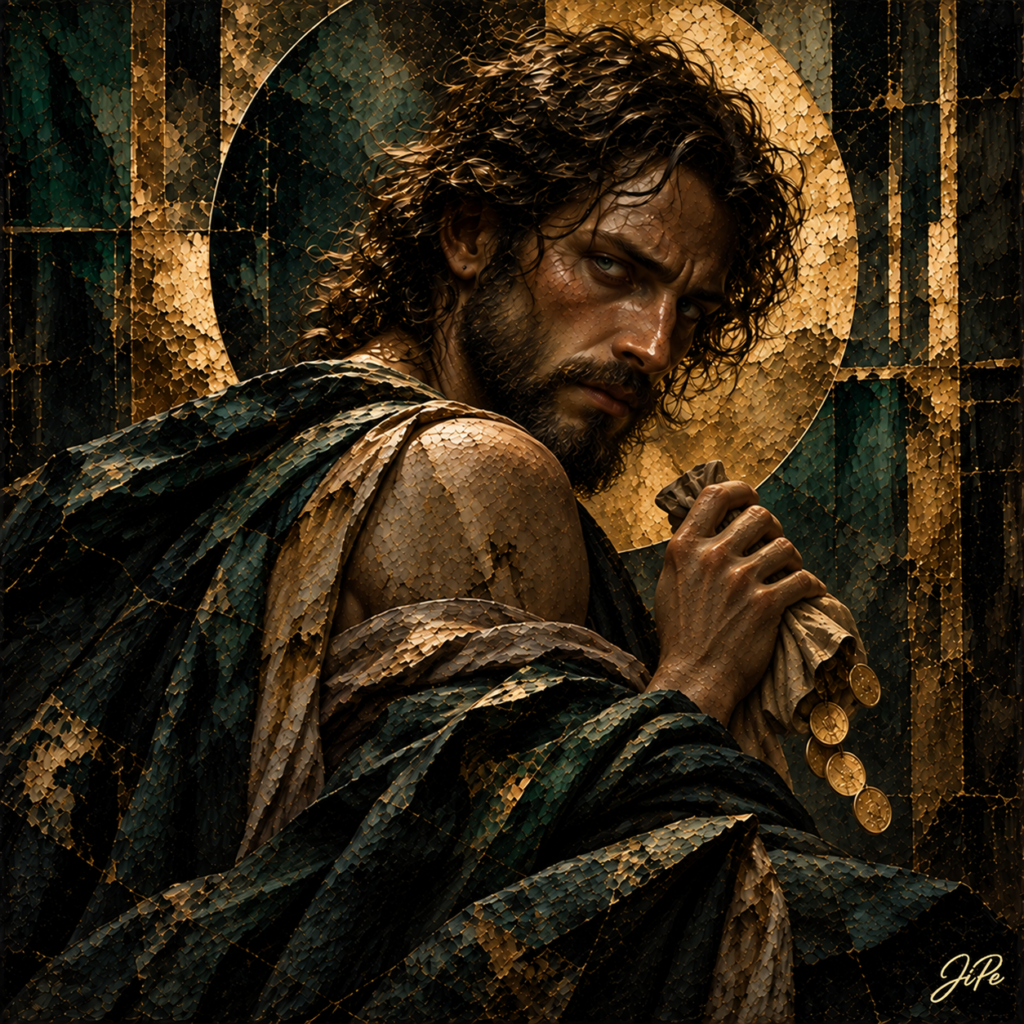
Judas — The Weight of Betrayal inhabits the uneasy space between human weakness and irreversible consequence. The figure emerges from an enclosing darkness with an expression that refuses the simplicity of condemnation. His gaze carries a troubled intimacy, suggesting neither innocence nor complete surrender to guilt, but the painful awareness of a choice whose meaning may have changed in the moment of its fulfillment.
The composition draws the surrounding world inward, allowing little distance between the figure and the burden he appears to carry. Light settles upon him with an almost merciless tenderness, revealing vulnerability where judgment might otherwise prevail. The tension between radiance and shadow creates an atmosphere in which exposure offers no certainty of redemption, and concealment provides no refuge from memory.
The title evokes betrayal not merely as an act, but as a condition that may come to define an entire existence. Yet the figure’s humanity unsettles the distinction between the betrayer and the betrayed. Questions of loyalty, necessity, remorse, and freedom remain suspended within a silence more profound than accusation.
Perhaps the deepest tragedy lies in the distance between an action and the identity it leaves behind. Can a human life ever be separated from its most consequential moment? Or does the weight of betrayal become unbearable precisely when forgiveness remains imaginable, yet forever beyond one’s own power to grant?