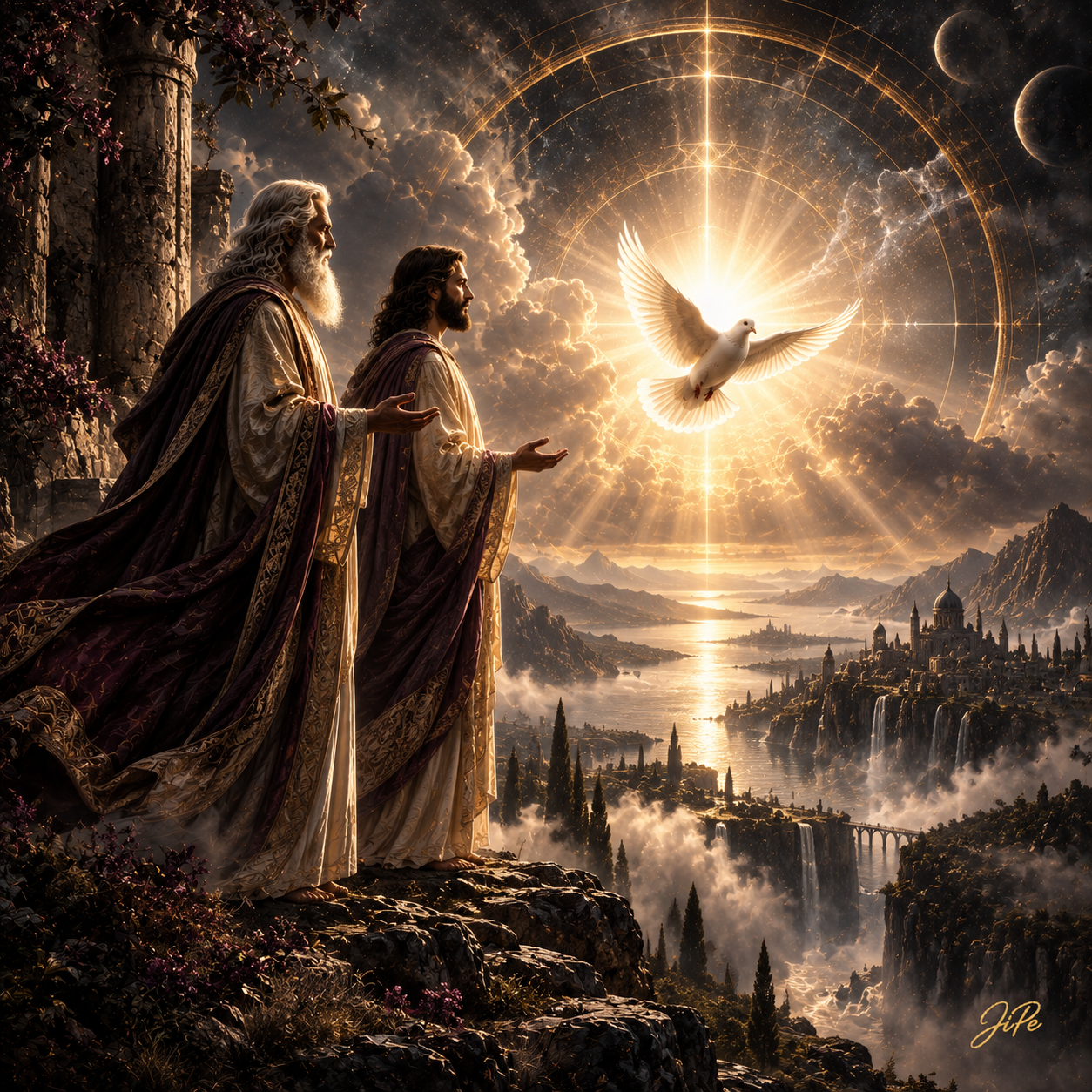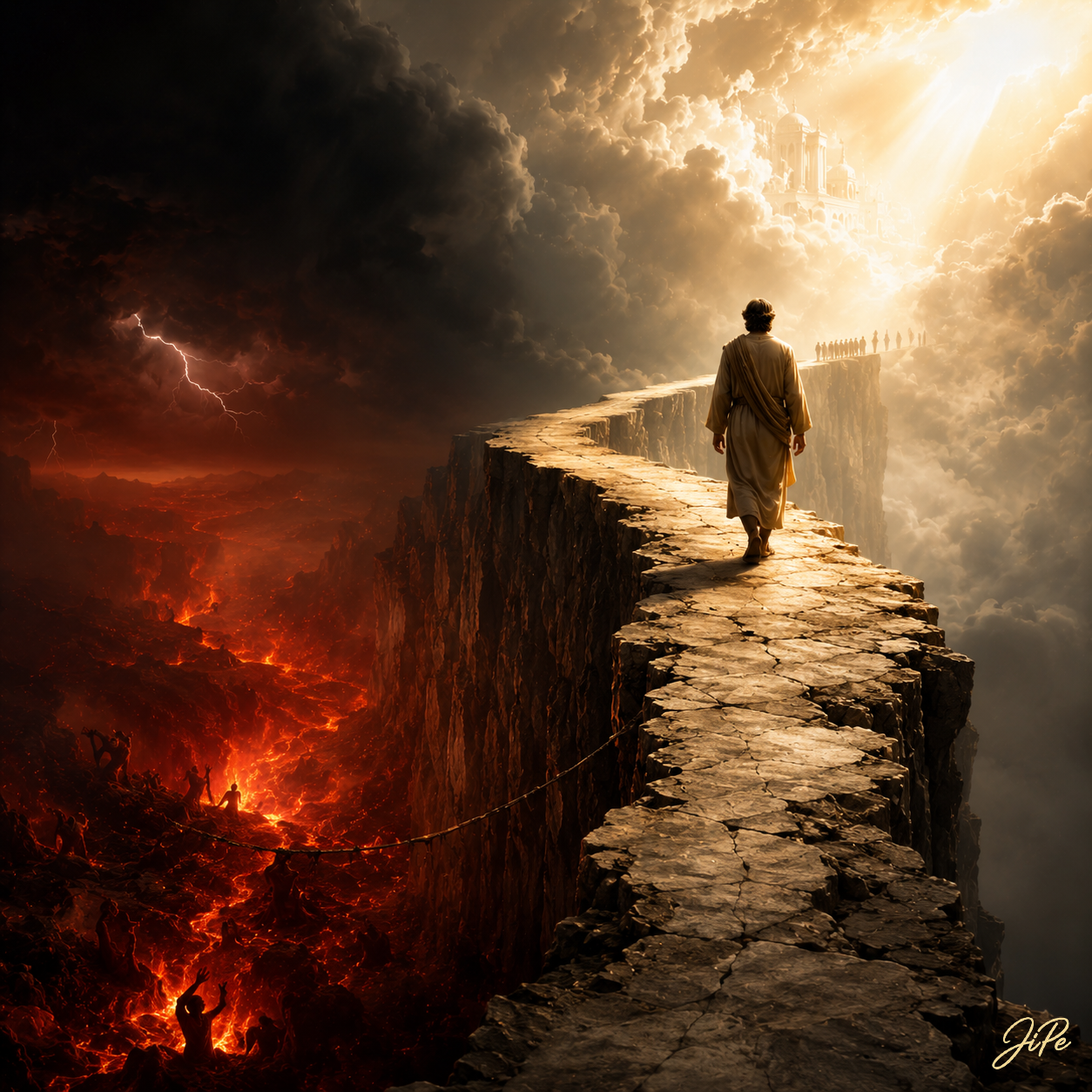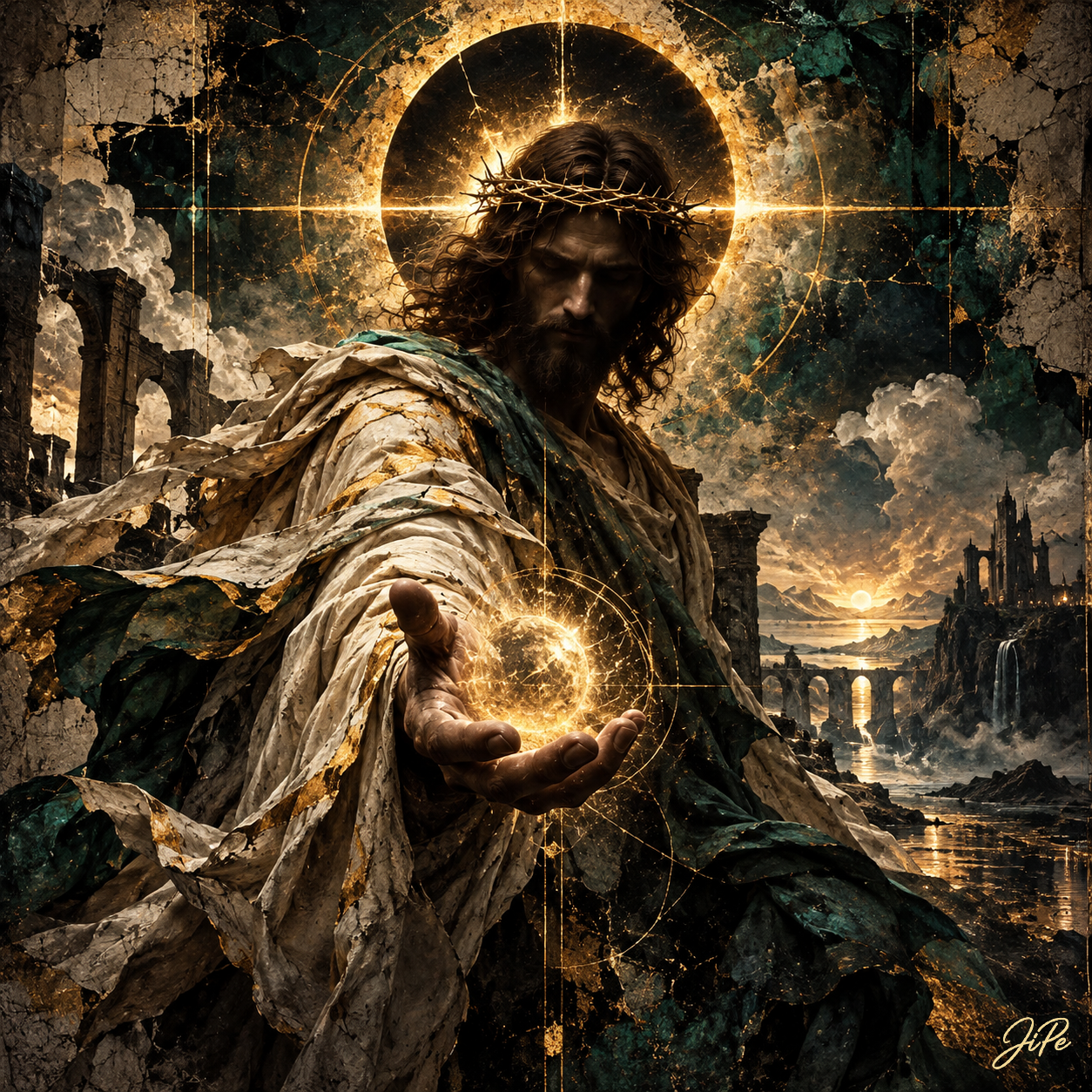
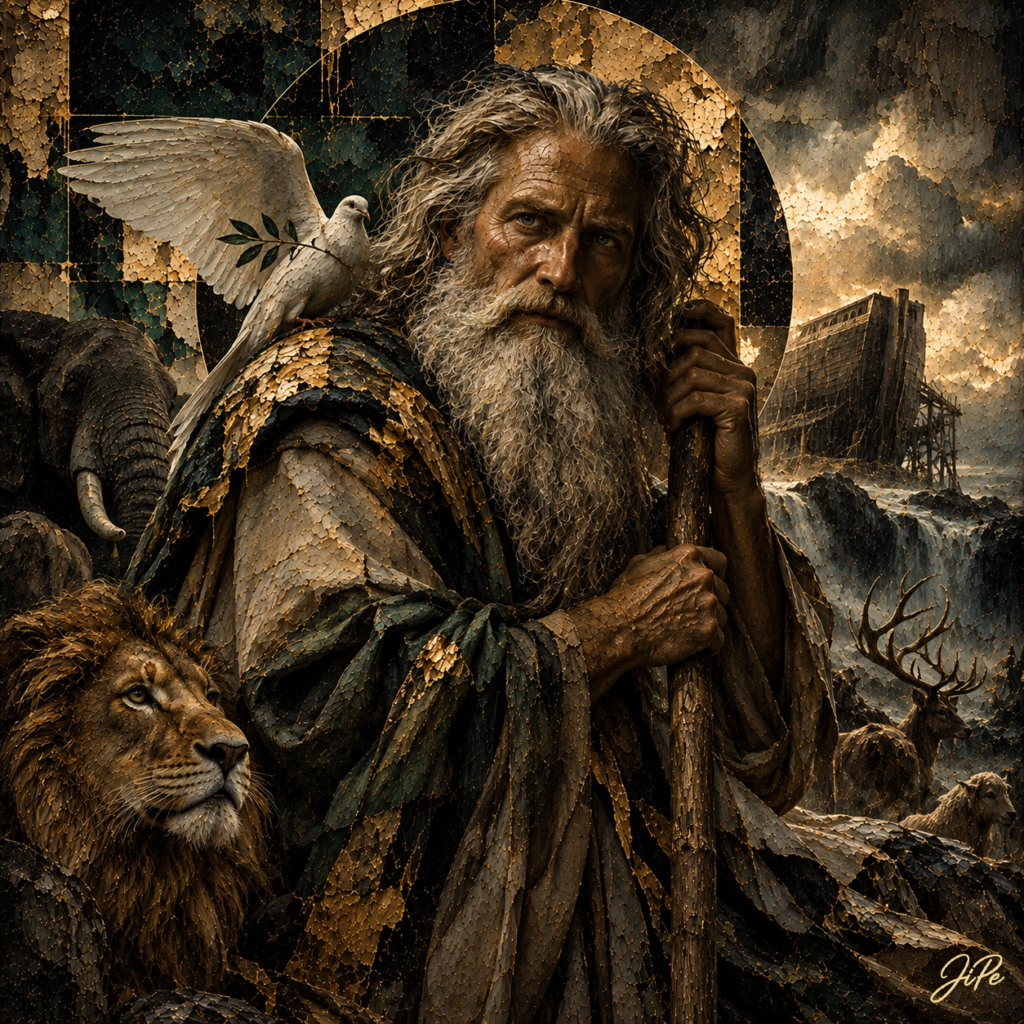
Noah — Keeper of the Living World stands at the threshold between devastation and renewal, bearing the quiet gravity of one entrusted with a responsibility greater than any single life. His presence is monumental yet deeply human, marked by an expression in which endurance, compassion, and unspoken sorrow seem to coexist. There is no triumph in his gaze, only the solemn awareness that survival may demand a burden as profound as loss itself.
The surrounding world unfolds between intimate proximity and immense, uncertain distance. Light struggles through the gathering darkness, neither entirely victorious nor extinguished, creating an atmosphere suspended between catastrophe and possibility. Within this fragile equilibrium, the living world appears both extraordinarily resilient and painfully vulnerable, its continuity dependent upon forces that remain beyond comprehension.
The title introduces a subtle distinction between possession and guardianship. To preserve life is not necessarily to command it, and the responsibility of protection may carry the knowledge that not everything can be saved. What appears to be a moment of deliverance becomes something more ambiguous: an encounter with the moral weight of survival and the silence of all that has been left behind.
Beyond the promise of renewal, an unresolved question remains. Can a world truly begin again without carrying the memory of its destruction? Or does every new beginning inherit something of the darkness from which it emerged?