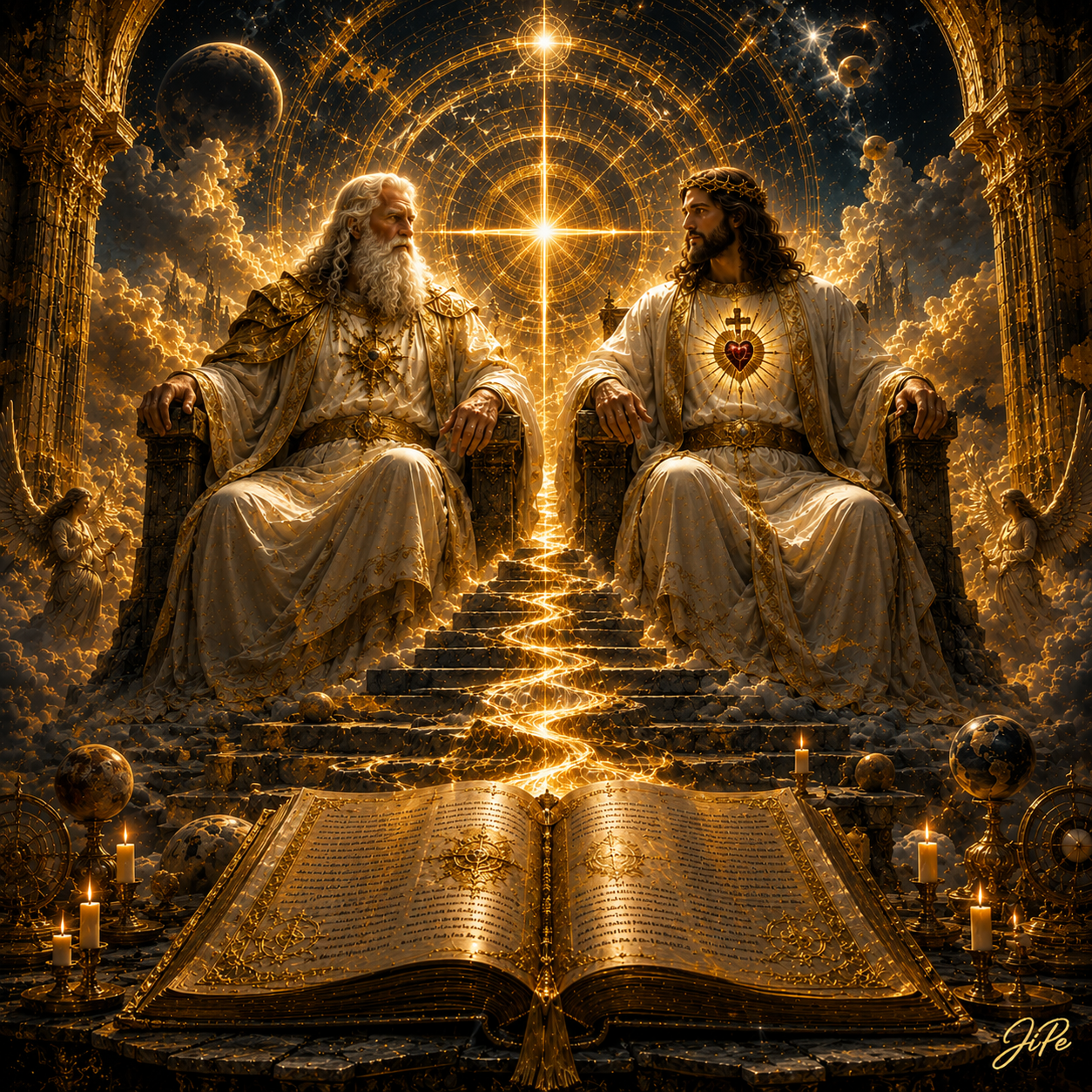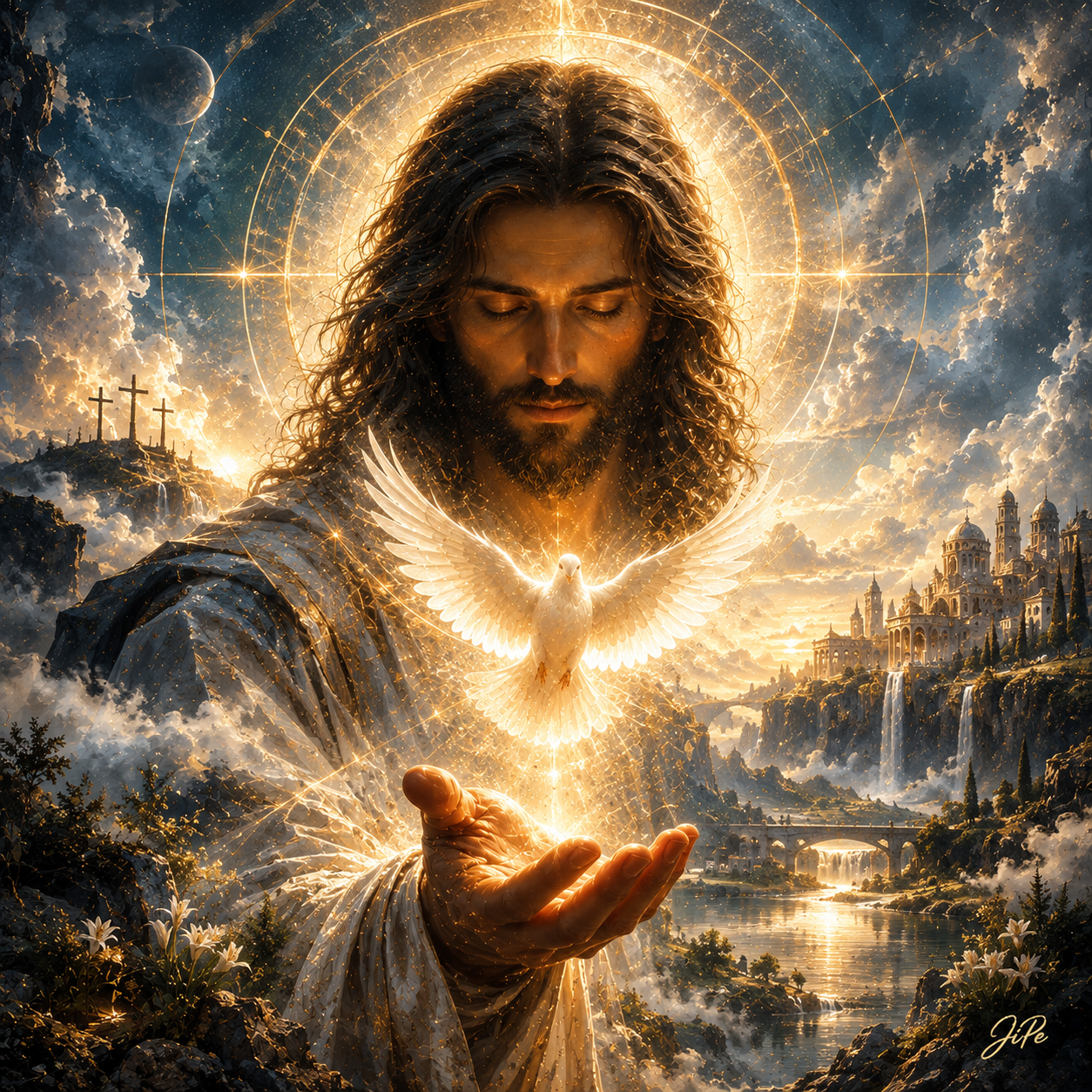

In Chess with Eternity, scale becomes a measure of uncertainty rather than power. The monumental presence at the centre seems less an object within the world than something before which the world has been arranged—a silent axis around which choice, devotion, chance, and consequence appear to gather. Everything feels poised after one move and before another, held within an interval whose duration cannot be measured.
Light divides the space without resolving it. Darkness and radiance coexist as opposing conditions, yet neither possesses the certainty of victory. Between them, the landscape assumes the stillness of a game whose rules may precede those who play it. The tension is not simply between opposing forces, but between agency and inevitability: the desire to choose against the possibility that every choice already belongs to a larger pattern.
The title turns eternity into an opponent, or perhaps a companion, seated beyond the limits of ordinary time. To play against it would seem impossible; to refuse the game may be equally so.
What remains unanswered is whether we are moving the pieces—or whether our deepest convictions, sacrifices, and certainties are themselves already in play.