
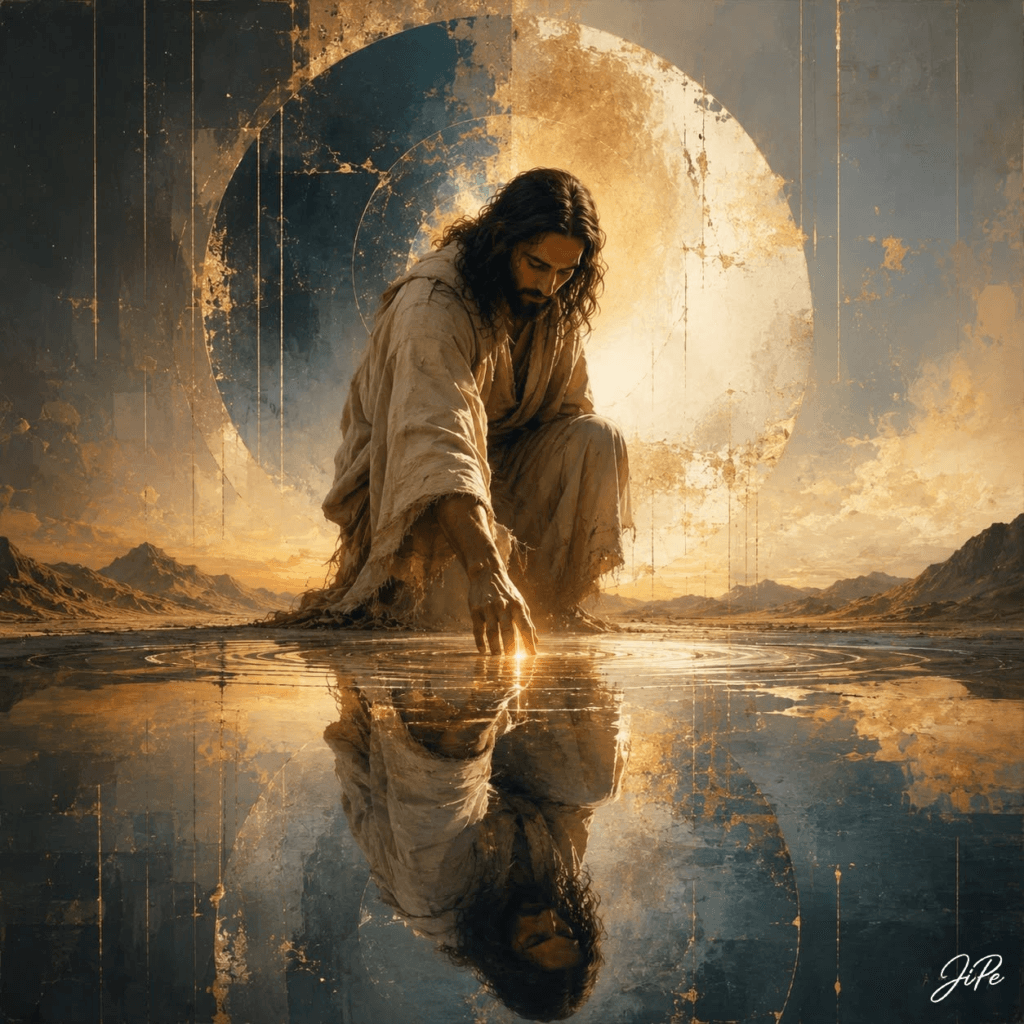
Where the Light Touches the Water holds a moment at the edge of transformation. The figure appears absorbed in an encounter so quiet that the surrounding expanse seems to have withdrawn from ordinary time. Vastness gathers around a single point of contact, reducing the distance between the monumental and the intimate to the width of a fingertip.
The water introduces a second presence: familiar yet unstable, close enough to resemble recognition but never entirely obedient to it. Above and below begin to answer one another without becoming identical. Light occupies the threshold between them, less as illumination than as an event—a brief concentration of something that might be revelation, memory, doubt, or simply attention made absolute.
Within Where the Light Touches the Water, silence becomes a form of tension. The gesture feels consequential, yet its consequence remains withheld. The landscape offers no explanation, and the reflected world complicates any certainty about which realm possesses greater substance.
Perhaps the deepest question lies precisely at the surface: when we reach toward what appears before us, are we touching the world itself—or only the place where the world becomes visible to us?