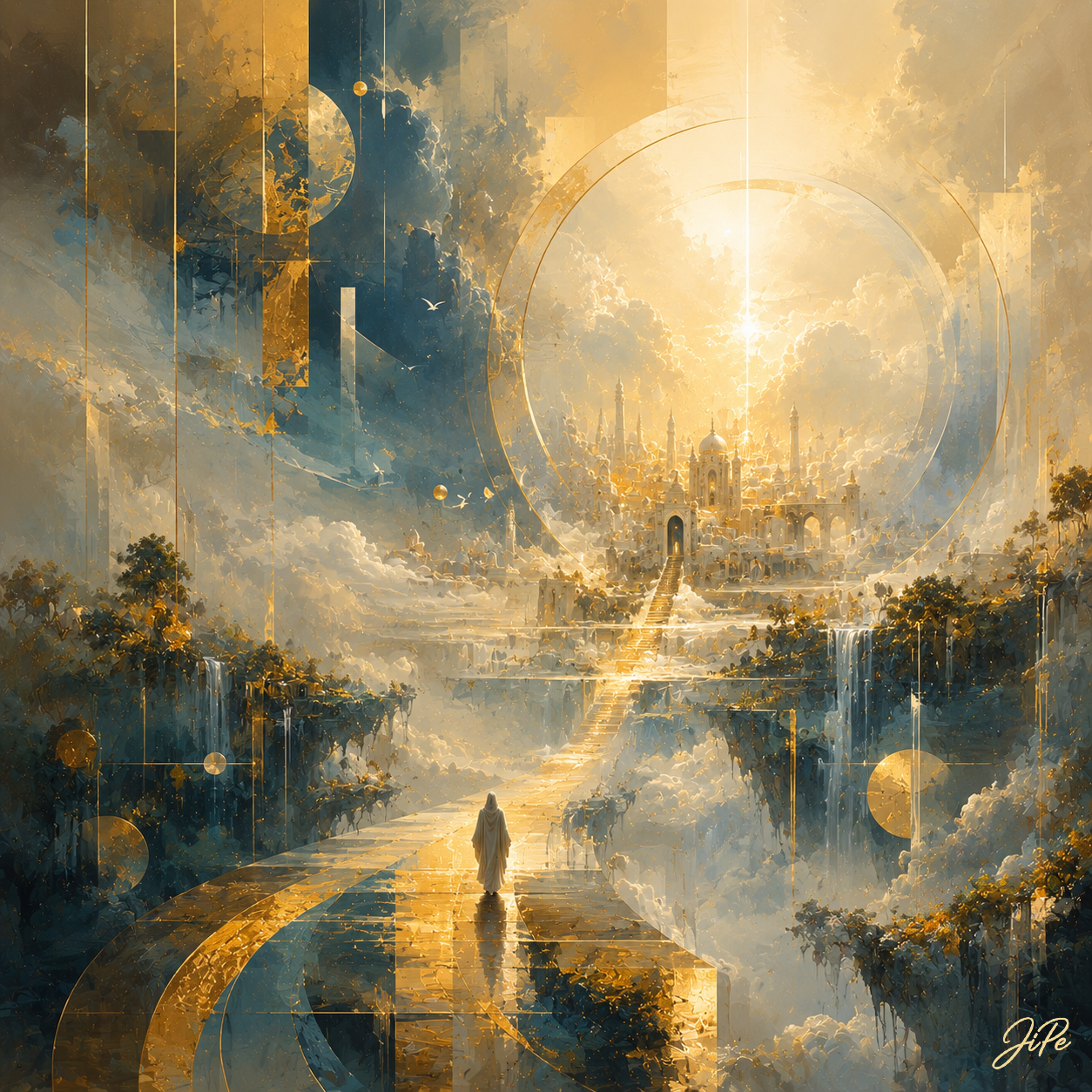

The Angel Who Remembered Heaven exists within a silence shaped by longing, where the memory of something infinite seems to inhabit a profoundly vulnerable presence. The figure turns toward us with an expression that resists easy interpretation, suspended between recognition and estrangement. There is an unsettling intimacy in this encounter, as though we have interrupted a private moment of remembrance whose significance lies beyond language.
The closeness of the composition creates a sense of emotional confinement, while the suggestion of a greater, unseen realm remains just beyond reach. Light rests upon the figure with a tenderness that offers neither certainty nor consolation. It seems less an illumination of the present than a distant echo of something once known, preserving the trace of an existence that may no longer be accessible.
The title introduces a delicate paradox: to remember heaven is also to become conscious of its absence. What should signify transcendence acquires the emotional weight of human nostalgia, where beauty and sorrow become almost indistinguishable. The possibility of belonging remains suspended between memory and desire.
Yet the figure’s quiet gaze suggests something more troubling than separation alone. If paradise survives within memory, can it ever truly be lost? Or does the act of remembering transform even eternity into something fragile, distant, and irretrievable?