Before the Eternal

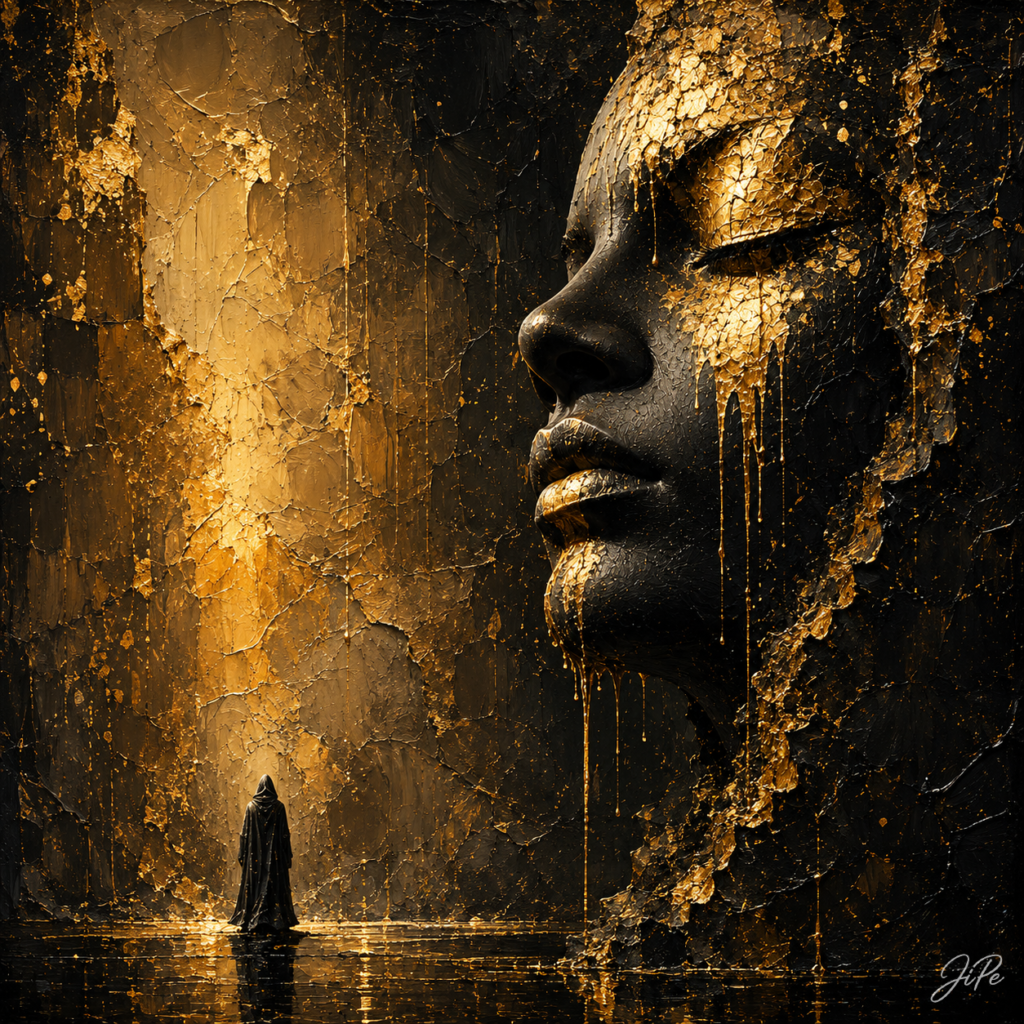
Before the Eternal is a profound meditation on humility, transcendence, and humanity’s encounter with the immeasurable. Existing at the intersection of symbolic realism, contemporary abstraction, and monumental figurative painting, the work explores one of the oldest philosophical and spiritual questions: What remains of the individual when standing before eternity? Rather than offering an answer, the painting creates a contemplative space in which silence itself becomes the primary language.
The title establishes the conceptual foundation of the work. Before the Eternal does not describe a physical location, but a state of being. It refers to that rare and transformative moment when human certainty dissolves in the presence of something infinitely greater than oneself. Whether understood as God, time, nature, consciousness, or the eternal mystery of existence, the ”Eternal” is deliberately left undefined. Its meaning is entrusted to the viewer, allowing every encounter with the painting to become deeply personal.
At the heart of the composition stands a solitary cloaked figure, almost insignificant in scale when compared to the monumental face emerging from the surrounding darkness. This dramatic contrast between human fragility and overwhelming presence immediately establishes the emotional architecture of the work. The small figure is not portrayed as defeated or fearful, but as someone who has willingly entered a place of reverence. The distance between the observer and the colossal visage becomes the symbolic distance between finite existence and infinite reality.
The monumental face dominating the right side of the composition functions as far more than a portrait. It is an archetype rather than an individual identity—a visual embodiment of timeless wisdom, divine presence, memory, or consciousness itself. Its closed eyes suggest neither sleep nor absence, but profound inward awareness. The face does not observe the world; it contains it. It becomes an image of eternal stillness existing beyond ordinary human perception.
One of the painting’s most striking visual qualities is the extraordinary use of fractured gold leaf textures. Gold appears to emerge from beneath layers of darkness, flowing across the face like rivers of illuminated time. These weathered surfaces evoke ancient icons, eroded sculptures, and sacred relics shaped by centuries of contemplation. Rather than symbolizing material wealth, gold represents enlightenment, spiritual permanence, and the enduring presence of truth beneath the changing surface of existence.
The cracked textures that cover both the monumental figure and the surrounding architecture carry equally profound symbolic meaning. Every fracture becomes a visual record of time itself. Rather than suggesting decay, these weathered surfaces speak of endurance. The painting proposes that permanence is not achieved by remaining untouched, but by surviving transformation. The visible marks of time become evidence of resilience rather than imperfection.
The dramatic vertical column of golden light descending through the center of the composition serves as the painting’s spiritual axis. It functions simultaneously as illumination, revelation, and invitation. Unlike theatrical light directed toward the viewer, this radiant passage appears to originate from beyond visible space, creating a symbolic threshold between earthly existence and transcendence. The cloaked figure stands precisely at its edge, suggesting the timeless human experience of standing before revelation without fully possessing it.
Light throughout the work functions as an active philosophical force rather than a simple visual device. Darkness is never portrayed as evil, nor light as simplistic redemption. Instead, both exist in profound balance. Darkness becomes the space of mystery, contemplation, and potential, while light reveals only enough to inspire wonder rather than certainty. The painting embraces ambiguity as an essential part of spiritual experience.
Water covering the foreground introduces another layer of symbolic depth. Its reflective surface doubles the surrounding architecture while softening the boundary between reality and illusion. Water has historically represented memory, purification, consciousness, and the subconscious mind. Here it becomes the threshold through which the viewer metaphorically approaches the Eternal. Every reflection suggests that truth cannot be grasped directly but must first be encountered through introspection.
The immense architectural space surrounding both figures evokes the atmosphere of an ancient sanctuary without belonging to any identifiable civilization. Monumental walls dissolve into textured abstraction, leaving the environment suspended between physical ruin and metaphysical landscape. The absence of recognizable architecture allows the painting to transcend historical specificity, transforming the space into a universal temple of contemplation.
Compositionally, Before the Eternal demonstrates remarkable restraint despite its monumental scale. The dominant visual tension arises not through movement but through stillness. The asymmetrical balance between the colossal face and the solitary figure creates extraordinary psychological weight. Large areas of negative space encourage prolonged contemplation, allowing silence to become an integral compositional element rather than empty background.
Scale plays a crucial conceptual role throughout the work. The immense proportions of the face relative to the human figure remind viewers of humanity’s place within a far greater cosmic order. Yet the painting avoids diminishing the individual. Instead, it suggests that genuine greatness may begin precisely with the recognition of one’s own limitations. Humility becomes not weakness, but the first step toward wisdom.
The limited palette of deep charcoal, warm black, luminous gold, and muted earth tones reinforces the painting’s timeless atmosphere. Gold introduces moments of transcendence while the surrounding darkness grounds the work in introspection and mystery. The absence of vibrant color focuses attention upon light itself, transforming illumination into both subject and symbol.
The artist’s use of layered mixed-media techniques further enhances the painting’s emotional resonance. Thick impasto, weathered textures, fractured surfaces, expressive brushwork, and subtle painterly erosion create an object that appears simultaneously ancient and contemporary. The physical surface becomes inseparable from the conceptual narrative, suggesting that truth is something revealed gradually through accumulated experience rather than instantly perceived.
From an art historical perspective, Before the Eternal exists within a rich dialogue between Byzantine iconography, Romantic notions of the sublime, Symbolist philosophy, sacred monumental sculpture, and contemporary visionary realism. The monumental face recalls ancient devotional imagery while the atmospheric abstraction situates the work firmly within a modern visual language. The painting neither imitates tradition nor rejects it; instead, it transforms historical influences into a contemporary meditation on timeless human questions.
Conceptually, the work addresses one of humanity’s defining experiences: the encounter with that which exceeds comprehension. Throughout history, philosophers, theologians, artists, and poets have attempted to describe moments when ordinary language becomes insufficient. This painting deliberately embraces that limitation. Rather than explaining eternity, it creates conditions in which the viewer may briefly feel its presence.
The cloaked figure functions as an archetype of every observer who has ever stood before something greater than themselves—a mountain, a cathedral, the night sky, a profound work of art, or the quiet realization of life’s immense mystery. The anonymity of the figure allows every viewer to enter the composition psychologically, replacing the solitary traveler with their own presence.
Ultimately, Before the Eternal is not a painting about divinity alone, nor solely about mortality. It is a meditation on perspective. It reminds us that beneath the noise of daily existence lies a deeper reality that cannot be possessed, controlled, or fully understood. It can only be approached with humility, patience, and openness.
Standing before this work, the viewer is invited into a rare experience of contemplative stillness. The immense face neither judges nor speaks. The solitary figure neither advances nor retreats. Between them exists only silence—a silence filled not with emptiness, but with infinite possibility. It is within that silent encounter that Before the Eternal reveals its deepest meaning: that the greatest truths are often discovered not through answers, but through the courage to remain present before mystery itself.