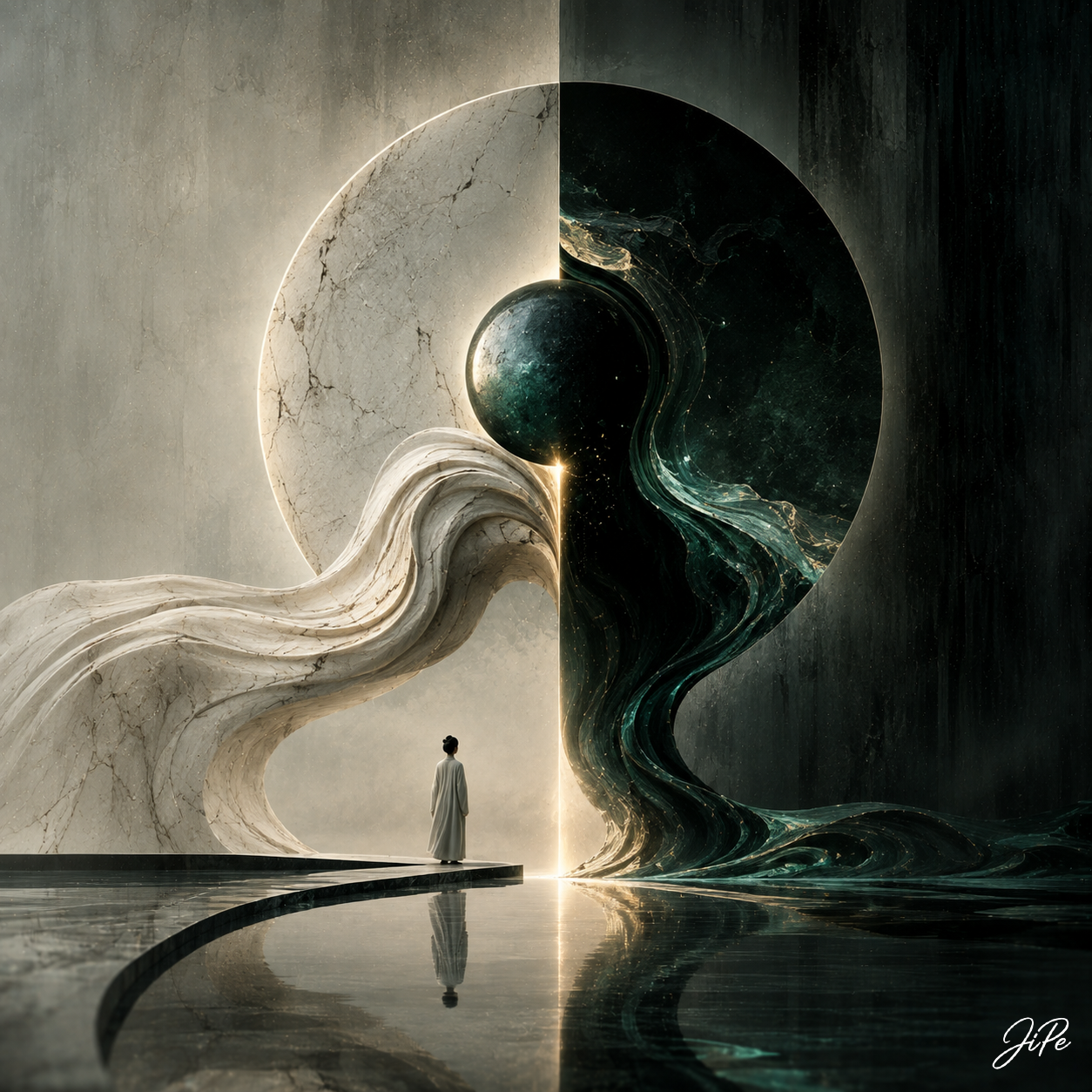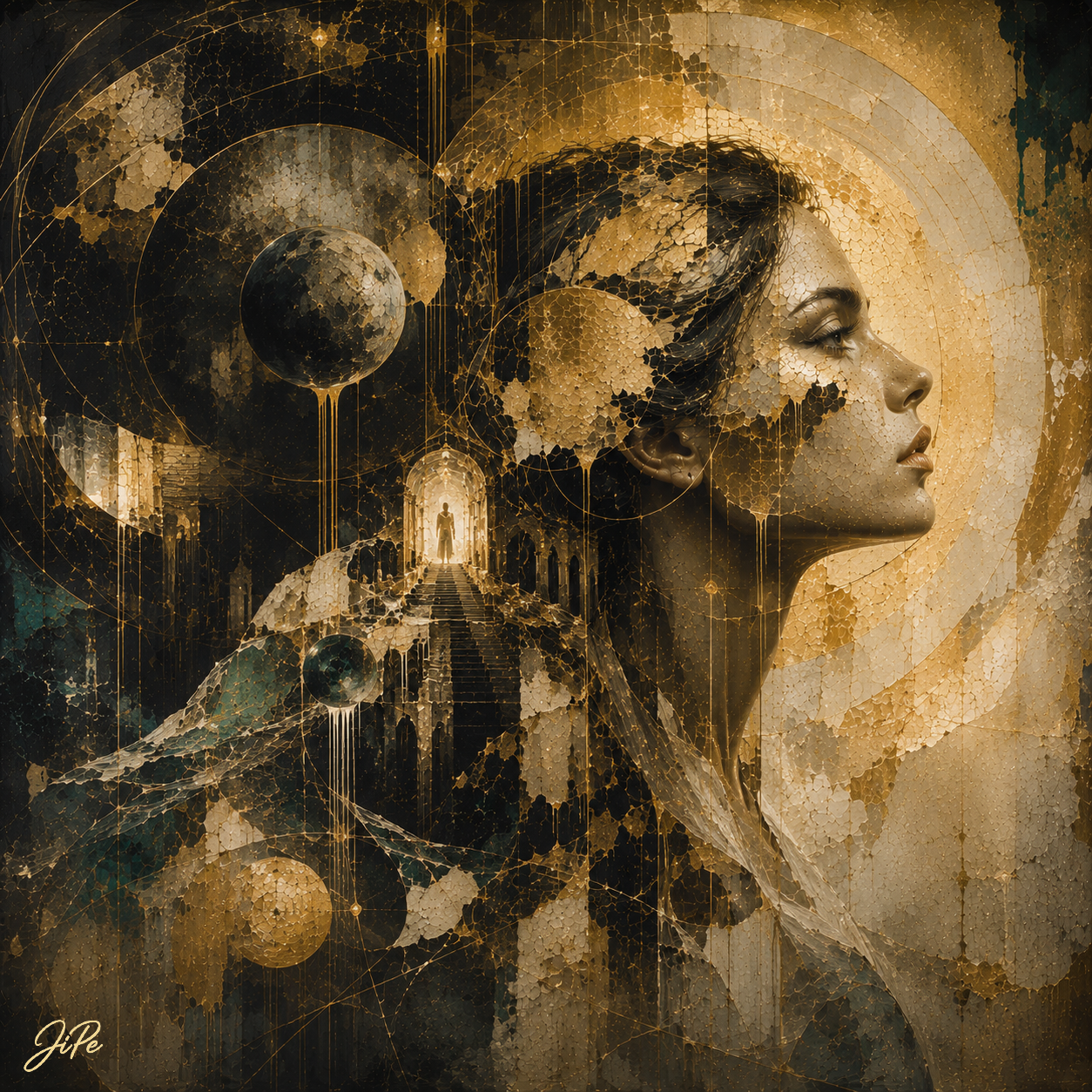

The Birth of Eternity unfolds at the point where dissolution and emergence become indistinguishable. A vast, fractured presence occupies the surrounding space while a smaller figure rises within its luminous field, creating an uneasy relationship between what endures and what is being released. The scene feels caught in an impossible instant: destruction suspended long enough to resemble creation.
Light gathers with extraordinary density at the centre, yet it offers no simple promise of salvation. It passes through fracture, illuminates instability, and turns the act of breaking apart into something strangely generative. Against this radiance, darkness retains its gravity, suggesting that whatever is beginning cannot be separated from what has been lost.
The title, The Birth of Eternity, contains its own paradox. Eternity should have no beginning, yet here it seems to emerge from rupture, as though the timeless might become perceptible only when ordinary measures of existence fail. The boundary between body, memory, and surrounding world begins to loosen.
What is being born remains uncertain. Perhaps eternity begins not when something escapes disappearance, but when disappearance itself ceases to be an ending.