
Before the Hand of God
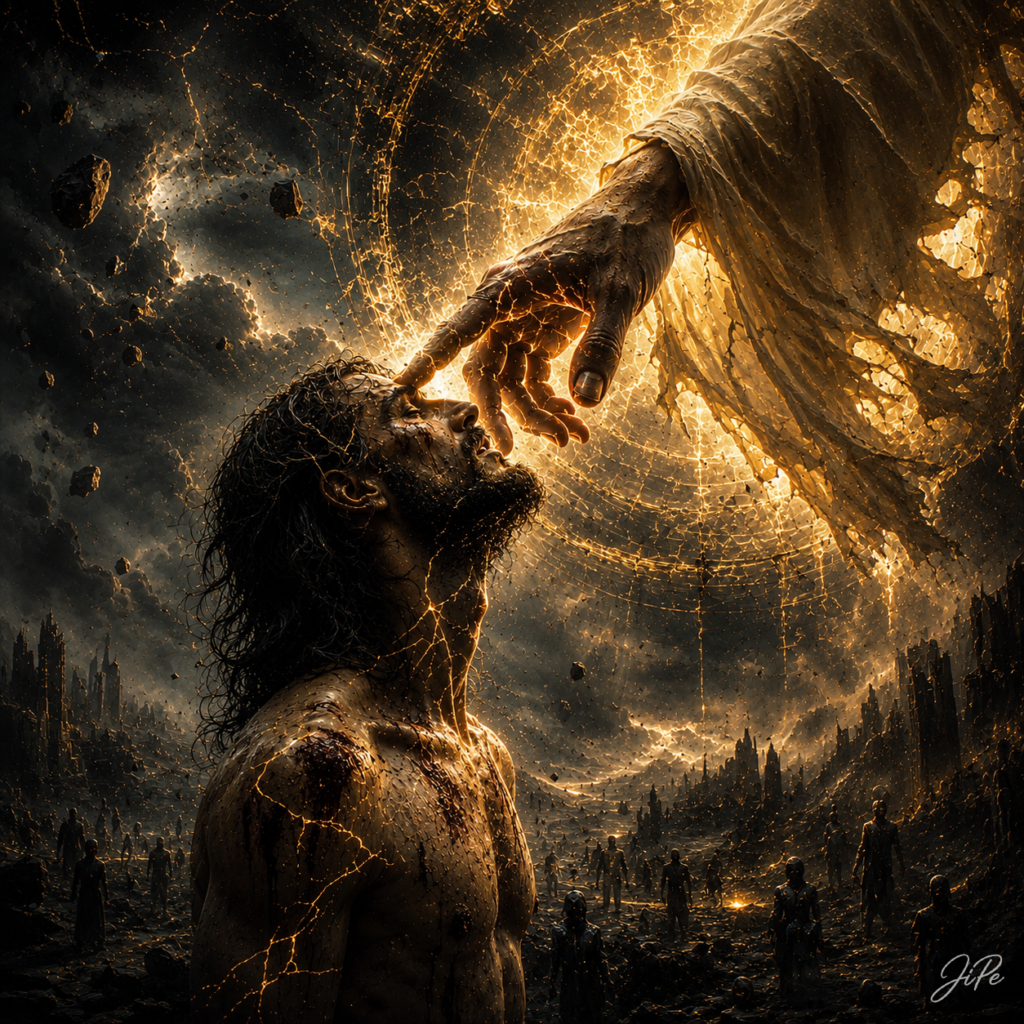
Before the Hand of God is a monumental contemporary vision of humanity’s encounter with the divine, presenting a moment suspended between judgment, mercy, vulnerability, and redemption. Rather than illustrating a single biblical narrative, the artwork synthesizes centuries of theological symbolism into a universal meditation on the relationship between the finite human condition and the infinite presence of God. Through its dramatic composition and overwhelming visual intensity, the work invites viewers to contemplate the mystery of divine intervention at the very edge of human existence.
At the heart of the composition stands a solitary figure whose gaze is lifted toward an immense celestial hand descending from a radiant sphere of golden light. The gesture is neither forceful nor condemnatory. Instead, the extended fingers approach with extraordinary tenderness, evoking one of the oldest and most enduring motifs in sacred art: the divine touch that restores, awakens, and transforms. Positioned at the threshold between heaven and earth, the hand becomes a visual embodiment of grace—an act of intimate nearness emerging from unimaginable transcendence.
The human figure is portrayed in a state of profound vulnerability. His body bears visible wounds, fractures, and traces of suffering, while luminous fissures of gold flow across his skin like rivers of healing light. These glowing veins suggest that brokenness itself has become the pathway through which divine presence enters. Rather than concealing human imperfection, the artist elevates it into a central theological statement: redemption does not erase suffering but transforms it into a source of illumination and spiritual renewal.
The surrounding landscape unfolds as a vision of cosmic desolation. Crumbling cities dissolve into darkness beneath turbulent skies, while scattered figures populate the distant terrain like silent witnesses to an unfolding revelation. Floating fragments of rock and fractured space imply that the very fabric of creation has been disrupted, placing the scene beyond ordinary history and within an eschatological dimension. Time appears suspended. The world is neither fully destroyed nor fully restored, existing instead within the sacred interval between catastrophe and hope.
Dominating the upper portion of the composition is an immense halo-like structure composed of radiant circles, intricate geometric patterns, and networks of golden light. This celestial architecture evokes multiple traditions simultaneously: the mandorlas of Byzantine iconography, medieval visions of the heavenly cosmos, and contemporary interpretations of sacred geometry. Rather than functioning merely as a decorative backdrop, these concentric forms suggest the ordered harmony of divine reality—a realm governed by eternal wisdom beyond human comprehension.
The artist’s treatment of light serves as the principal narrative force throughout the painting. Gold does not simply illuminate surfaces; it appears to generate existence itself. Light fractures through darkness in delicate veins, surrounds the descending hand with overwhelming brilliance, and penetrates the human figure from within. This dynamic recalls theological understandings of divine light as both revelation and presence, echoing traditions extending from Eastern Orthodox mysticism to the luminous symbolism of Renaissance sacred painting.
The restrained yet powerful color palette intensifies the emotional impact of the work. Deep charcoal blacks, storm-filled grays, and weathered earth tones establish an atmosphere of existential uncertainty, while the incandescent gold introduces a profound visual counterpoint. Rather than opposing darkness, the light permeates it, suggesting that divine grace operates not outside human suffering but within it. Every luminous fracture becomes an affirmation that hope survives even amidst devastation.
Stylistically, Before the Hand of God occupies a compelling intersection between classical religious iconography, Romantic sublime aesthetics, and contemporary visionary digital art. The monumental scale of the divine gesture recalls Michelangelo’s iconic imagery of creation, while the emotional intensity and atmospheric depth evoke the dramatic spirituality of the Baroque tradition. At the same time, the painting embraces a distinctly modern visual language, employing cinematic composition, symbolic abstraction, and immersive spatial effects that transcend conventional narrative illustration.
From an art historical perspective, the work contributes to the enduring tradition of depicting humanity’s direct encounter with God. Whereas earlier masterpieces often emphasize divine authority or miraculous intervention, this composition shifts its focus toward relational intimacy. The divine hand descends not as an instrument of power but as an invitation to communion. In doing so, the artist reinterprets one of Western art’s most recognizable theological symbols through a contemporary lens that emphasizes compassion, restoration, and spiritual reconciliation.
The composition is carefully orchestrated around a powerful vertical dialogue between heaven and earth. The ascending gaze of the human figure intersects with the descending movement of the divine hand, creating a visual axis upon which the entire painting is constructed. Surrounding figures, ruined architecture, and fragmented celestial forms all reinforce this central encounter, directing the viewer’s attention toward the decisive moment where transcendence meets mortality.
Symbolically, the artwork explores themes that extend far beyond its explicitly Christian references. The broken body represents the universal human experience of suffering, limitation, and longing. The descending hand signifies not only divine intervention but also the possibility of hope, forgiveness, healing, and renewal that resonates across cultures and philosophical traditions. In this sense, the painting functions simultaneously as sacred narrative, existential reflection, and universal allegory.
The emotional power of Before the Hand of God lies in its remarkable balance between awe and intimacy. The scale of the divine presence evokes the overwhelming majesty traditionally associated with encounters between humanity and the sacred, yet the almost imperceptible distance separating the fingertips from the man’s face transforms the cosmic into something deeply personal. The viewer is drawn into this suspended instant, experiencing the tension between anticipation and fulfillment, distance and closeness, mortality and eternity.
Ultimately, Before the Hand of God is a profound meditation on the enduring relationship between divine grace and human fragility. It presents a vision in which brokenness becomes the threshold of transformation, darkness becomes the canvas upon which light reveals itself, and the smallest gesture of divine compassion possesses the power to reshape the destiny of individuals and worlds alike. Through its masterful synthesis of symbolism, theological depth, and visual grandeur, the artwork stands as a compelling contribution to the continuing tradition of sacred art, inviting visitors, scholars, and contemplative viewers alike to reflect upon the timeless mystery of what it means to stand before the presence of God.