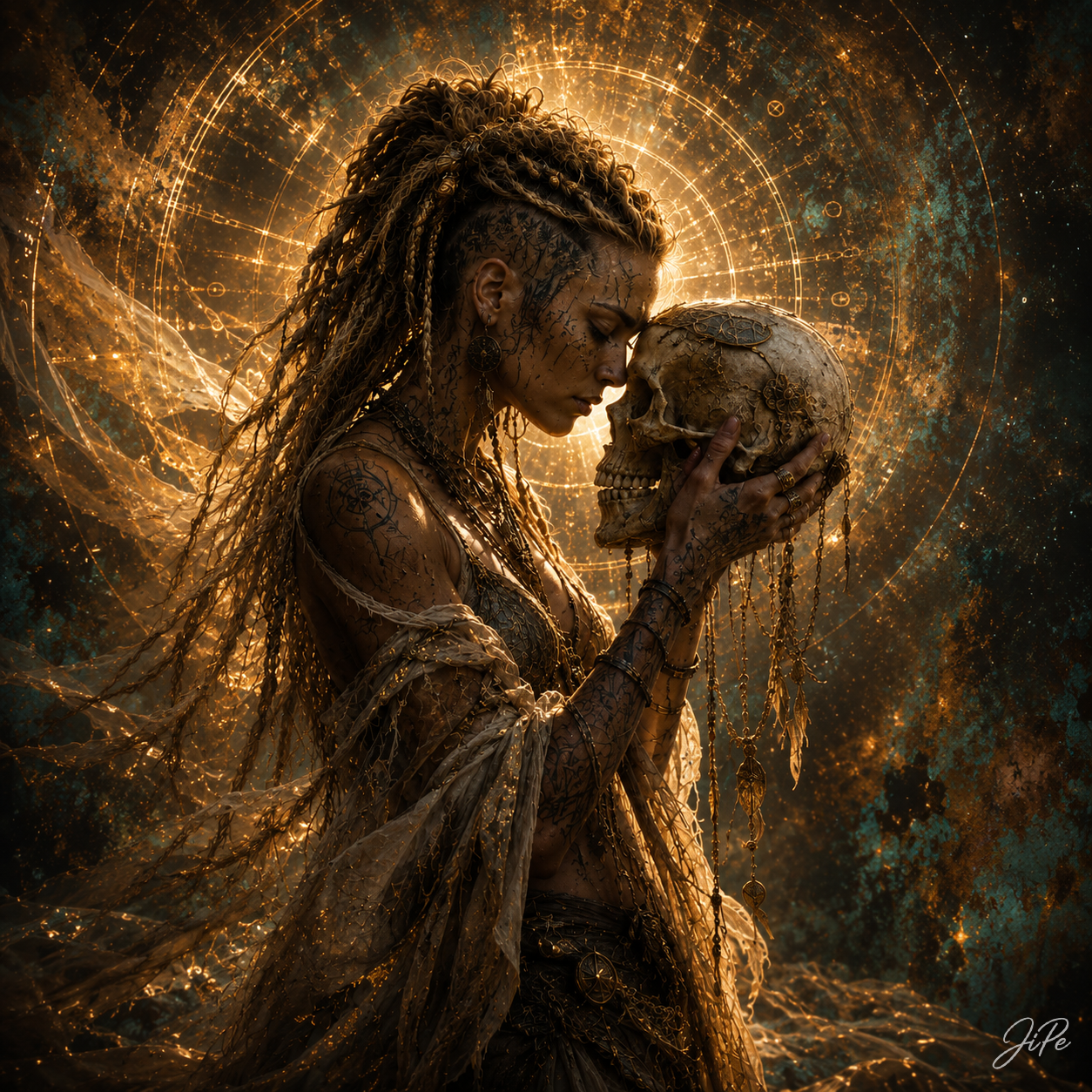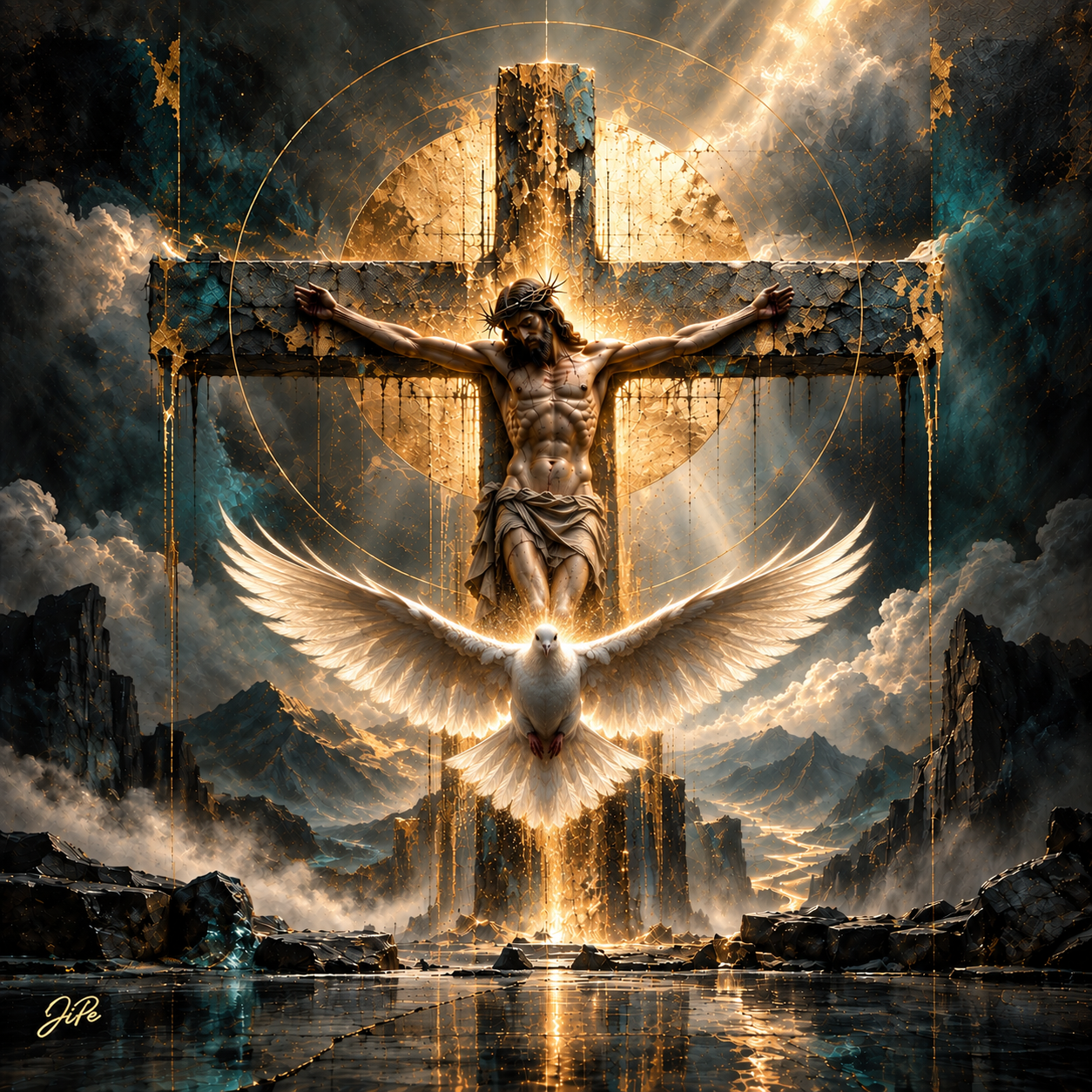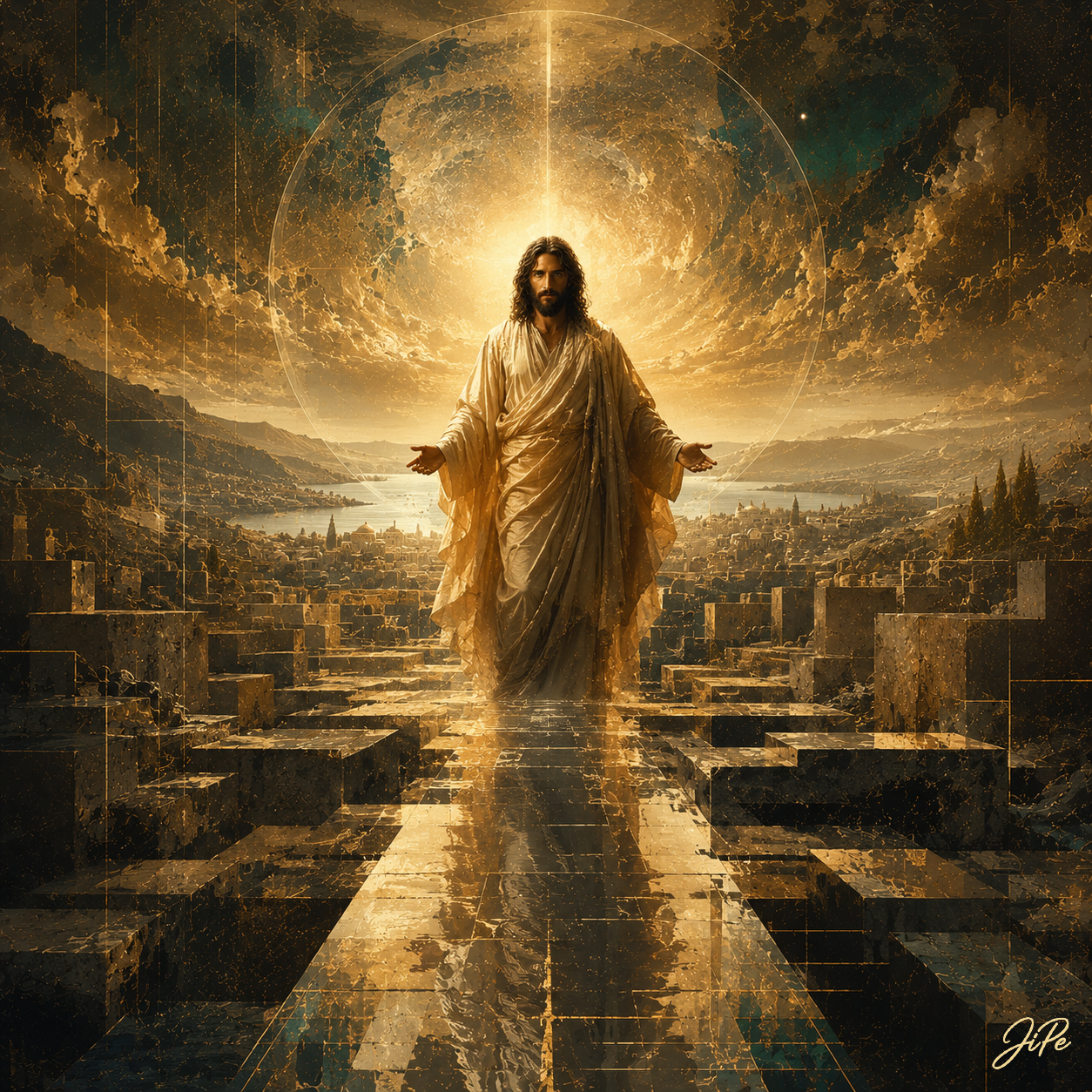
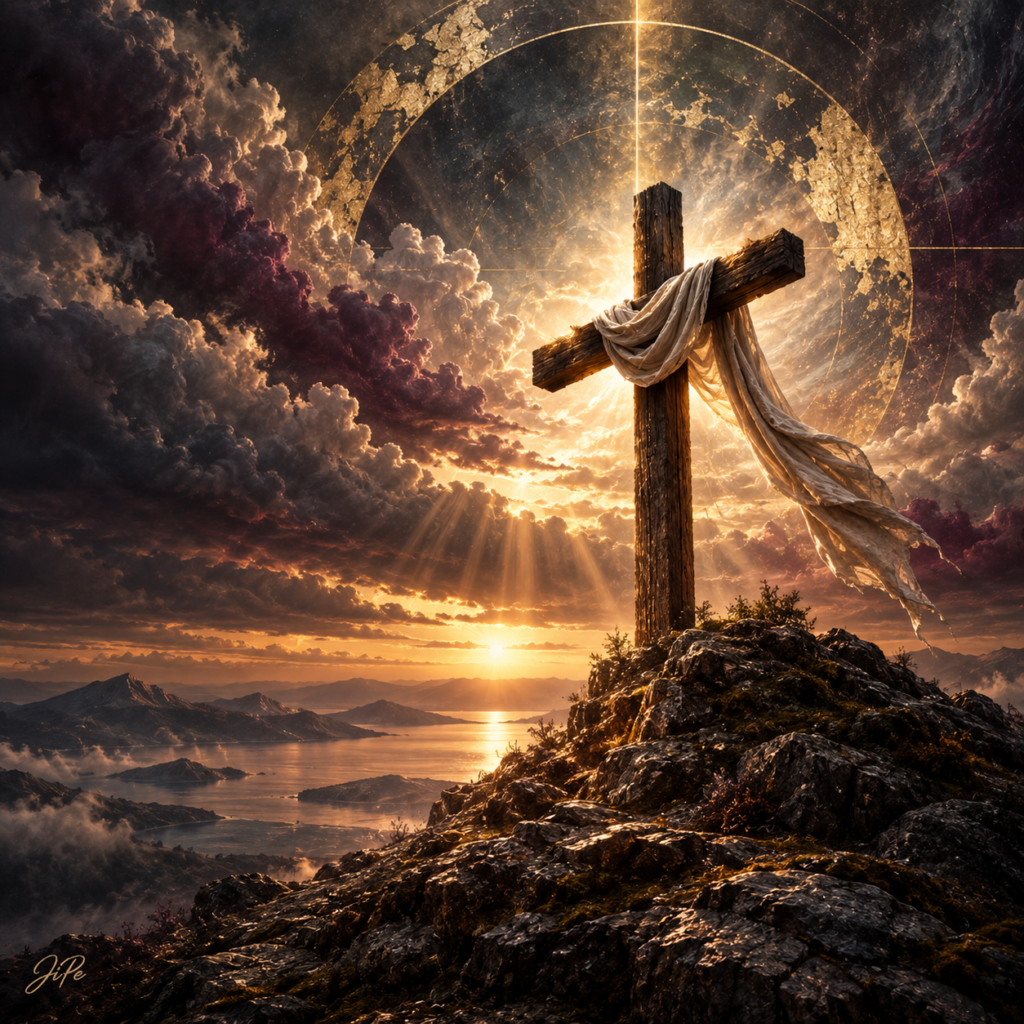
After the Cross, the Dawn holds itself at the threshold between aftermath and beginning. A profound stillness settles over the work, yet it is not the stillness of resolution. Something has passed, something remains, and something not yet fully formed seems to gather beyond the horizon. The vastness surrounding the central presence gives this moment an almost suspended quality, as though time itself has briefly loosened its hold.
Light emerges not as reassurance, but as a force that complicates the darkness. It presses through distance and shadow with an intensity that feels both intimate and immense. Against it, the solitary form carries the weight of what has been endured without surrendering to a single interpretation. Absence becomes as significant as presence; silence seems charged with memory.
The title shifts the work toward a fragile temporal tension: after suggests consequence, while dawn suggests possibility. Yet the space between them remains unresolved. Renewal may be approaching, but it does not erase what came before.
Perhaps the deepest tension lies there—in the uncertain moment when suffering has ended, but its meaning has not. What begins when the darkness recedes, and what must remain with us when the light returns?