
Series: Echoes Beneath the Eclipse


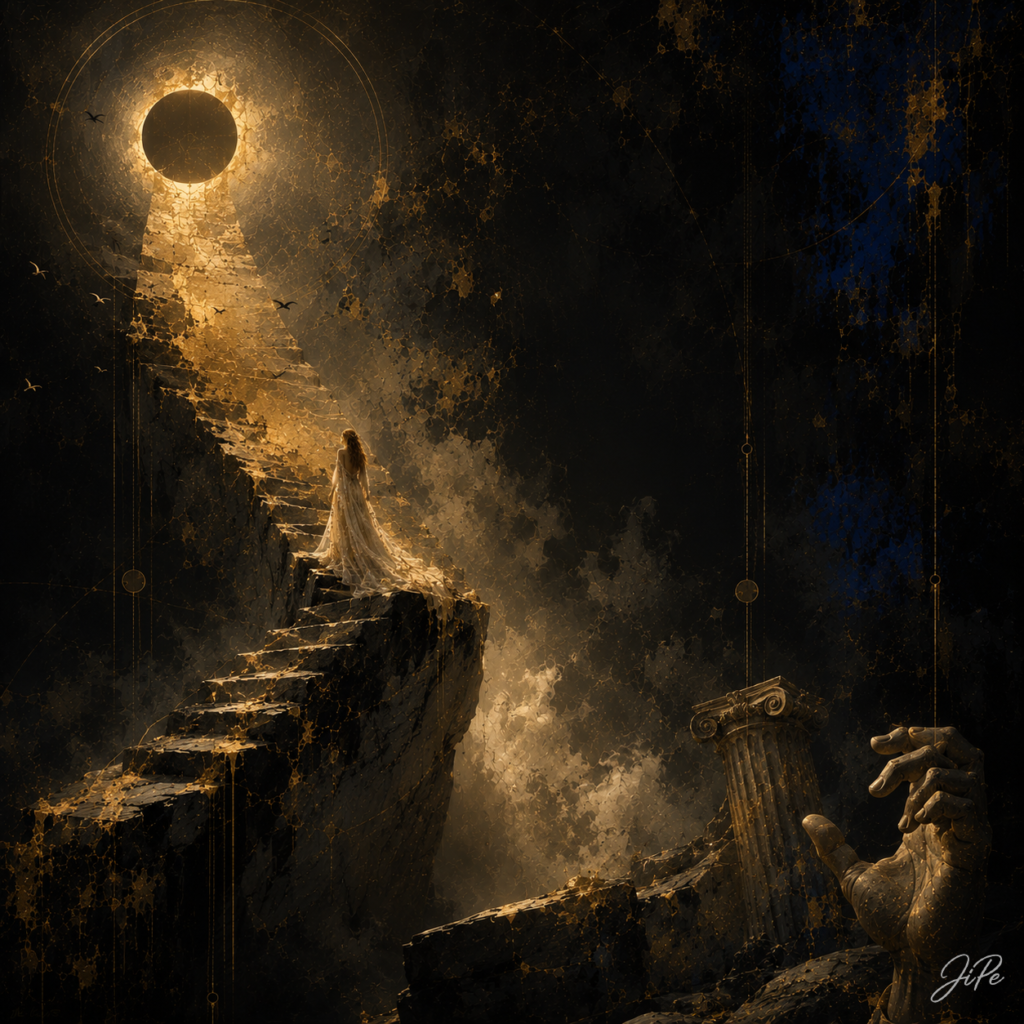

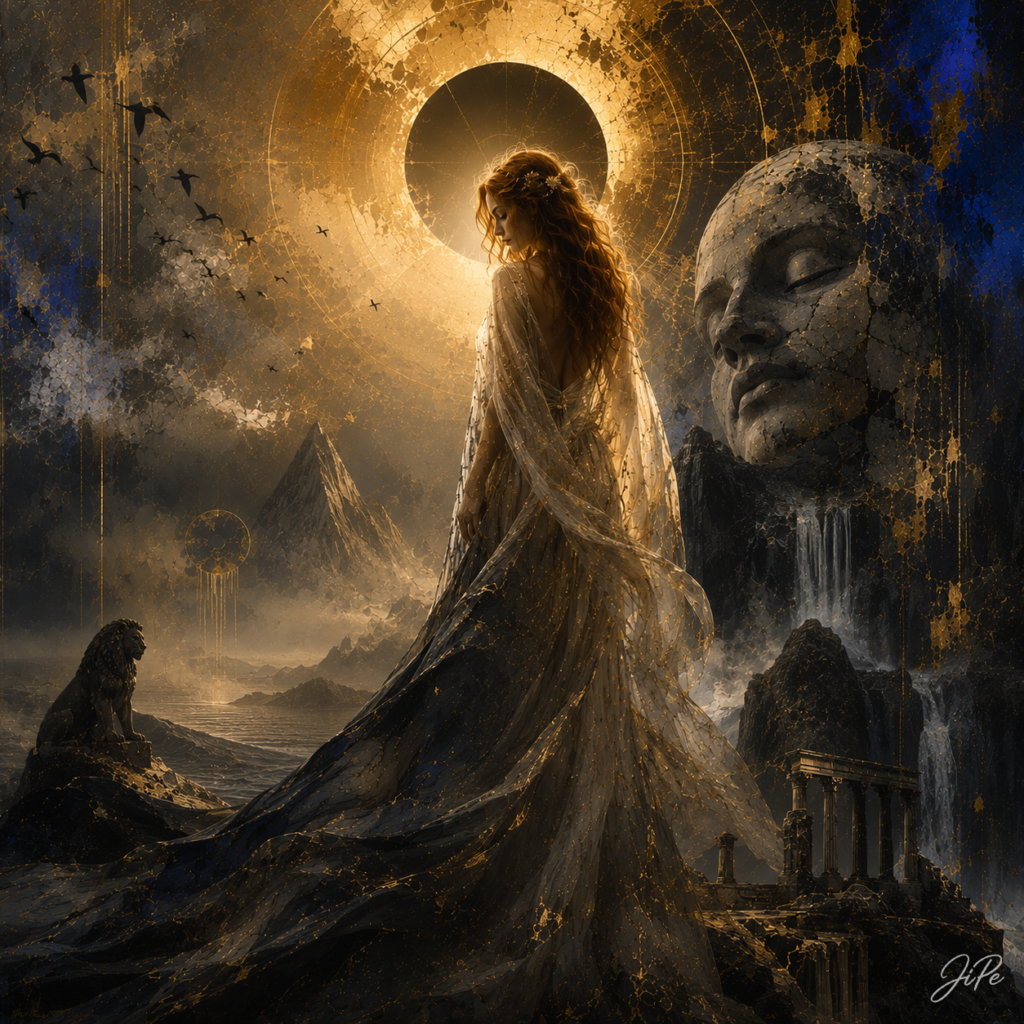

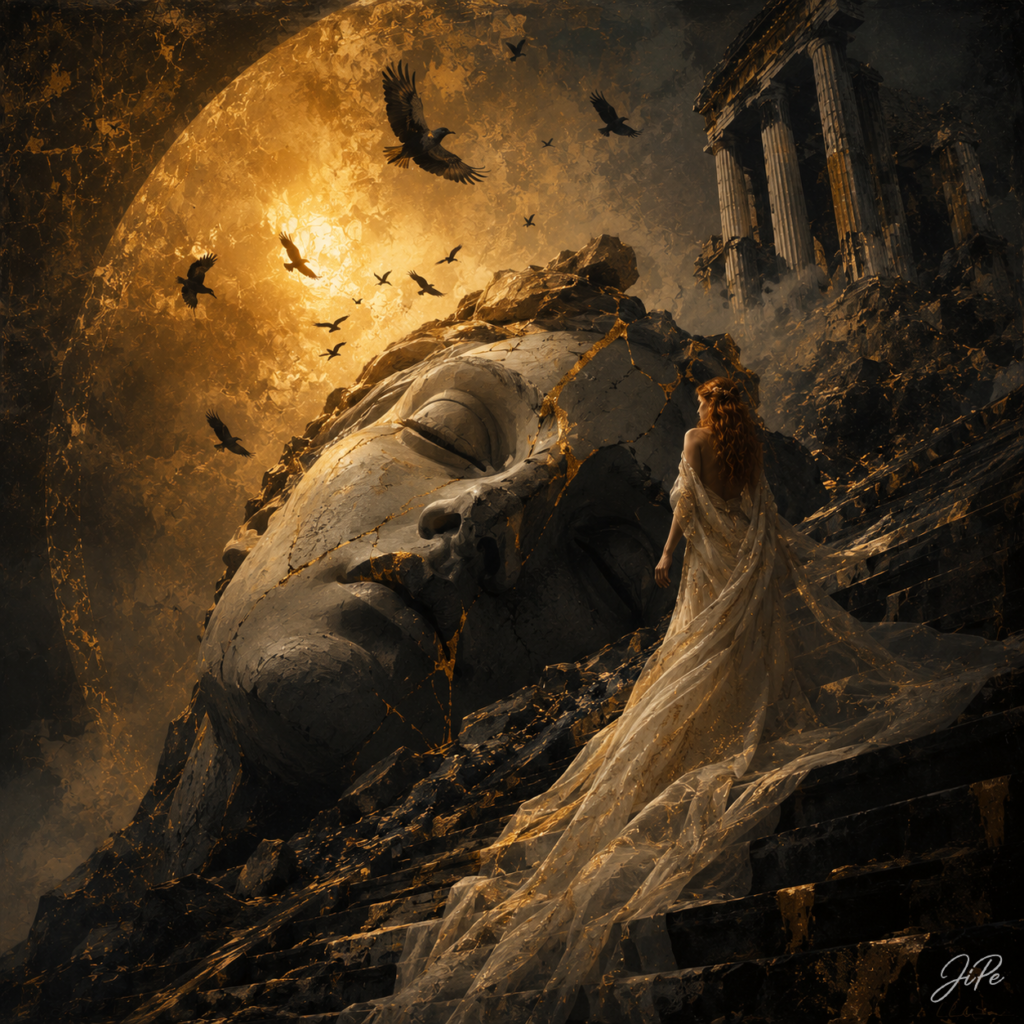
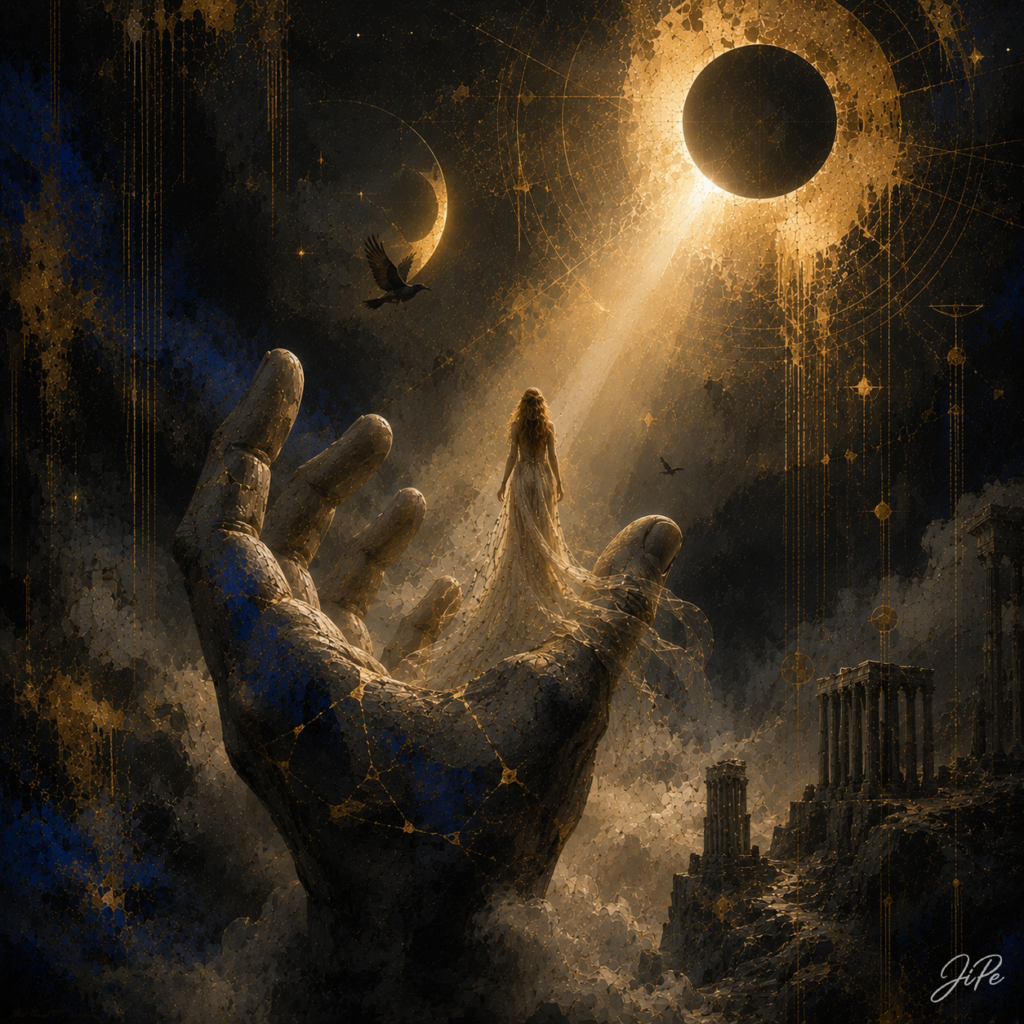
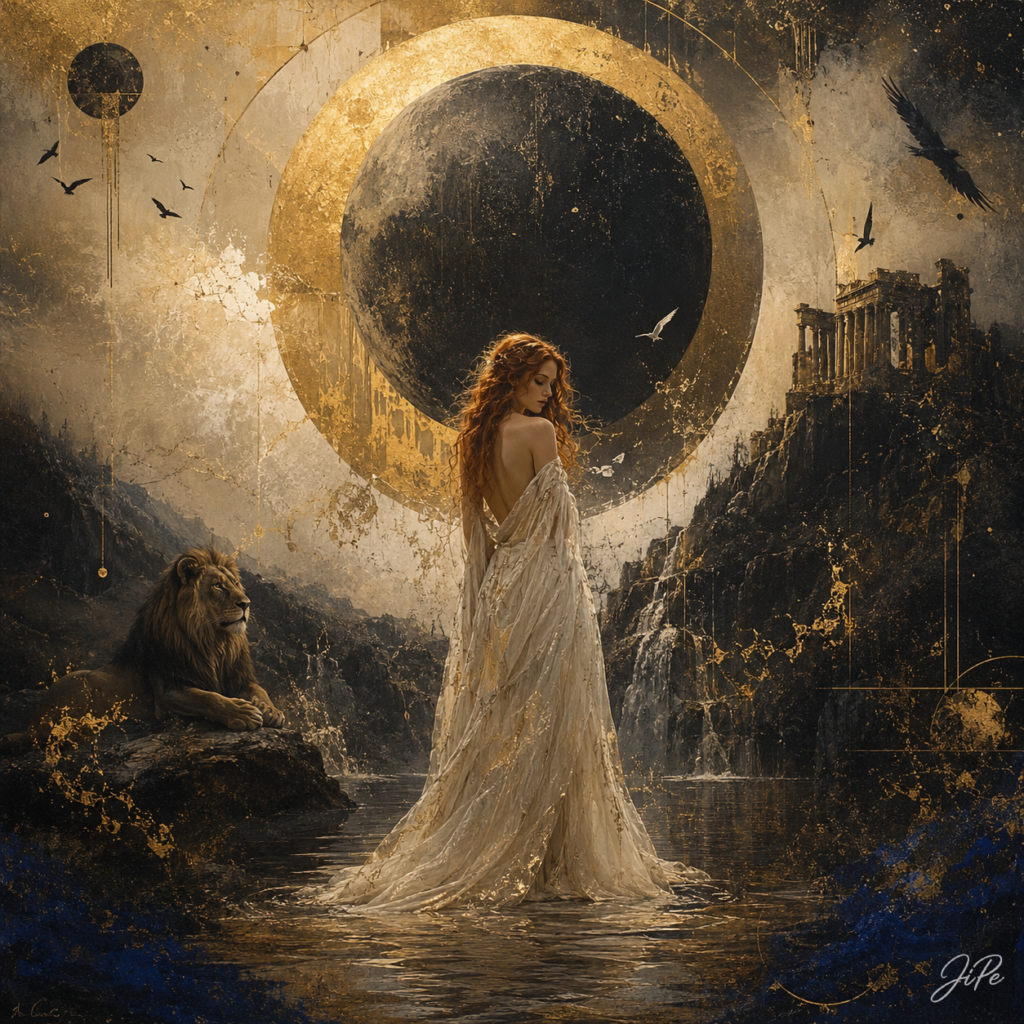
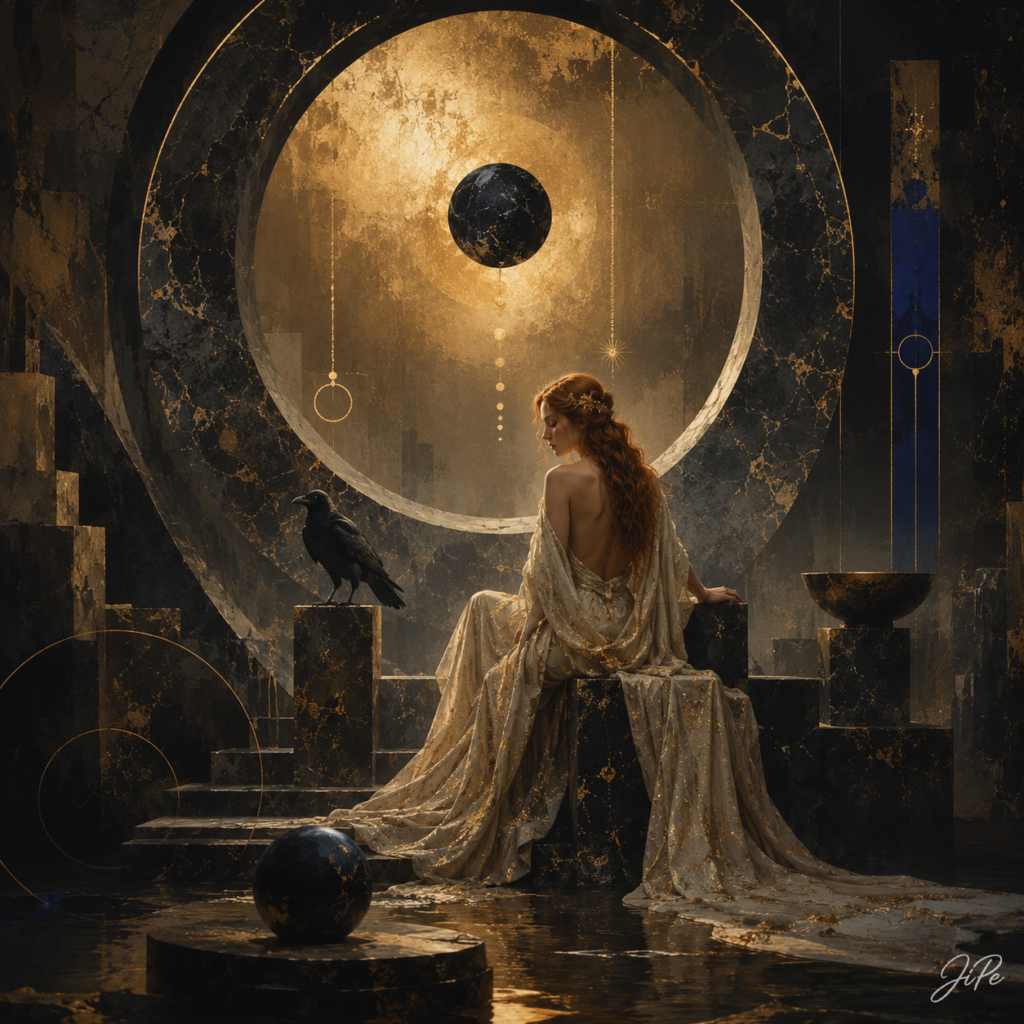


Echoes Beneath the Eclipse is a meditation on memory, transcendence, and the silent dialogue between humanity and eternity. Across twelve interconnected paintings, JiPe Art constructs a mythic landscape where celestial phenomena, monumental ruins, forgotten sculptures, and solitary figures merge into a visual language that exists beyond historical time. Rather than illustrating a narrative, the series invites the viewer into a contemplative journey where every image functions as a chapter within a larger philosophical and emotional composition.
At the heart of the series stands a lone female figure, not as an individual portrait but as an archetype. She embodies the timeless seeker—the soul confronting the immeasurable, standing between the known world and the infinite. Her recurring presence provides continuity throughout the collection while allowing each painting to explore a different aspect of transformation, remembrance, silence, sacrifice, and hope. She is simultaneously witness, pilgrim, guardian, and reflection of the viewer, guiding us through landscapes shaped by both external grandeur and inner awakening.
The eclipse serves as the central symbol of the series. Traditionally associated with endings, mystery, and cosmic change, it is reimagined here as a threshold rather than a catastrophe. The darkened sun becomes a luminous portal, suggesting that true illumination often emerges through shadow. Instead of representing absence, darkness becomes a space where hidden truths reveal themselves, where memory resurfaces, and where the boundaries between the physical and the spiritual begin to dissolve.
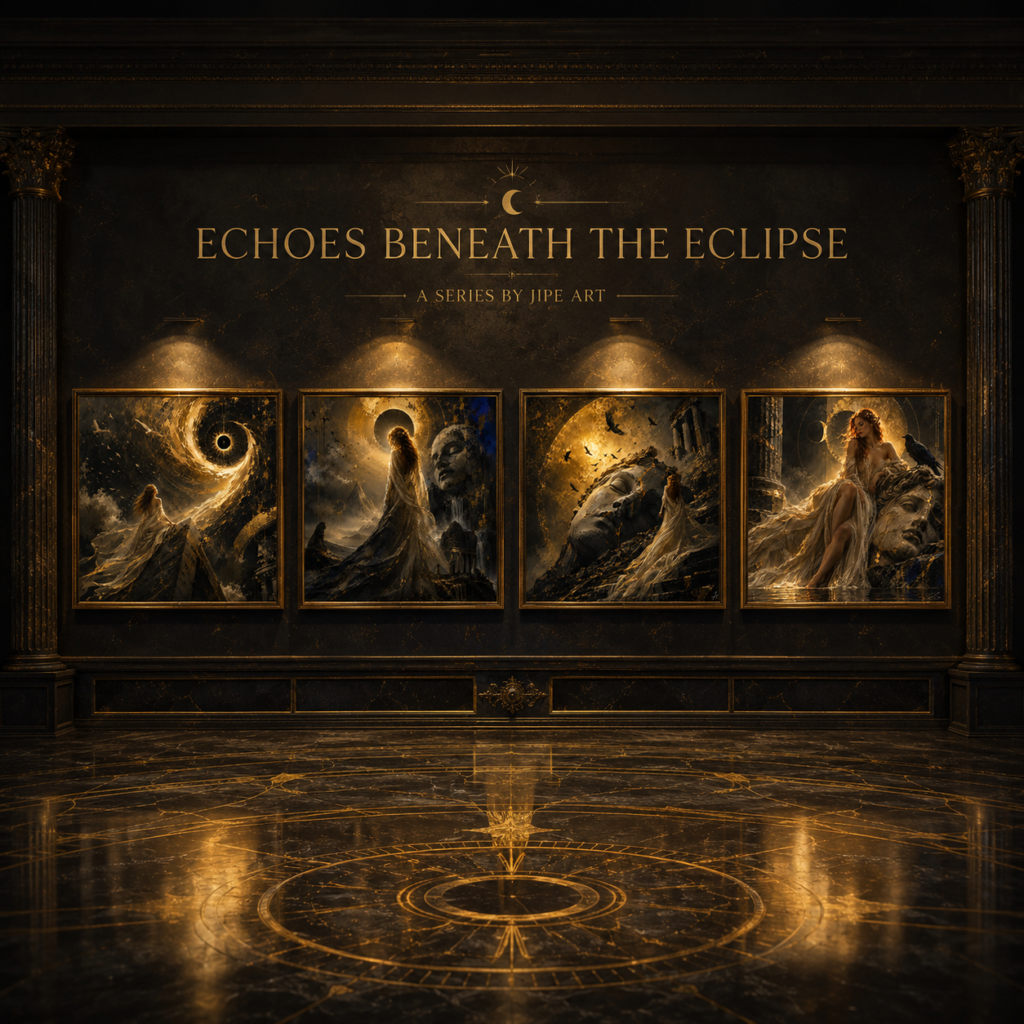
Throughout the collection, monumental stone faces, fractured sculptures, weathered temples, stairways, ravens, lions, and celestial geometries appear repeatedly. These motifs do not function as literal symbols but as fragments of an imagined mythology. The cracked sculptures evoke civilizations that have vanished yet continue to resonate across time, while the recurring architecture suggests that every generation builds upon the silent foundations of those who came before. Gold-filled fractures running across stone surfaces transform destruction into beauty, proposing that what survives history is not perfection, but resilience.
Light is treated not merely as illumination but as a narrative force. Warm gold emerges from deep charcoal and midnight blue, creating compositions where every ray appears to carry symbolic weight. The contrast between brilliance and darkness echoes the central theme of the series: that meaning is born through opposition. Hope exists because uncertainty exists; permanence is understood only through decay; silence gains significance because it follows countless forgotten voices.
Visually, Echoes Beneath the Eclipse combines elements of contemporary visionary symbolism, surreal realism, classical monumentality, and painterly abstraction. Rich textures, layered brushwork, subtle impasto effects, weathered surfaces, and metallic gold accents create works that appear both ancient and contemporary. The paintings possess the presence of archaeological relics while simultaneously embracing a modern cinematic sensibility, allowing the series to exist outside any fixed artistic period.
The carefully orchestrated compositions emphasize balance without rigidity. Monumental forms coexist with expansive negative space, while circular geometries establish a visual rhythm that recurs throughout the series. Each painting is designed to function independently, yet when viewed together they reveal a larger structural harmony in which symbols, colours, architectural fragments, and celestial forms continuously echo from one work to the next. The result is a collection that rewards prolonged observation, revealing new relationships and subtle visual conversations over time.
Beneath its monumental scale, however, the series remains profoundly human. Every landscape, every ruined monument, and every eclipse ultimately reflects an inner condition. The vast environments become psychological spaces where solitude is transformed into contemplation rather than isolation. The silence that permeates the paintings is not emptiness, but presence—a quiet invitation to reflect upon one’s own memories, aspirations, losses, and capacity for renewal.
Rather than offering definitive answers, Echoes Beneath the Eclipse embraces ambiguity as one of art’s greatest strengths. It encourages viewers to project their own experiences onto the imagery, allowing each encounter to become deeply personal. The paintings resist literal interpretation in favour of emotional resonance, creating an experience that evolves with each viewing and differs from one observer to another.
In an age defined by speed, distraction, and constant movement, this series deliberately chooses stillness. It invites the audience to slow down, to inhabit silence, and to rediscover the enduring power of symbolic imagery. The monumental ruins, eclipsed heavens, and solitary figure become mirrors through which viewers may contemplate not only the passage of civilizations, but also the landscapes that exist within themselves.
Echoes Beneath the Eclipse ultimately speaks of continuity rather than conclusion. It suggests that every ending conceals another beginning, that every fragment preserves the memory of wholeness, and that beneath every eclipse there remains a light waiting to emerge. Through its timeless visual language and contemplative atmosphere, the series offers an exploration of humanity’s enduring relationship with mystery, memory, and the eternal search for meaning.