
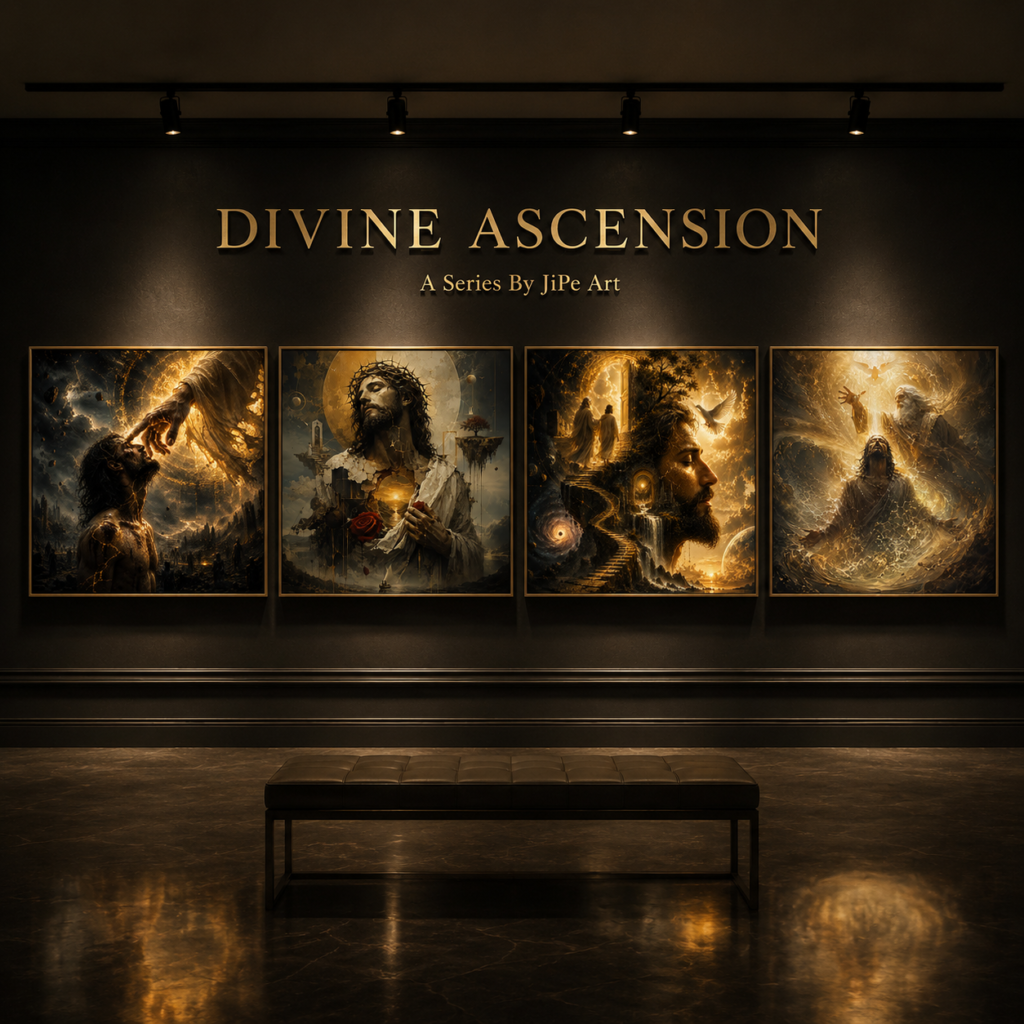
A solemn intensity gathers around these works, where ascent is felt less as movement through space than as a transformation of state. In Divine Ascension, the human presence occupies a charged interval between vulnerability and immensity, held within forces that seem capable of both dissolution and renewal.
Light carries unusual weight here. It does not simply descend or illuminate; it appears to exert a pull, creating a tension between the grounded body and something beyond its familiar limits. Silence deepens this encounter, allowing moments of surrender, resistance, and expectancy to coexist without resolving into a single narrative. The monumental scale surrounding the figure makes transcendence feel neither effortless nor assured, but bound to uncertainty and consequence.
The title places the divine alongside the idea of departure, yet what is being left behind remains unclear. Ascension may suggest release, awakening, sacrifice, or the gradual undoing of a former self. The distinction between elevation and disappearance becomes increasingly fragile.
Perhaps the threshold is not crossed by rising above what we are, but by relinquishing the certainty of where the self ends—and what might begin beyond it.