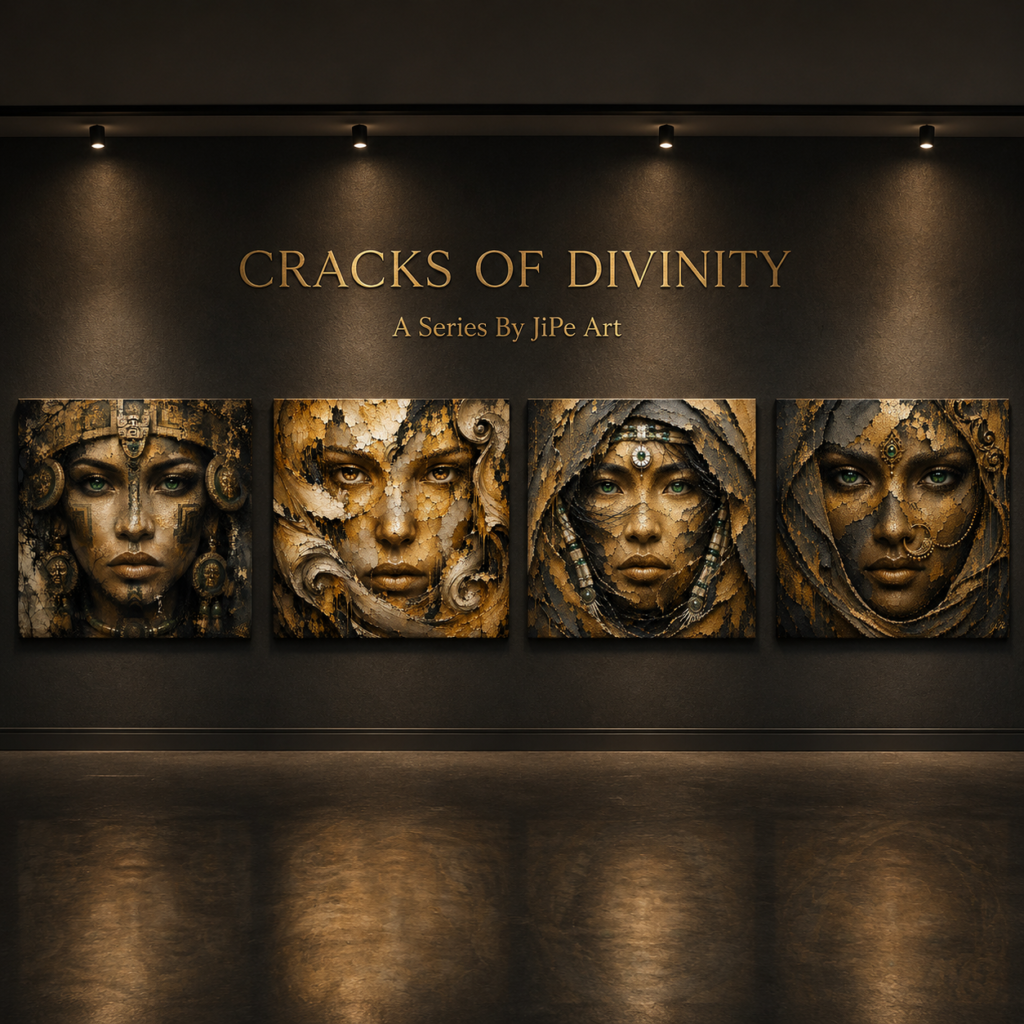
A concentrated presence emerges from these works, poised between endurance and disintegration. In Cracks of Divinity, the face becomes less a portrait than a threshold: intimate in its proximity, yet carrying the weight of something older, larger, and resistant to ordinary measures of identity.
Fracture is never merely damage. It introduces uncertainty into surfaces that might otherwise suggest permanence, allowing vulnerability and authority to occupy the same space. What appears broken may also be opening. Light gathers along these divisions with restrained intensity, suggesting that revelation does not necessarily arrive through perfection, but through moments when the coherent surface can no longer remain intact.
The title places divinity itself under pressure. If the sacred can fracture, perhaps its power lies not in remaining untouched, but in surviving transformation. Yet the unwavering presence of these figures complicates any simple reading of fragility. They seem neither ruined nor restored, but suspended somewhere between those states.
What, then, do the cracks expose: an interior truth, an absence, or merely another surface waiting beneath the first?