
After the Storm
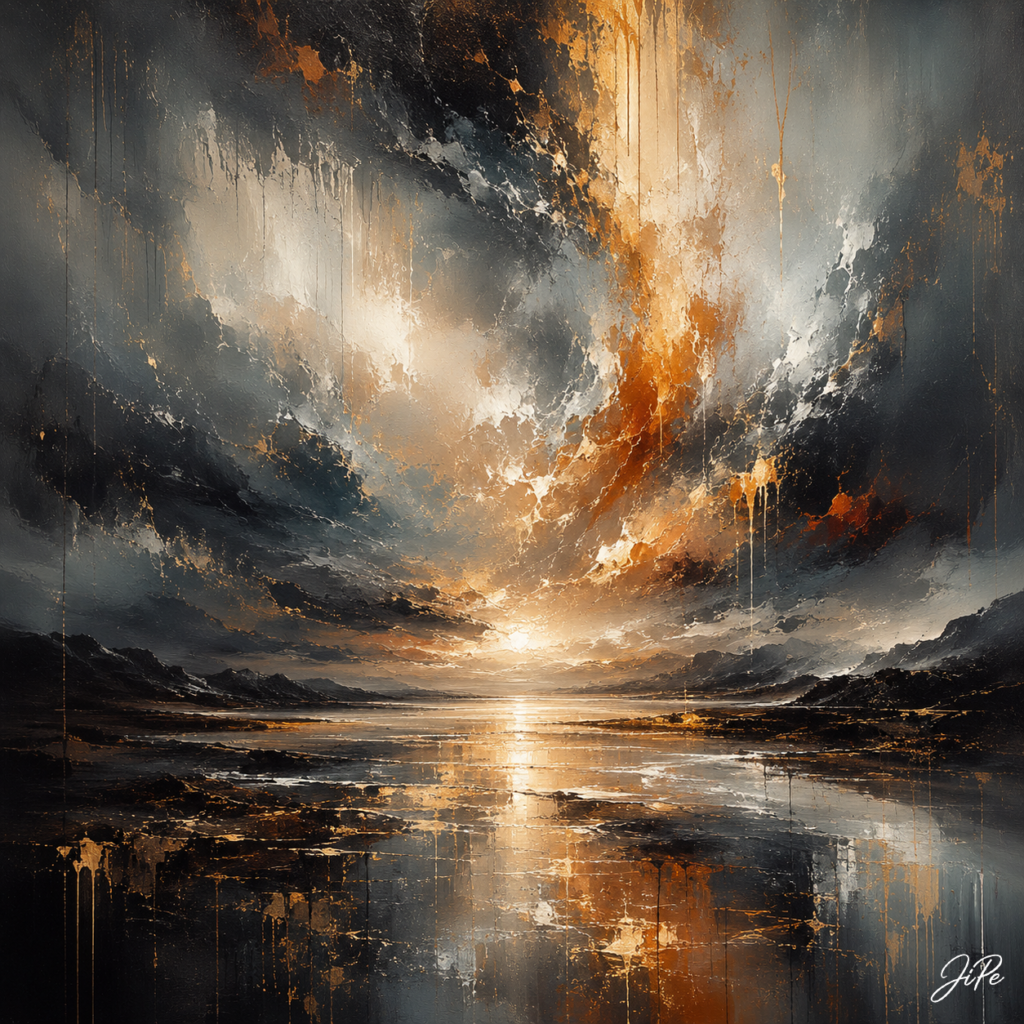
After the Storm is a meditation on renewal, resilience, and the profound silence that follows upheaval. Rather than portraying a literal landscape, the painting transforms nature into an emotional and symbolic realm where light becomes the primary narrator. The horizon emerges not merely as a geographical boundary, but as a threshold between uncertainty and hope—a place where destruction quietly gives way to possibility.
At first glance, the viewer is drawn toward the luminous centre, where a radiant sun breaks through the remnants of a turbulent sky. Towering formations of charcoal, slate grey, ivory, and molten gold dominate the composition, creating an atmosphere of immense scale and emotional gravity. The dramatic cloud structures appear almost sculptural, dissolving into sweeping painterly gestures, textured surfaces, and cascading vertical drips that blur the distinction between abstraction and representation. These deliberate marks reveal the physicality of the painting while simultaneously suggesting rainfall, memory, and the gradual release of accumulated tension.
The work explores the timeless relationship between chaos and order. The storm has already passed, yet its presence lingers in the fractured sky and the darkened earth. Instead of depicting violence directly, the composition focuses on its aftermath—the quiet transformation that often remains unseen. In this suspended moment, nature is neither triumphant nor defeated; it simply continues, reminding the viewer that every ending carries the possibility of a new beginning.
Water functions as both mirror and metaphor throughout the composition. Its reflective surface extends the drama of the heavens into the landscape below, creating a visual dialogue between above and below, spirit and matter, consciousness and memory. The reflections soften the boundary between reality and imagination, encouraging contemplation rather than observation alone. The viewer is invited to question whether the true landscape exists before them or within themselves.
Light occupies a central symbolic role. It is not treated merely as illumination but as a transformative force that reshapes every element it touches. Warm golden tones emerge from deep shadows with remarkable subtlety, suggesting that hope is not the absence of darkness but something that is discovered through it. This dynamic interplay of brilliance and shadow recalls the long artistic tradition of chiaroscuro while reinterpreting it through a distinctly contemporary visual language.
The painting’s expressive surface contributes significantly to its emotional impact. Layered textures, gestural brushwork, and fluid vertical streaks evoke the natural erosion of stone, weathered walls, and ancient landscapes marked by the passage of time. Gold appears not as decoration but as a structural element woven into the composition, introducing a sense of permanence, value, and quiet transcendence. These luminous passages seem to repair the fractures of the storm, echoing ideas of restoration and resilience.
From an art historical perspective, After the Storm occupies a compelling intersection between contemporary abstract landscape painting, lyrical abstraction, and visionary symbolism. While echoes of Romantic landscape traditions can be sensed in its overwhelming atmosphere and sublime scale, the work ultimately belongs to a modern visual language where emotion, texture, and symbolic light take precedence over strict representation. The landscape becomes psychological rather than geographical—a place of inner experience as much as physical space.
The composition is carefully balanced despite its apparent spontaneity. Sweeping diagonal movements guide the eye through the turbulent heavens before gently descending toward the tranquil horizon and reflective waters below. This rhythmic structure creates a visual journey that mirrors an emotional one, leading the viewer from unrest toward stillness without ever abandoning the complexity of the experience.
Ultimately, After the Storm is a reflection on the enduring human capacity for renewal. It speaks of those moments when clarity only becomes visible after confusion has subsided, when silence carries greater meaning than noise, and when light reveals itself most powerfully against the memory of darkness. The painting does not offer definitive answers; instead, it creates a contemplative space in which viewers may recognise their own experiences of loss, endurance, healing, and transformation.
Standing before After the Storm, one is reminded that every storm eventually gives way to light—and that the most profound transformations often occur not during the tempest itself, but in the quiet moments that follow.