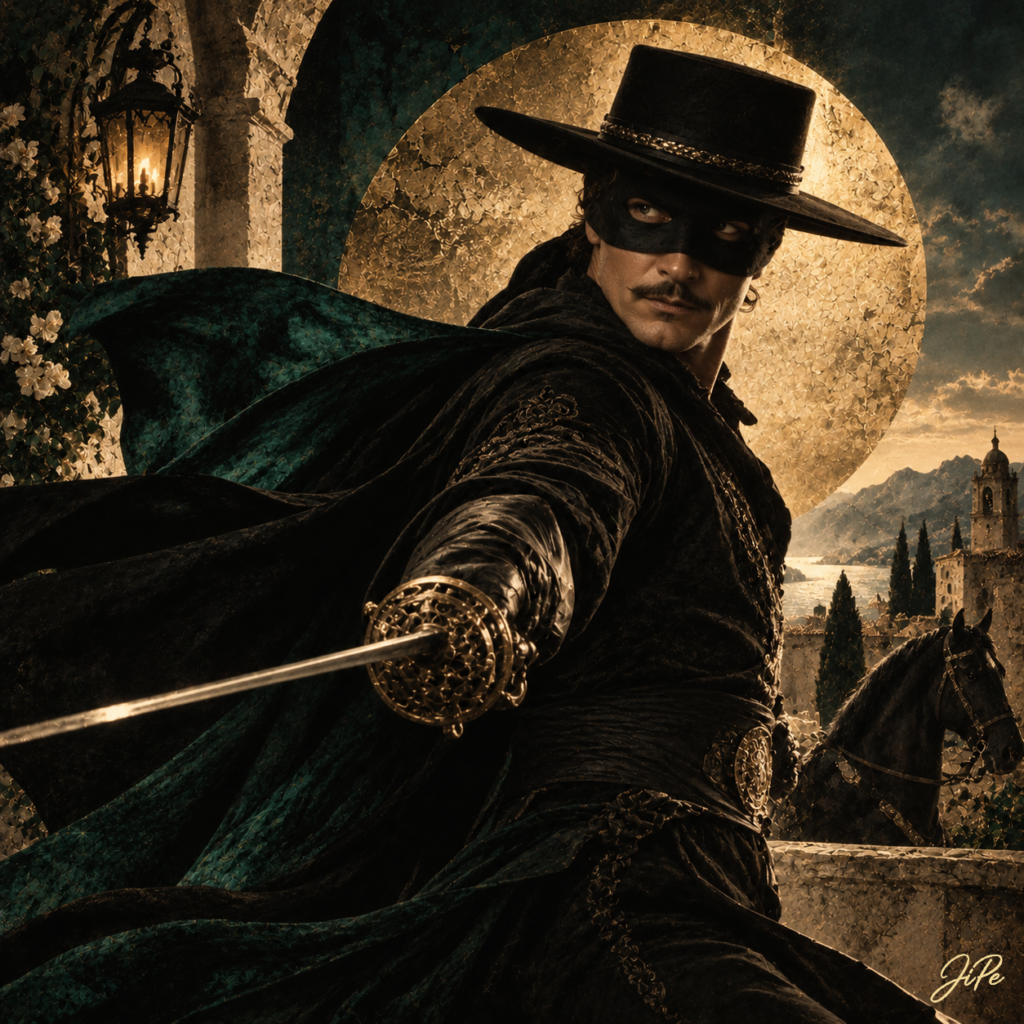
Zorro occupies the instant before action becomes consequence. The masked figure is held between concealment and exposure, his presence sharpened by an atmosphere of suspended motion. Light gathers behind him with almost ceremonial intensity, while the surrounding darkness preserves the secrecy on which his identity depends. Power here is not expressed through spectacle alone, but through restraint—the discipline of waiting, watching, and choosing when to act.
Created by Johnston McCulley in 1919, Zorro became one of popular culture’s most enduring masked heroes. Across novels, cinema, television, and comics, the character’s black mask, sword, and double identity became internationally recognizable, influencing generations of later vigilante figures. Yet fame has also transformed Zorro from an individual character into something closer to an archetype: a name suspended between justice, rebellion, performance, and myth.
The work draws its tension from that ambiguity. The heroic silhouette promises certainty, while the hidden face denies complete access. Elegance and danger coexist; public legend and private identity remain inseparable yet opposed.
Perhaps Zorro ultimately leaves us before a more difficult question: when a person disappears behind a symbol, does the mask conceal the self—or become the truest version of it?