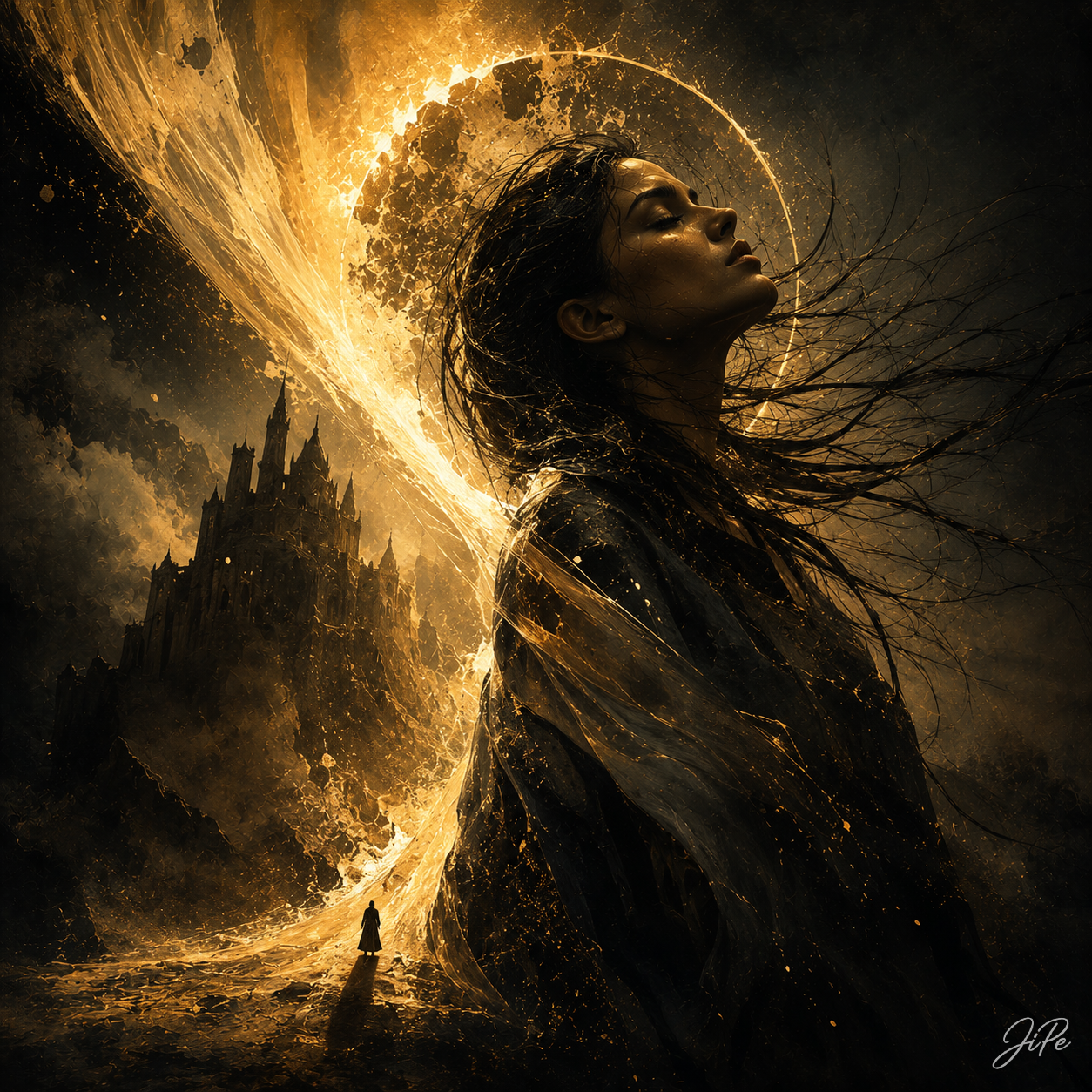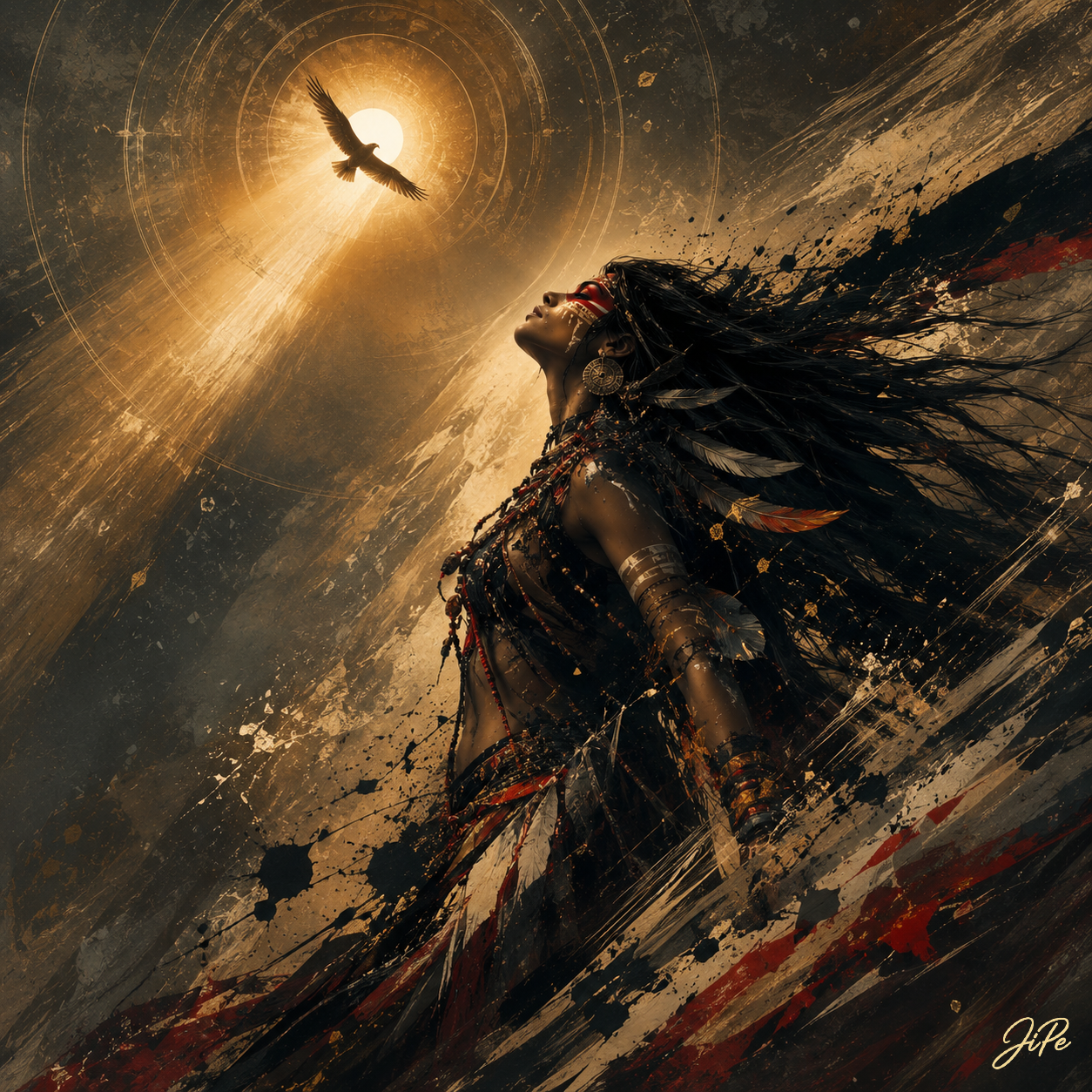

In Witness of the Moon, presence is concentrated into an encounter that feels at once immediate and unreachable. The gaze does not simply meet the viewer; it seems to hold its position across an unseen distance, carrying the stillness of someone who has already witnessed what remains hidden from others. Around this intensity, space fragments and reforms, suggesting a world in which inner and outer realities no longer remain entirely separate.
Light appears in traces rather than revelation. It touches, interrupts, and withdraws, leaving darkness to preserve what cannot be disclosed. The tension between concealment and exposure gives the work its psychological charge: identity seems simultaneously asserted and obscured, as though every act of seeing also creates another form of secrecy.
The title introduces the moon not as an answer but as a silent counterpart—something distant that observes without intervening, keeping its own measure of time. To become its witness might imply solitude, vigilance, memory, or a knowledge acquired beyond ordinary language.
Yet the direction of that witnessing remains uncertain. Is she looking outward from the threshold of another world, or are we the ones being observed from somewhere beyond our own?