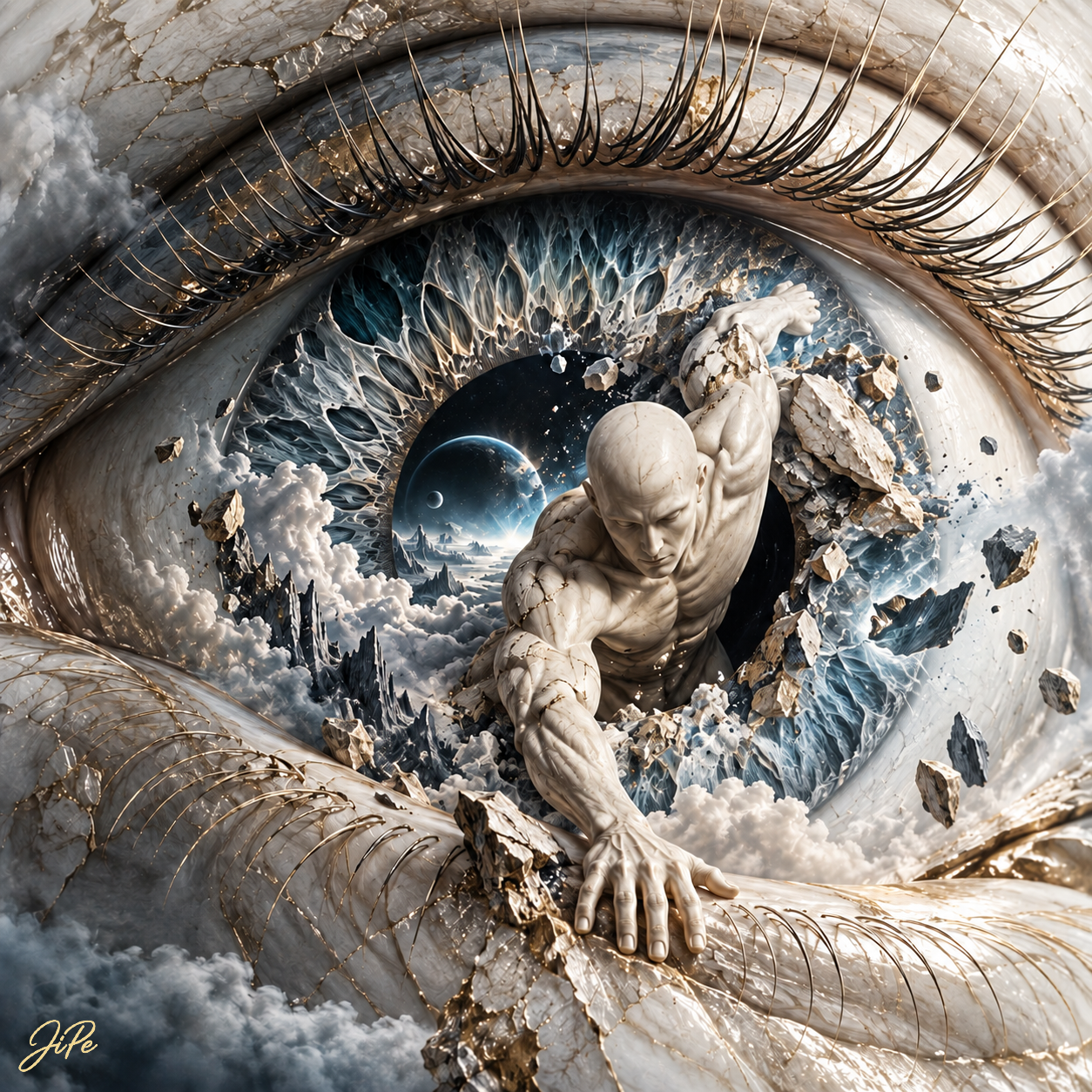
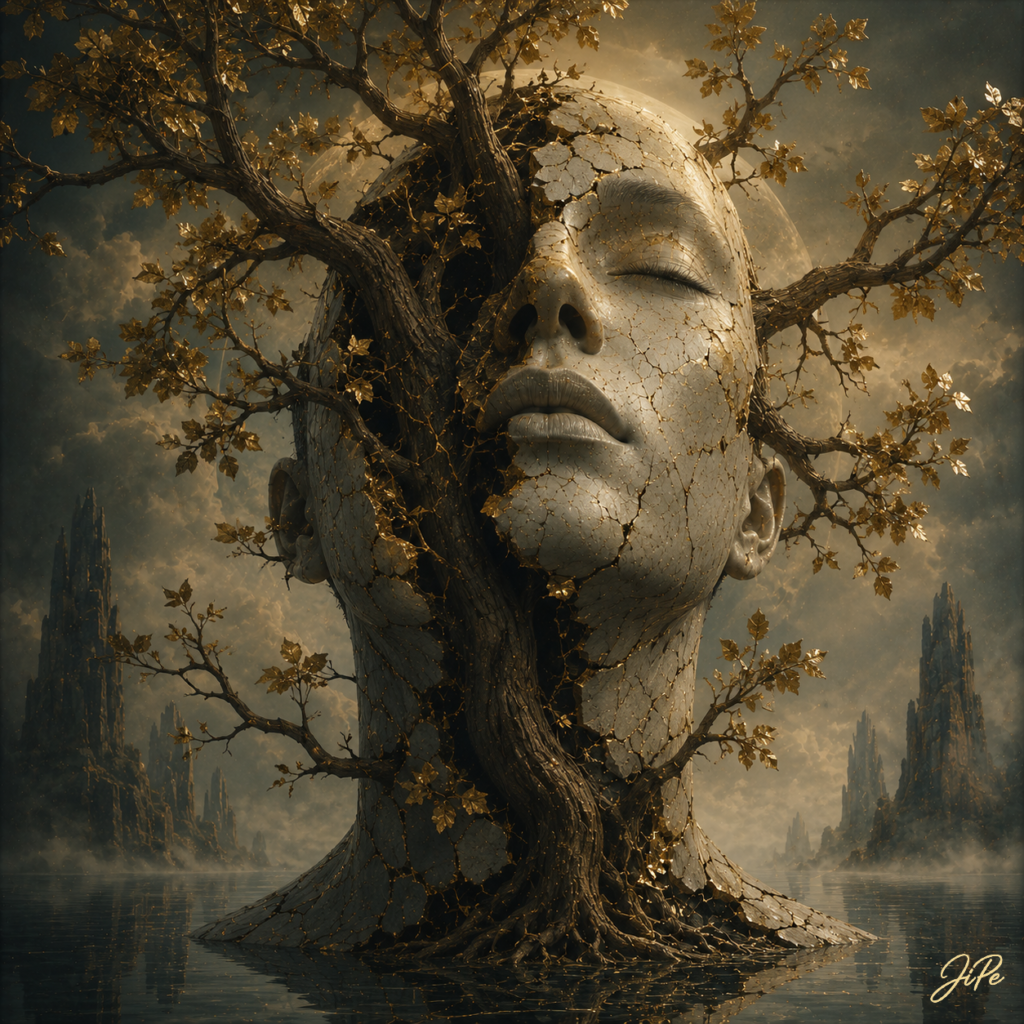
What the Earth Became confronts us with a presence that seems neither entirely human nor entirely landscape. Identity has become inseparable from the world that contains it, as though the distinction between inner life and living matter has quietly dissolved. The monumental scale creates a strange intimacy: something vast appears vulnerable, while something fractured continues to endure.
There is tension between erosion and growth, between what has been broken and what persists through the break. Light settles gently across this transformation, refusing the drama of catastrophe. Instead, it gives the scene an almost suspended calm, suggesting a time beyond urgency, after familiar definitions of loss and survival have ceased to be sufficient.
The title carries the weight of aftermath. What the Earth Became does not specify what preceded this state, leaving open whether we are witnessing consequence, adaptation, memory, or an unfamiliar form of renewal. Human presence and the natural world no longer appear opposed; their boundaries have become impossible to locate.
Perhaps the deepest uncertainty lies in whether this transformation should be mourned. The face seems at peace, yet the world around it feels irrevocably altered. What remains unanswered is whether we are looking at the end of something—or at life after the idea of separation has disappeared.