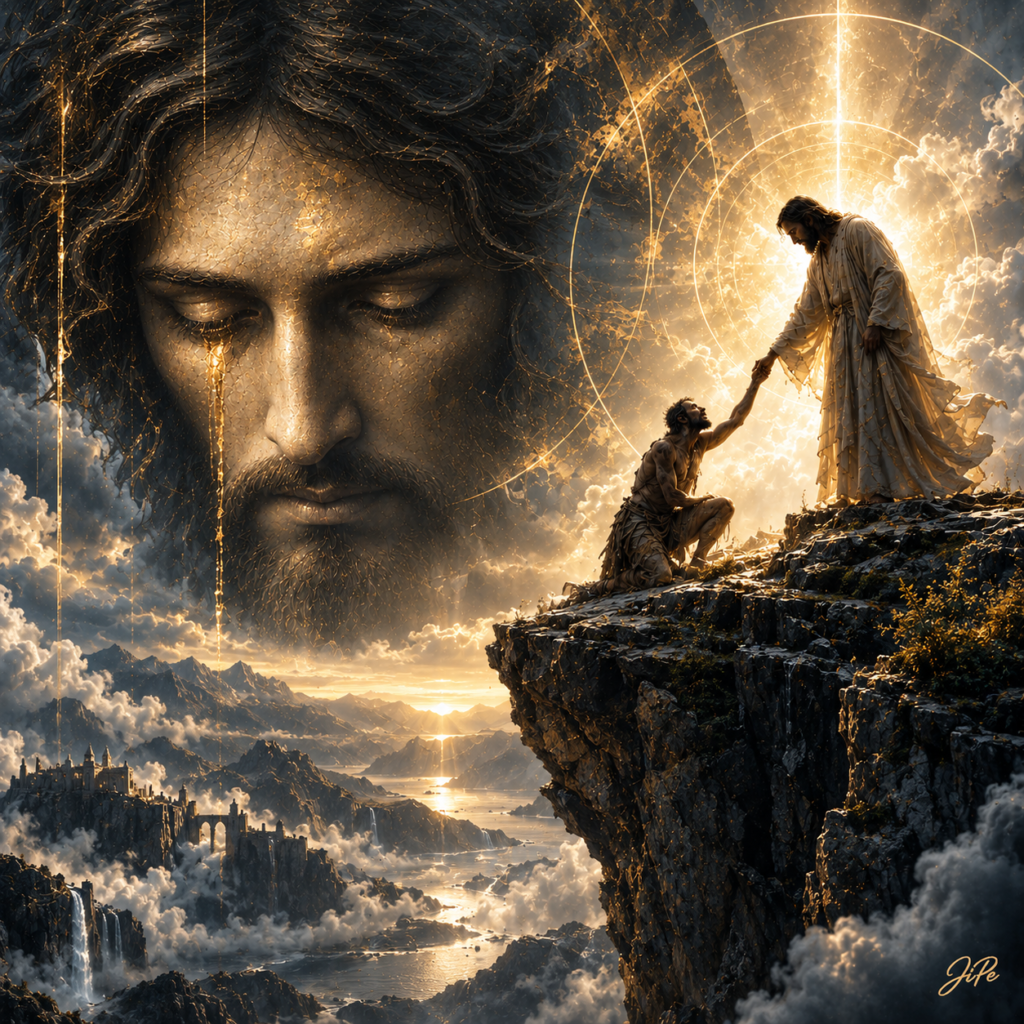
The Hand of Redemption is held in the fragile interval between collapse and return. An encounter unfolds at the edge of a vastness where human vulnerability is set against an almost immeasurable order. Yet the work’s emotional gravity gathers not in its scale, but in the smallest point of contact: one hand accepting the weight of another.
Redemption here does not appear as triumph. It carries the quiet difficulty of being reached when one has fallen too far to imagine rising alone. Light surrounds the gesture without resolving it, illuminating both mercy and dependence, strength and surrender. The monumental presence suspended beyond the scene deepens this tension, suggesting that what occurs between two beings may belong simultaneously to something intimate and something far larger.
The title, The Hand of Redemption, leaves uncertain where redemption truly resides. Is it in the hand extended, the hand that reaches back, or in the willingness of both to close the distance between them?
Perhaps salvation begins neither in power nor certainty, but in that brief and precarious moment when separation ends—and one presence chooses not to release the other.