The Crack Between Worlds

The Crack Between Worlds is a powerful meditation on rupture, transformation, and the invisible threshold between destruction and creation. Positioned at the intersection of abstract expression, symbolic landscape, and visionary art, the painting captures a singular moment when opposing realities appear to collide. Rather than depicting catastrophe alone, the work explores the profound philosophical idea that every fracture carries within it the possibility of emergence, renewal, and revelation. It is an image of transition—not between places, but between states of being.
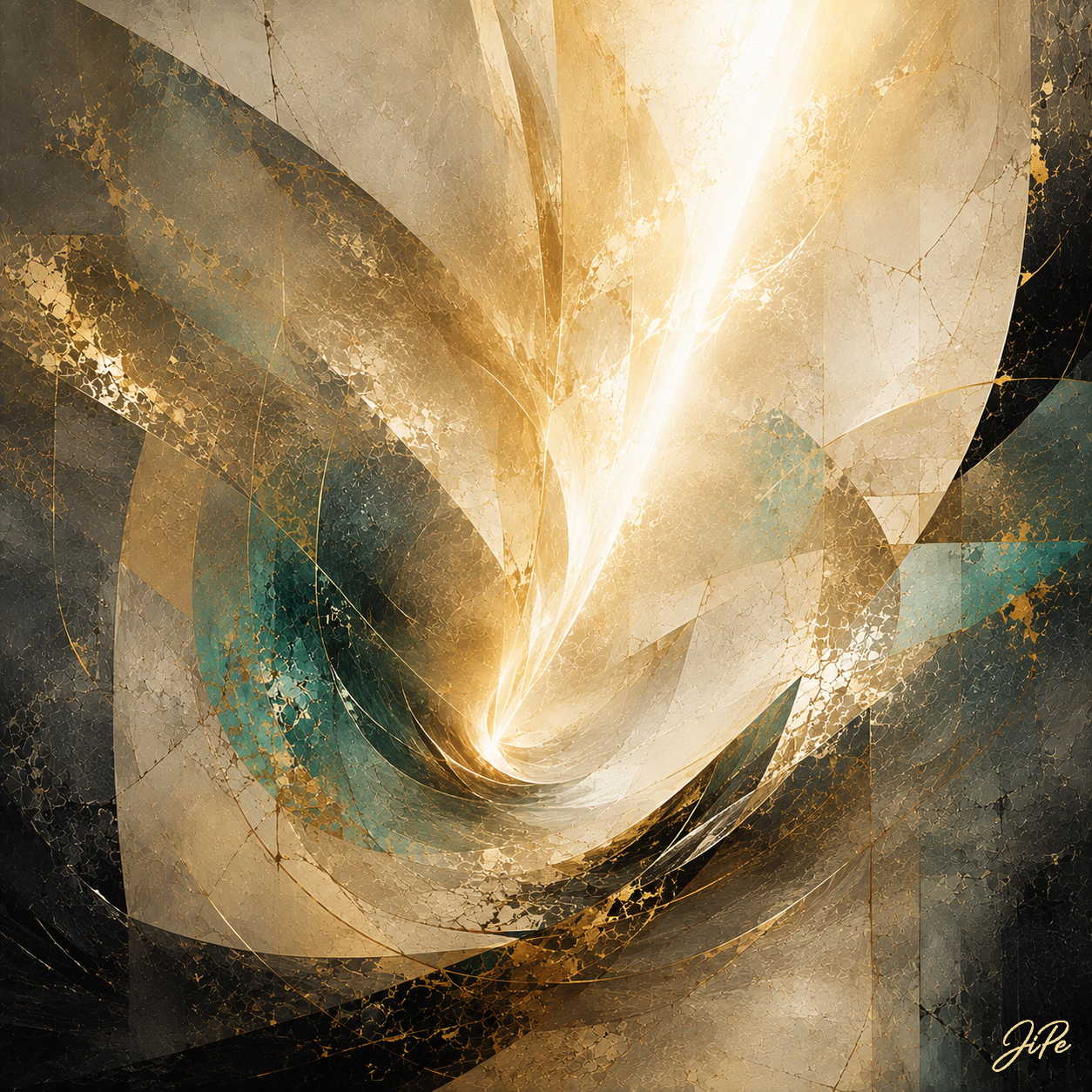
At the center of the composition, an immense fissure erupts across the surface like a wound in reality itself. A brilliant explosion of incandescent light tears through layers of darkness, igniting the surrounding landscape with extraordinary intensity. The crack is neither random nor merely destructive. It functions as the painting’s symbolic axis—a point where hidden energies break through the visible world, transforming collapse into creation. The viewer is left uncertain whether they are witnessing the end of one universe or the birth of another.
The title, The Crack Between Worlds, deliberately evokes the timeless motif of the threshold. Across mythology, philosophy, and spiritual traditions, moments of transformation are often represented as passages between realities—between life and death, certainty and mystery, ignorance and enlightenment. This painting reimagines that universal symbol in contemporary visual language. The fracture becomes neither obstacle nor catastrophe, but a gateway through which unseen possibilities emerge.
The composition is built around an extraordinary contrast between darkness and light. Deep charcoal blacks, weathered earth tones, and scorched reds create an atmosphere of immense tension, while the brilliant white-gold center radiates outward with almost overwhelming force. Yet the light does not erase the darkness. Instead, the two exist in profound dialogue, reinforcing one of the painting’s central philosophical ideas: illumination derives its greatest meaning from its relationship with shadow. Without darkness, light cannot reveal itself.
Running horizontally across the composition is the silhouette of a distant architectural landscape. Barely visible through layers of smoke, abstraction, and textured surfaces, these fragmented structures resemble forgotten cities, ruined civilizations, or memories suspended between existence and disappearance. Their ambiguous presence invites multiple interpretations. They may represent humanity’s achievements, the fragile constructions of identity, or the impermanent nature of every civilization confronted by the vast forces of time and transformation.
Texture plays an essential role in communicating the emotional power of the work. Thick painterly surfaces, fractured layers, weathered impasto, and expressive vertical drips create the impression that the painting itself has endured immense pressure. Rather than functioning merely as visual effects, these tactile qualities become part of the narrative. The surface appears scarred, eroded, and rebuilt, echoing the geological processes that shape mountains, continents, and human lives alike. Every crack becomes a record of transformation rather than damage.
The explosive center radiates with remarkable symbolic richness. It recalls volcanic eruption, lightning, stellar birth, and spiritual revelation simultaneously. This deliberate ambiguity allows the work to transcend literal interpretation. The explosion becomes a universal metaphor for awakening—a moment when invisible forces suddenly become visible and previously separate realities intersect. What initially appears violent gradually reveals itself as profoundly creative, suggesting that the birth of new understanding often arrives through the collapse of familiar structures.
Color contributes significantly to the painting’s emotional resonance. Fiery crimson, molten amber, luminous ivory, and deep obsidian create a dramatic palette associated with elemental forces. Fire traditionally symbolizes purification, energy, transformation, and renewal. Here, it appears not as an agent of destruction alone but as the catalyst through which hidden truths emerge. The restrained use of color intensifies every luminous passage, allowing the central eruption to dominate the composition with extraordinary psychological impact.
Despite its apparent spontaneity, the composition demonstrates remarkable structural sophistication. The explosive center anchors every visual movement, while diagonal fractures and radiating lines carry the viewer’s gaze outward through successive layers of texture and atmosphere. The subtle balance between horizontal stability and vertical disruption generates a dynamic tension that prevents the image from becoming static. Every gesture appears carefully orchestrated, creating a rhythm that alternates between stillness and eruption.
Within the broader history of art, The Crack Between Worlds engages with several significant traditions while establishing a distinctly contemporary visual language. Its expressive energy recalls the emotional freedom of Abstract Expressionism, where gesture becomes the direct expression of psychological experience. The symbolic ambition aligns with the aspirations of nineteenth-century Symbolism, while its monumental atmosphere echoes Romantic explorations of the sublime. Yet the painting extends beyond these influences by incorporating the cinematic scale and philosophical openness characteristic of contemporary visionary art.
For art historians, the work may also be understood through the lens of kintsugi, the Japanese philosophy of embracing fracture as an essential part of beauty. Although no literal gold repairs appear across the surface, the radiant fissure performs a similar symbolic function. The rupture does not diminish the world it divides; instead, it reveals its hidden vitality. What is broken becomes illuminated. What appears damaged becomes transformed into a source of meaning and renewal.
The painting further invites reflection upon humanity’s relationship with uncertainty. Modern life often seeks permanence, clarity, and control, yet The Crack Between Worlds suggests that the most significant transformations arise precisely where certainty fails. The fissure becomes the place where rigid structures dissolve, allowing imagination, resilience, and new possibilities to emerge. In this sense, the work speaks not only of cosmic events but of deeply personal experiences—the moments when loss, change, or crisis become the beginning of profound inner evolution.
The absence of a visible human figure makes the viewer an active participant in the narrative. Standing before the work, one instinctively occupies the space of the unseen witness, confronting the immense rupture directly. This subtle compositional strategy transforms observation into experience. The viewer is not merely looking at a fracture between worlds; they stand before it, invited to contemplate what lies beyond its brilliant threshold.
Ultimately, The Crack Between Worlds is not a painting about destruction but about possibility. It reminds us that every ending contains the seed of a beginning, that every collapse conceals an unseen horizon, and that the deepest transformations rarely occur within comfort or certainty. The luminous fissure becomes a universal symbol of hope hidden within upheaval—a reminder that the greatest moments of creation often begin when the familiar world breaks open and allows a new reality to emerge. Through its extraordinary balance of abstraction, symbolism, and emotional intensity, the work invites viewers to reconsider the fractures within their own lives, not as signs of failure, but as the places where light first finds its way through.