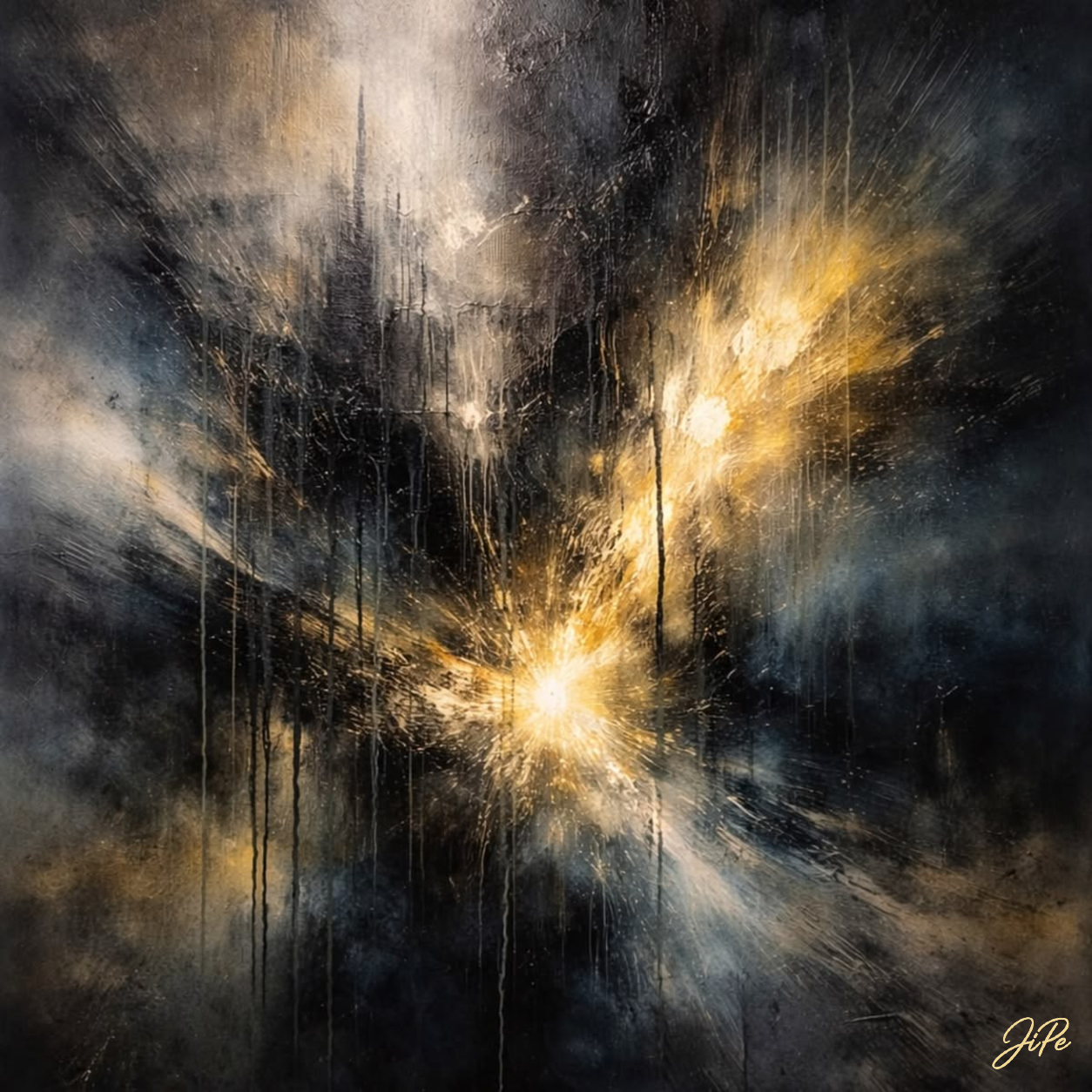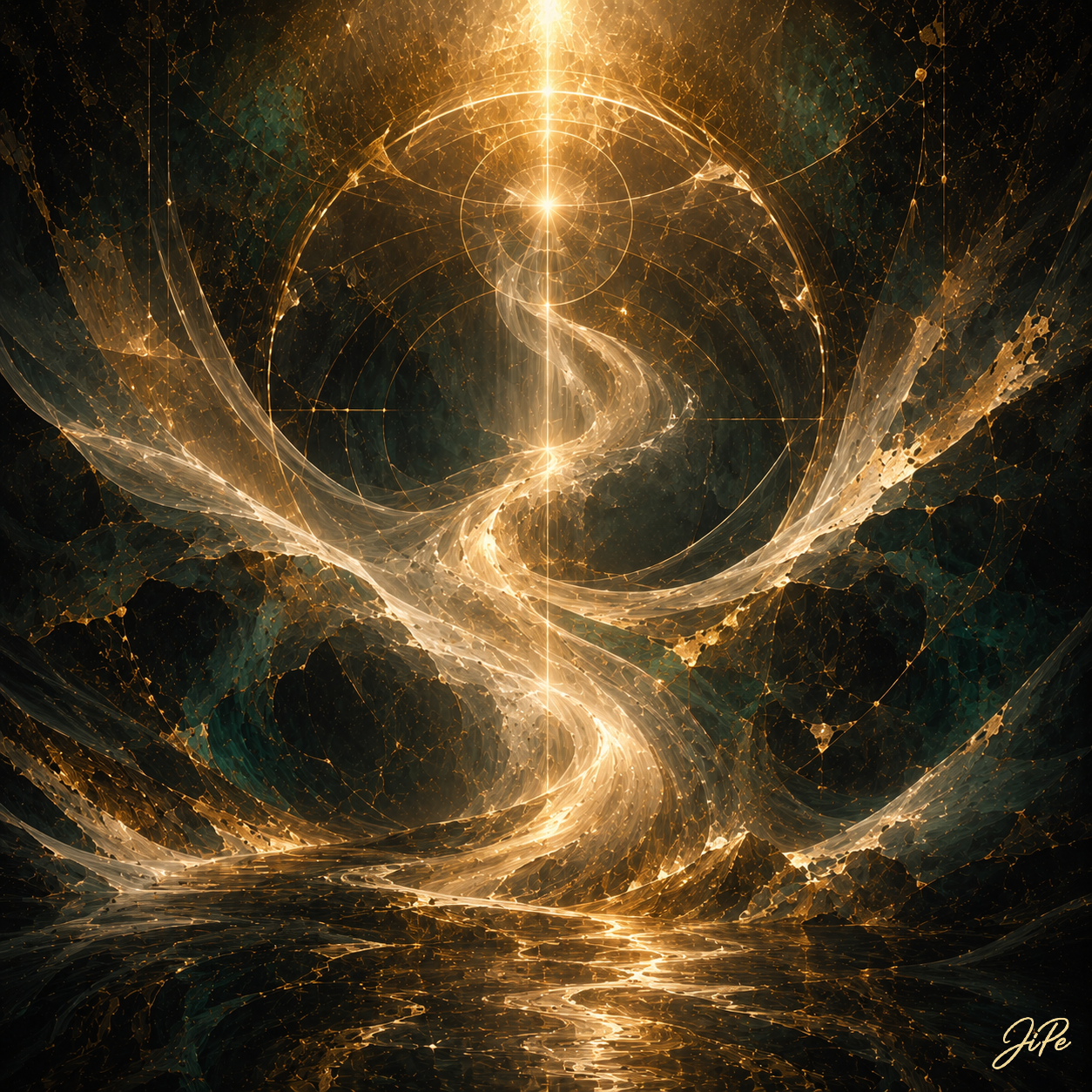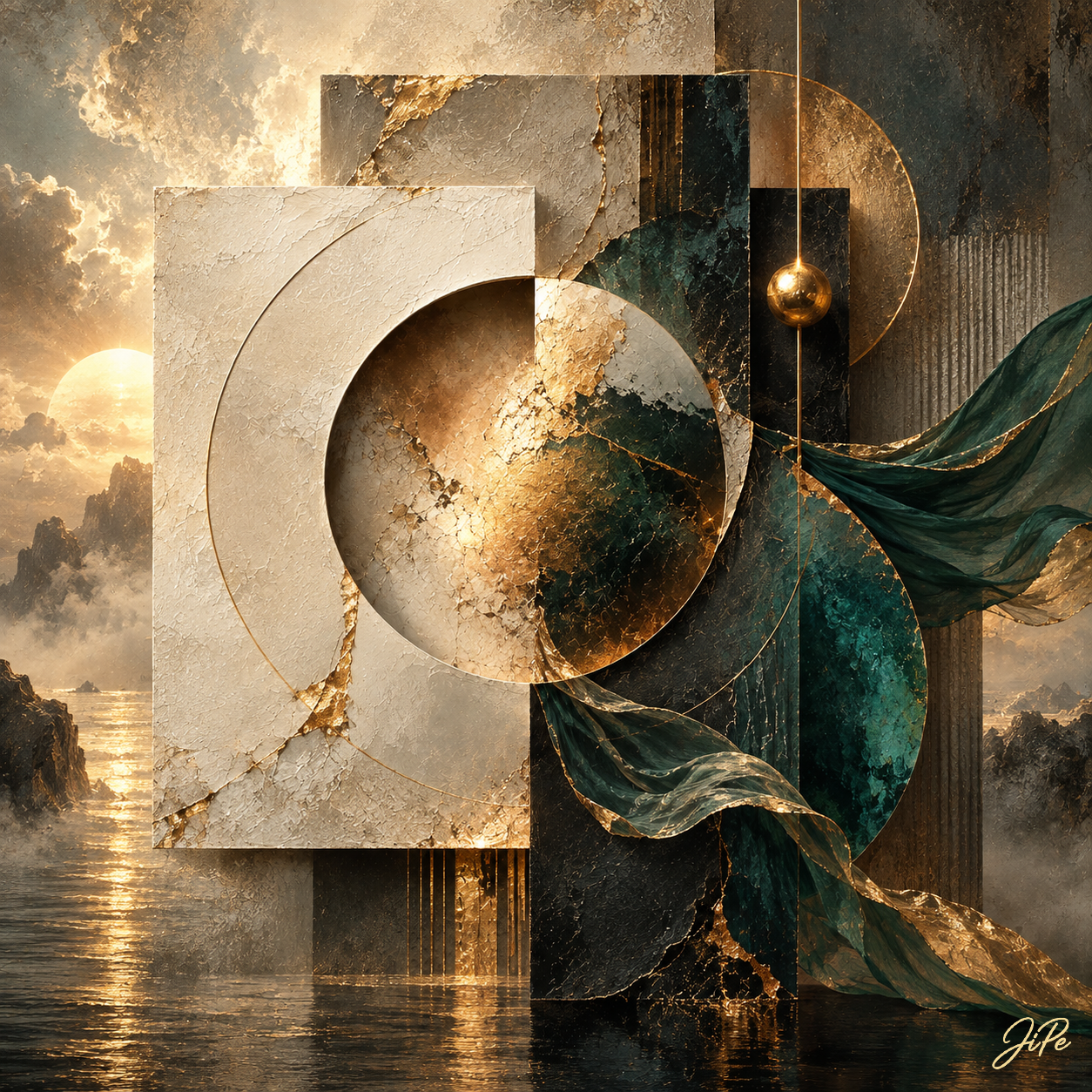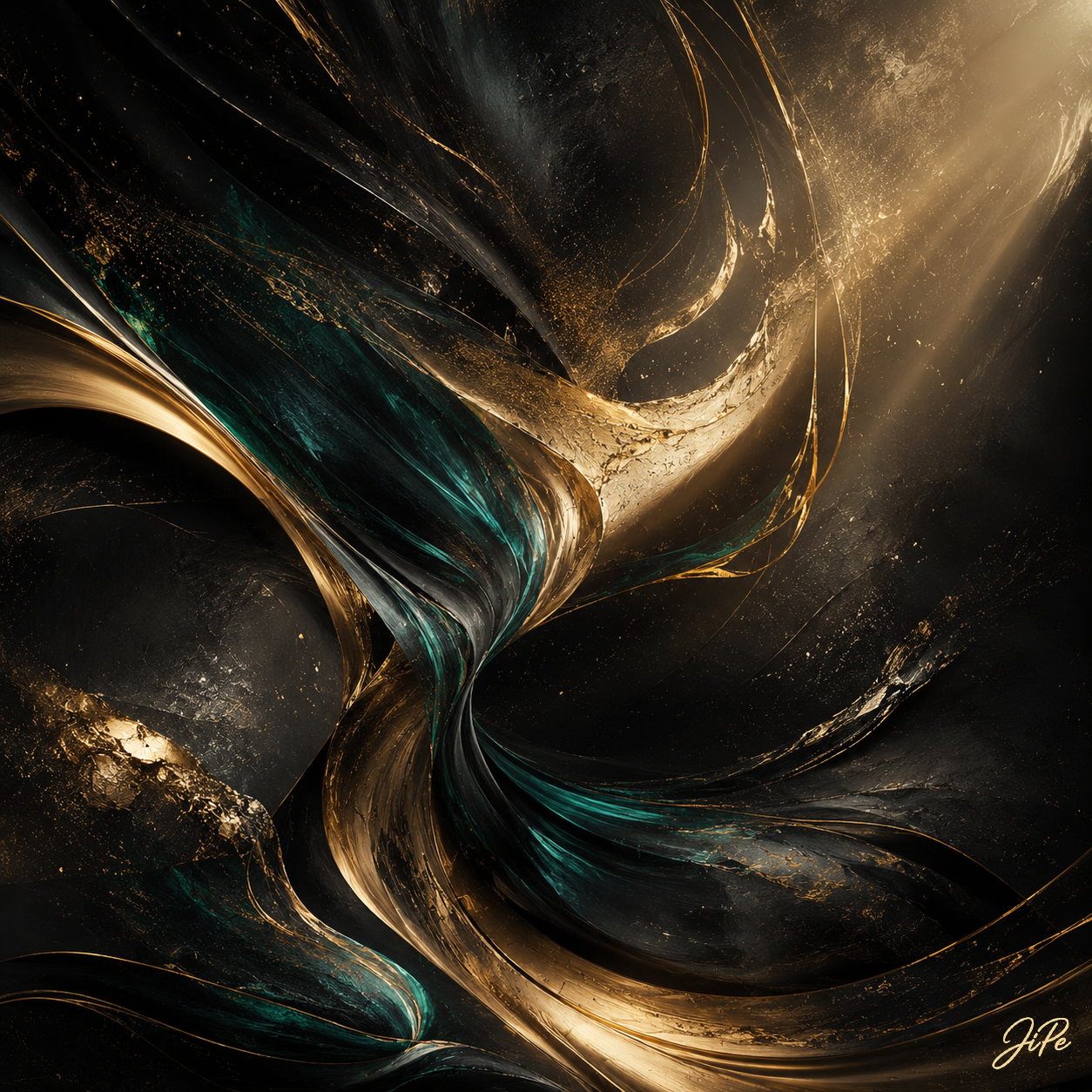
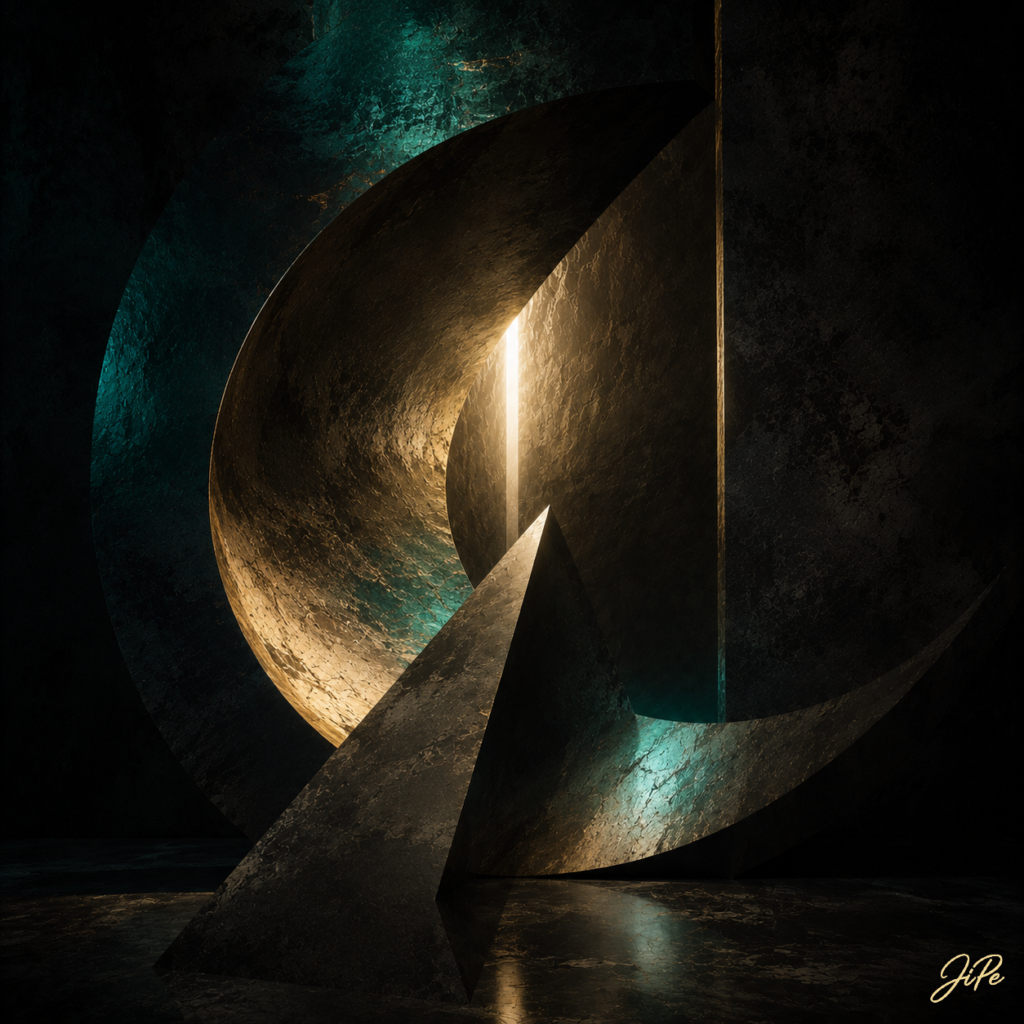
The Form That Guarded the Light inhabits a realm of profound stillness, where monumental forms appear suspended between concealment and revelation. An atmosphere of solemn restraint surrounds the composition, its imposing presence tempered by a narrow luminosity that seems to exist beyond the reach of the darkness enclosing it. Space becomes uncertain, suggesting an interior without boundaries, a sanctuary whose purpose remains deliberately unresolved.
There is an uneasy intimacy in the relationship between protection and confinement. The surrounding forms possess an almost watchful gravity, as though their silence conceals an ancient obligation. Yet the light they appear to shelter also exposes their vulnerability, introducing a quiet tension between what must be preserved and what cannot remain hidden indefinitely. Its presence feels neither accidental nor entirely secure.
The work suggests that preservation may demand a certain withdrawal from the world, and that what is most carefully guarded may also be what is most deeply feared. Beneath its apparent equilibrium lies the possibility of change, restrained but never extinguished.
Nothing reveals whether the luminous presence is waiting to emerge or gradually being enclosed. Perhaps the unresolved question is whether the form exists to protect the light from the darkness beyond, or to protect the darkness from what the light might reveal.