
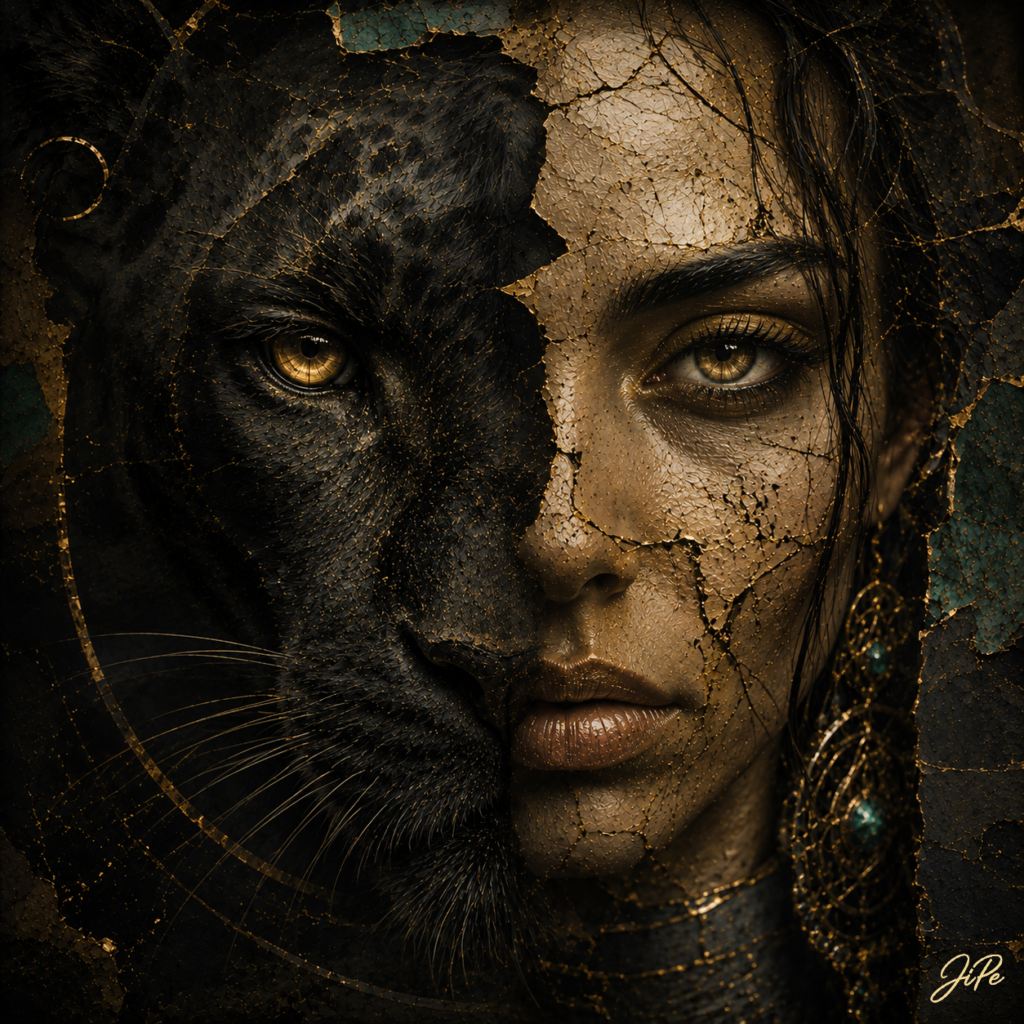
The Covenant of the Black Lion confronts the viewer with a union so complete that distinction begins to feel uncertain. Two presences occupy the same psychological space, neither subordinate to the other. Their proximity carries an unusual stillness: intimate without tenderness, powerful without aggression, as though an ancient recognition has occurred beyond the reach of language.
The tension lies in the boundary between them. What appears divided also seems inseparable, and the fractures crossing their shared presence suggest not destruction but a fragile condition of belonging. Darkness holds its own authority here, while restrained traces of light move across the surface like something remembered rather than revealed. The gaze becomes the work’s most immediate threshold—direct, composed, and impossible to resolve into either challenge or acceptance.
The title introduces the idea of a covenant: a bond that may precede choice, carrying both protection and obligation. Yet nothing confirms who has entered into it, or what has been promised. Human and animal presence seem to approach a deeper equivalence, where instinct and consciousness no longer occupy opposing territories.
Perhaps every covenant asks for something in return. What remains uncertain is whether this one demands loyalty to another presence—or recognition of something that has always lived within.