
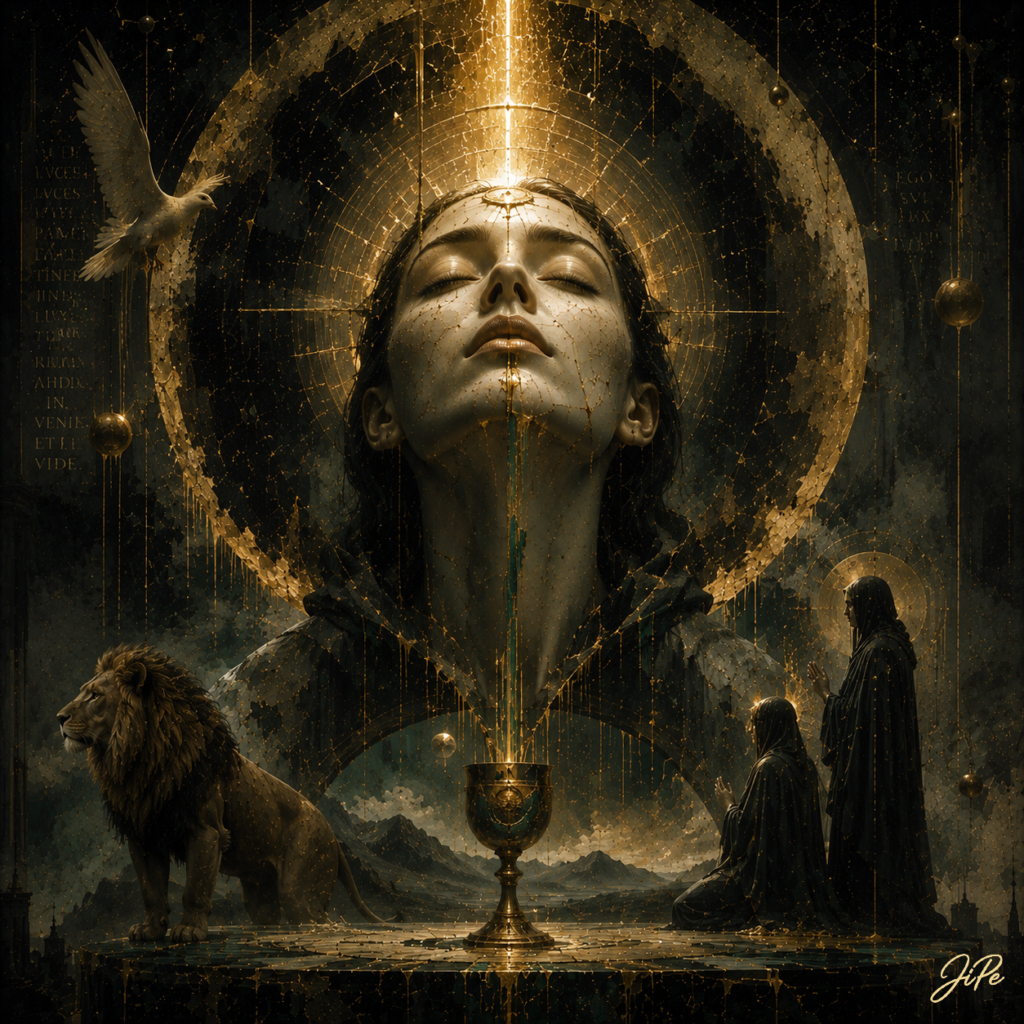
The Communion of the Golden Flame gathers its world around an act of profound stillness. Monumental presence and ritual intimacy occupy the same space, creating an atmosphere in which silence seems almost ceremonial. The central radiance does not merely illuminate; it establishes a vertical tension between what is earthly and what remains beyond comprehension.
Around this axis, the composition holds opposing forces in suspension: power and surrender, solitude and communion, vulnerability and permanence. The human presence appears absorbed into something larger without entirely disappearing within it. Light becomes both promise and demand, descending with an intensity that suggests revelation while withholding whatever might finally be revealed.
The title introduces communion not necessarily as union, but as proximity to an unknowable presence. To receive the golden flame may imply transformation, yet the work leaves uncertain what such transformation requires—or what must be relinquished before it can occur. Reverence is accompanied by unease; illumination carries its own shadow.
Perhaps the deepest tension lies in that threshold between receiving and becoming. When the light finally enters us, does it reveal what has always been there—or does something of the former self cease to exist?