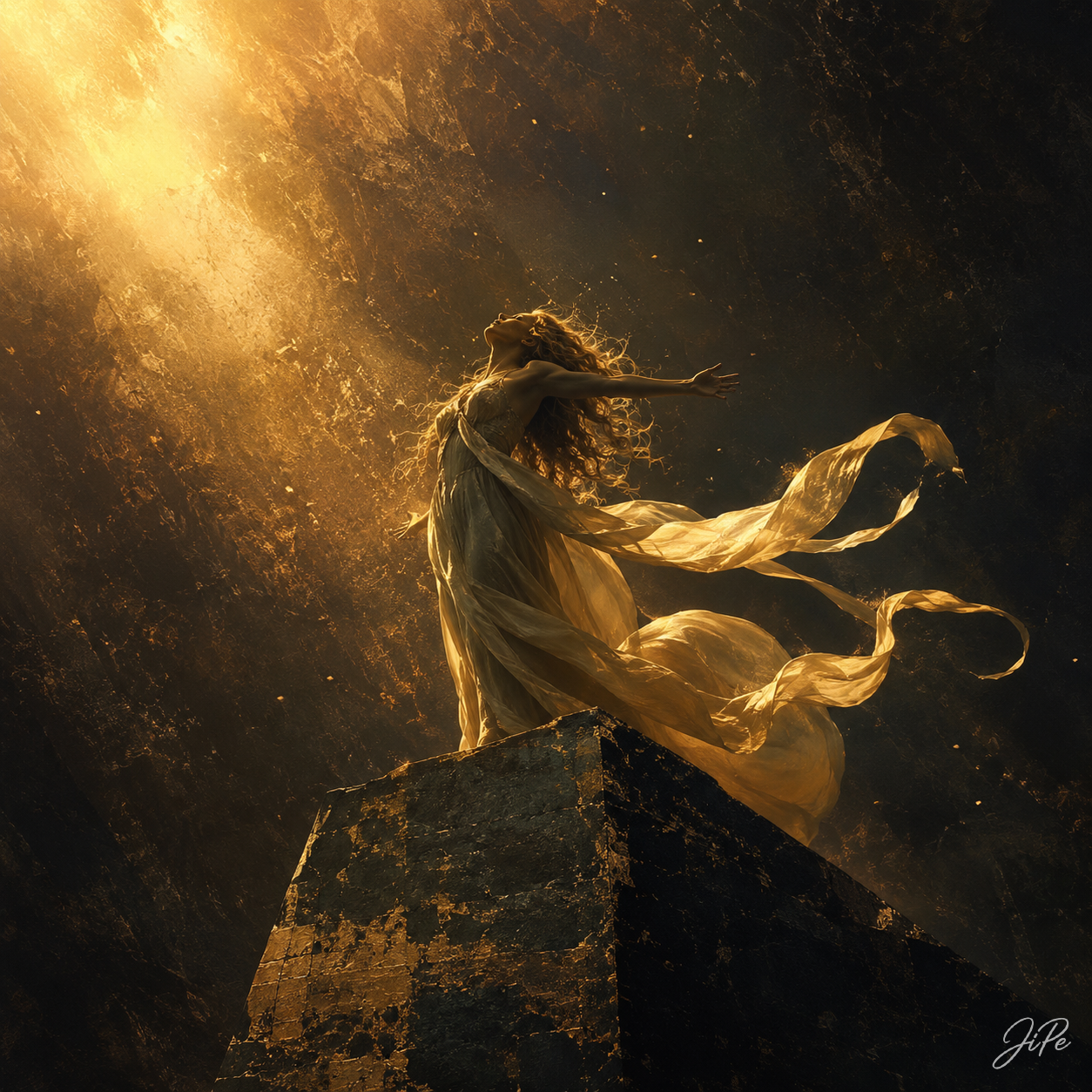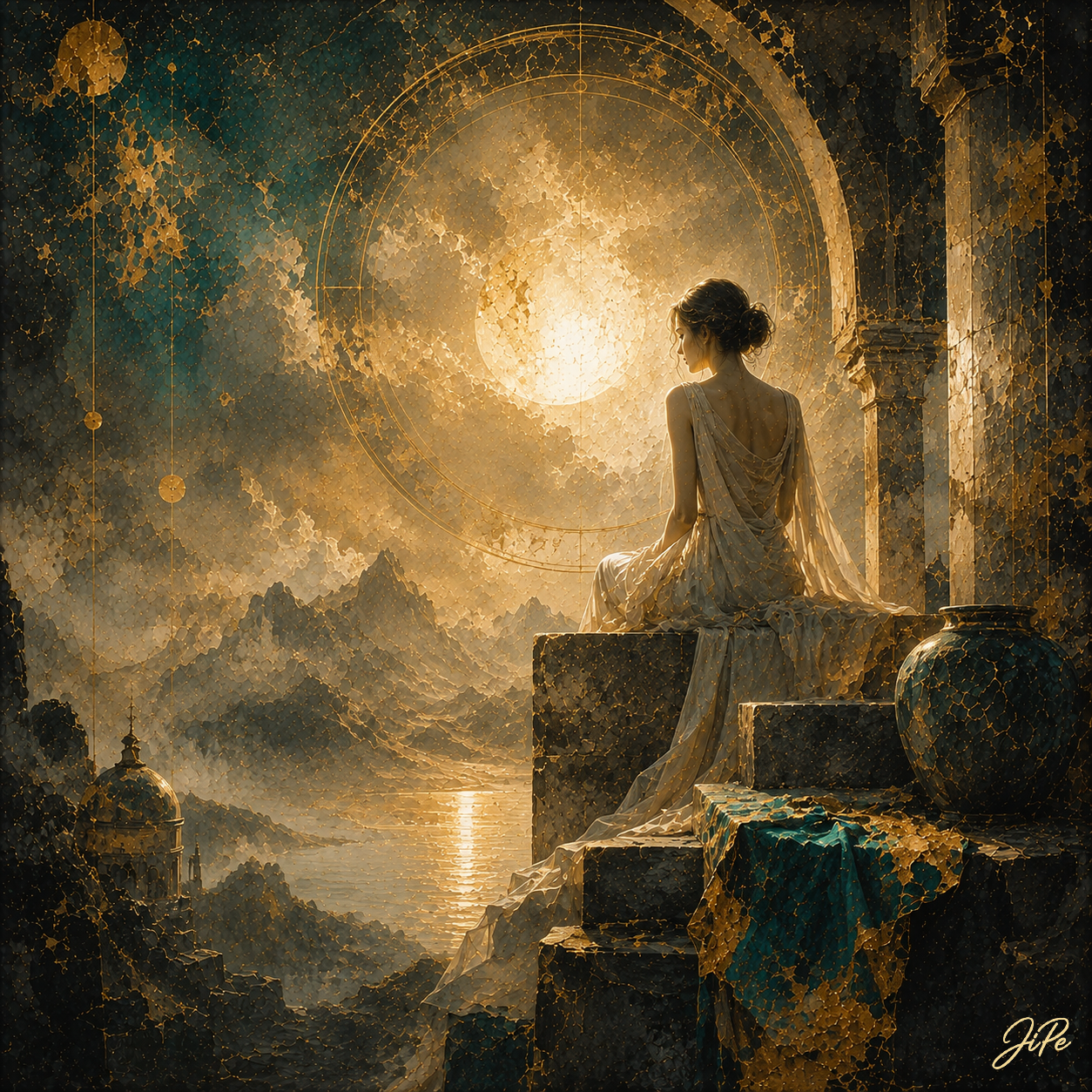
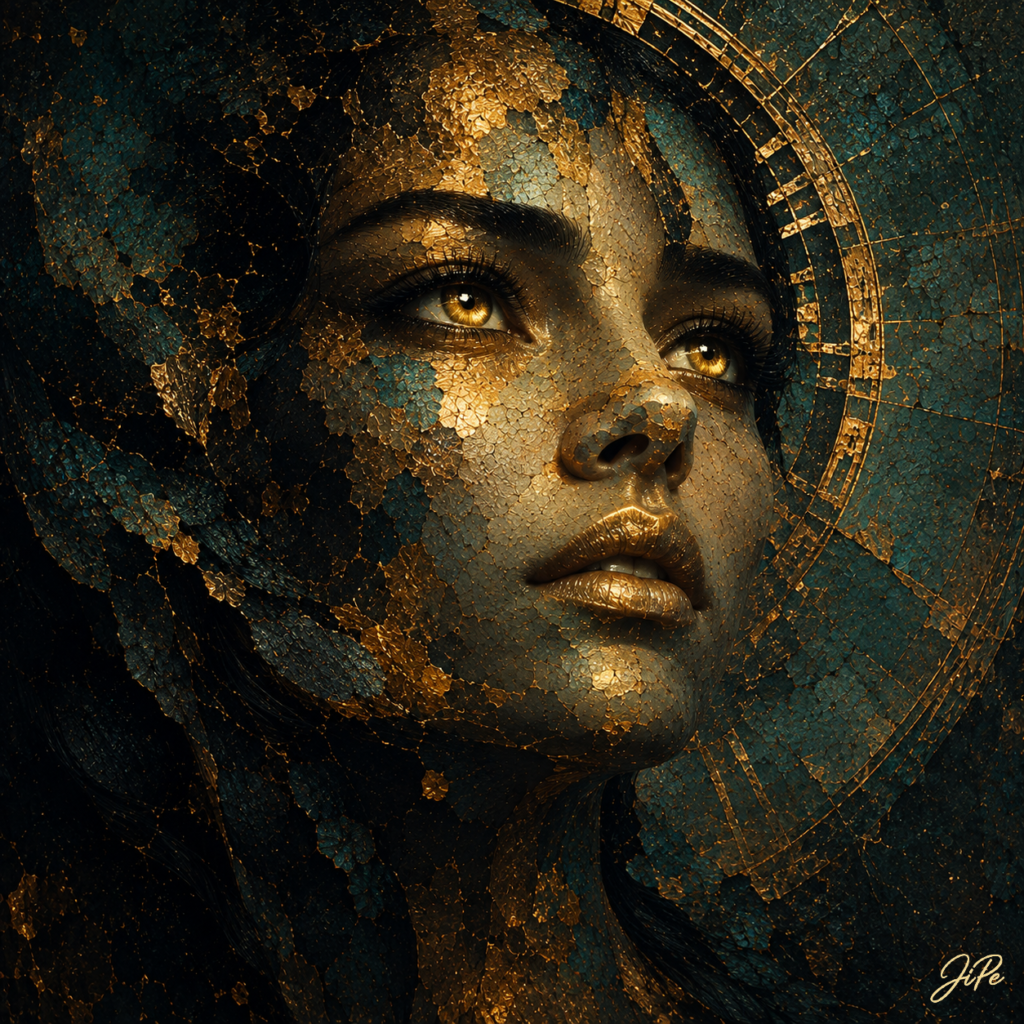
She Who Looked Beyond Time holds a moment of perception that seems detached from ordinary duration. Her gaze rises beyond the immediate field, fixed upon something neither visible nor entirely absent. The stillness of her expression carries no urgency; it suggests the strange calm that can emerge when the boundaries between memory, anticipation, and the present begin to dissolve.
Around her, order and erosion exist simultaneously. The measured geometry implies continuity, while the fractured surface speaks of everything that time alters. Between these opposing conditions, light becomes less an illumination than a trace of permanence—appearing through rupture, gathering in the eyes, and resisting the surrounding darkness without overcoming it.
The title proposes an impossible act: to look beyond the very structure through which human experience is understood. Yet the work leaves uncertain whether she has escaped time, witnessed its entirety, or simply reached a state in which past and future have ceased to remain separate.
Her expression offers no revelation. It preserves instead the distance between seeing and knowing, leaving one final uncertainty: if it were possible to look beyond time, would we discover what awaits us—or recognize what has always been there?