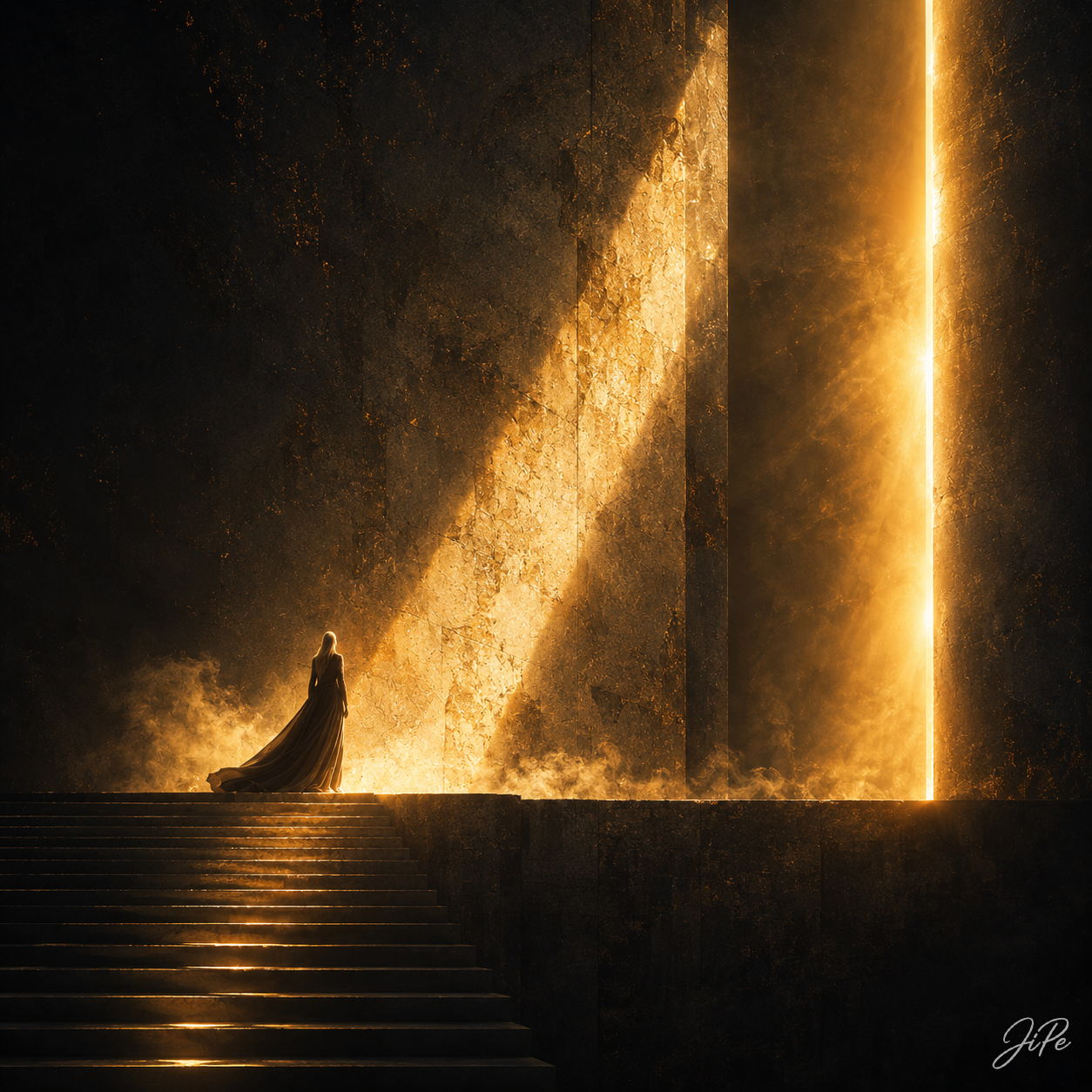

The Architecture of All Dreams unfolds as a space where inner life acquires impossible dimensions. A monumental presence and a solitary ascending figure coexist without belonging to the same scale, creating the sensation that one may be contained within the consciousness of the other. The distinction between dreamer and dream remains deliberately unstable.
The architecture offers passage, yet not certainty. Thresholds open onto distant light; steps rise toward an unseen destination; vast forms appear simultaneously solid and vulnerable. Everything seems constructed according to an order that can be sensed but never fully understood. Here, light does not simply reveal the way forward. It gathers around moments of transition, giving them the emotional weight of decisions not yet made.
The title suggests that dreams possess structure—that even the most private and elusive territories of consciousness may have corridors, foundations, repetitions, and hidden rooms. Yet architecture also implies limits. What is built can shelter us, but it can also determine where we are able to go.
Perhaps the deepest uncertainty lies in that contradiction: whether we create the spaces through which our inner lives move, or spend our lives wandering through structures that were already waiting for us.