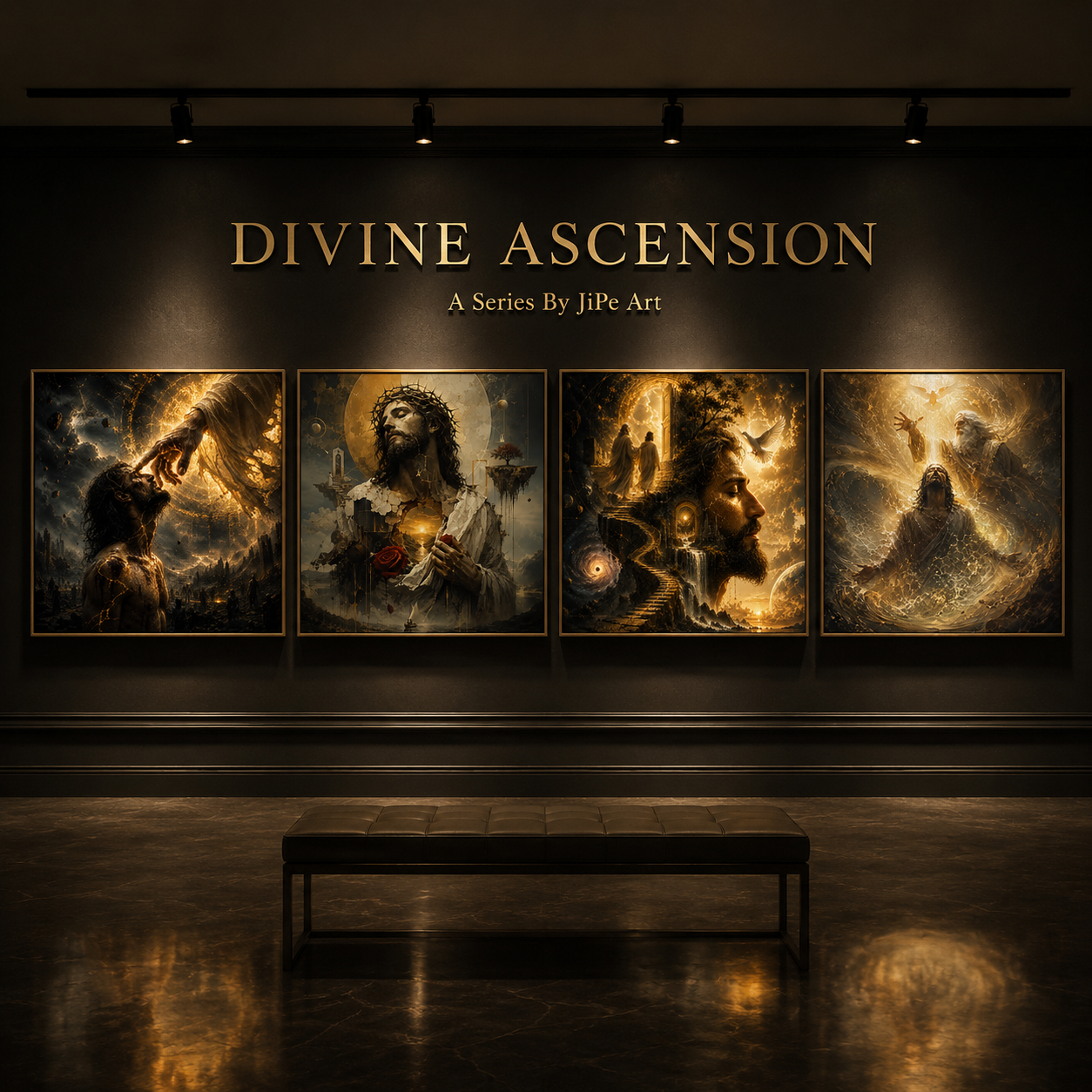
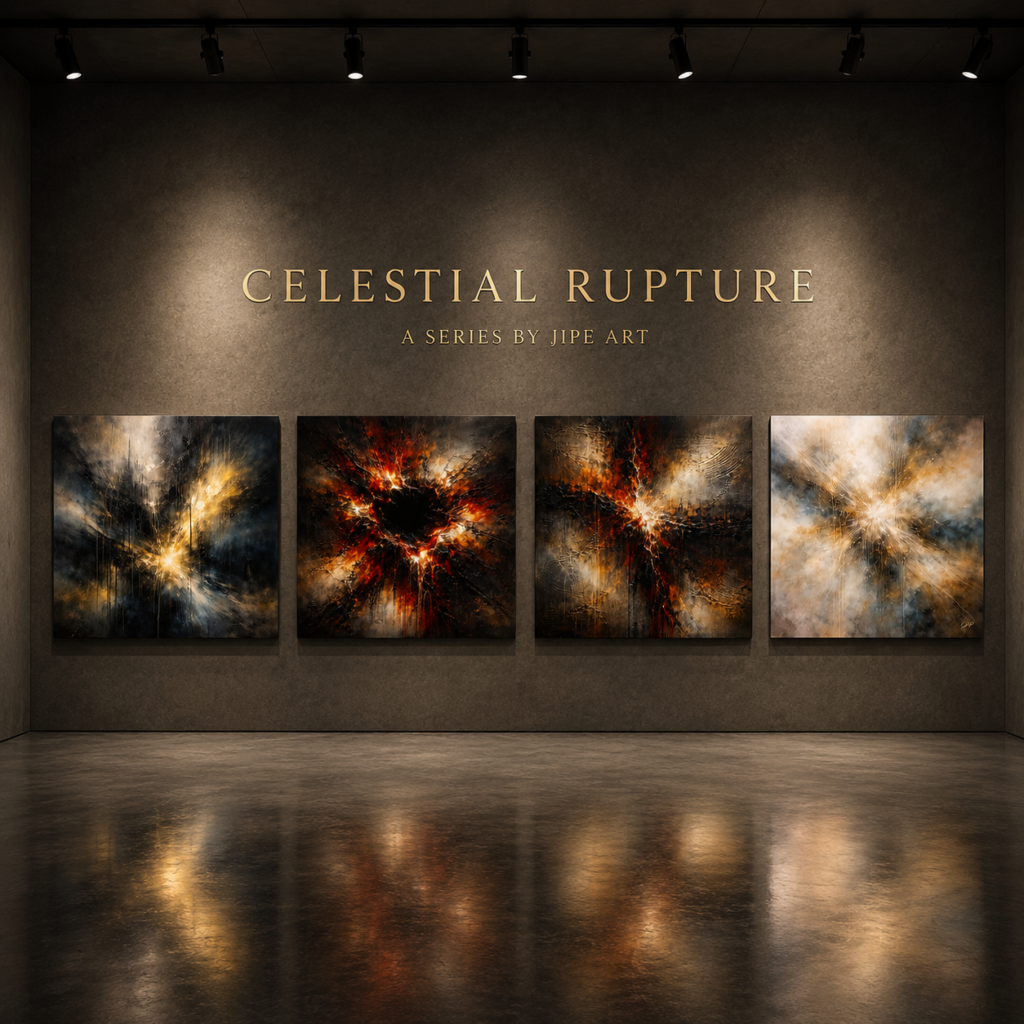
A volatile stillness occupies these works, as though immense forces have been arrested at the precise moment when coherence begins to fail. In Celestial Rupture, space no longer feels passive or continuous. It strains, fractures, and opens under pressures whose origins remain concealed, leaving light and darkness locked in an unstable relation.
Radiance emerges with contradictory force: at once generative and destructive, intimate and immeasurable. It does not simply illuminate what is present but seems to alter the conditions of presence itself. Around it, darkness acquires density, becoming a field against which each rupture feels more consequential. The absence of a stable human scale intensifies the uncertainty; these events might belong to the cosmos, to consciousness, or to some territory where the distinction between them has ceased to matter.
The title suggests that even the celestial is vulnerable to division. Order may contain the possibility of its own undoing, while rupture may conceal the beginnings of another order not yet visible.
What remains uncertain is whether these moments record a world coming apart—or the instant in which something previously impossible is finally able to enter.