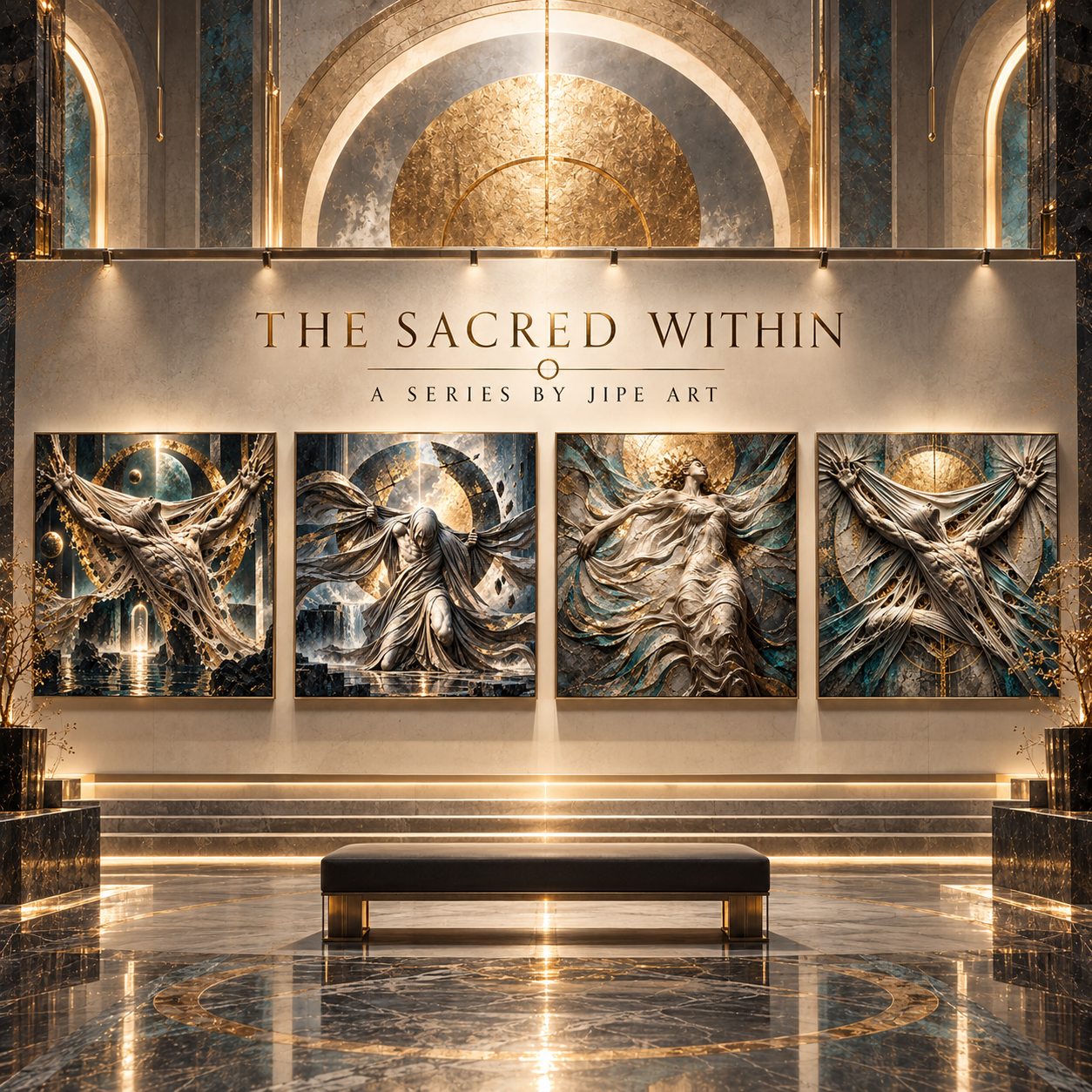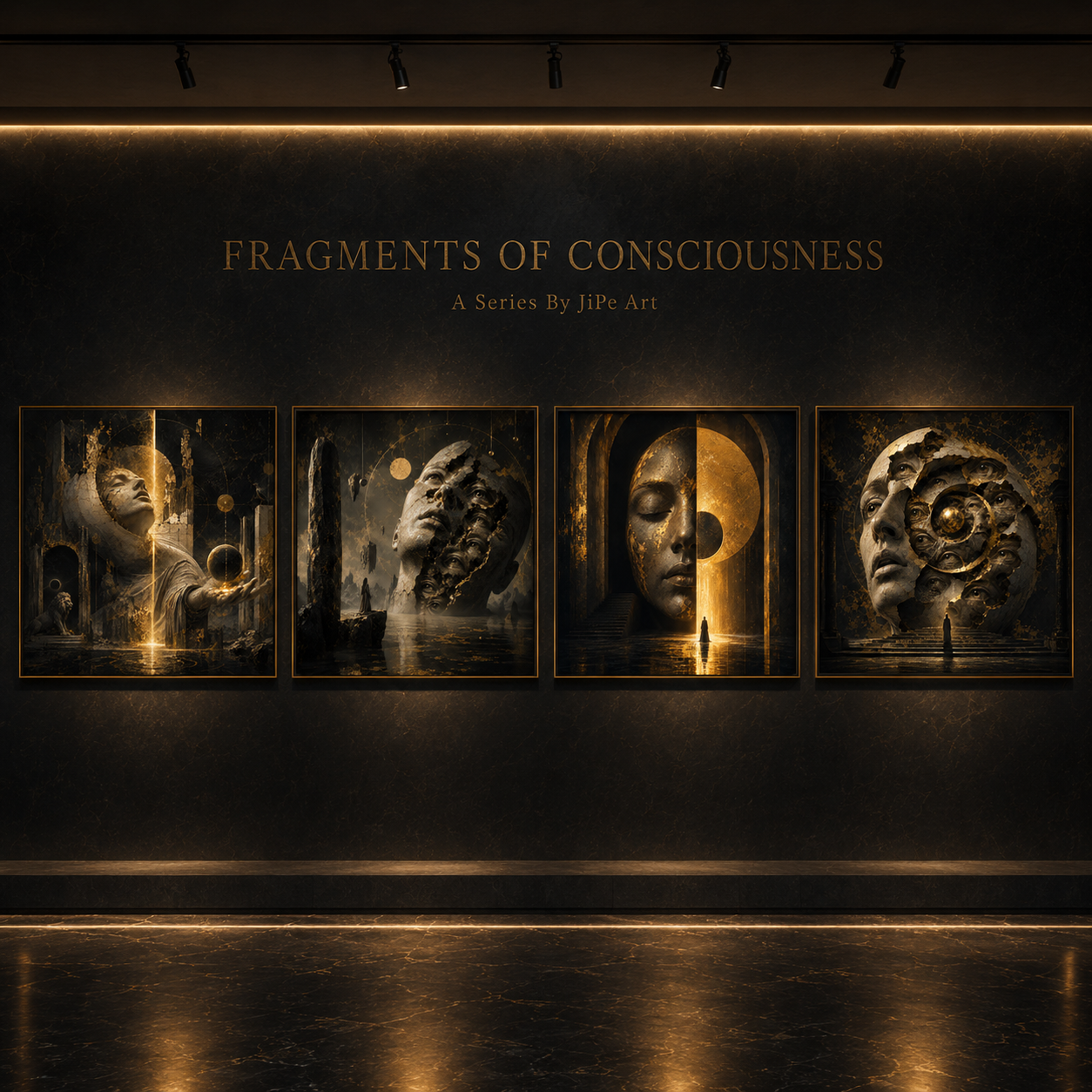

A quiet instability inhabits these works, where identity appears less as a fixed presence than as something continuously constructed, opened, and revised. In Architects of Dreams, the boundary between interior and exterior becomes uncertain. Thought seems to acquire scale and space, while the human form becomes a threshold through which imagined worlds might enter—or escape.
Monumentality is tempered by solitude. Vast structures seem governed by private states of consciousness, yet the figures within them remain strangely vulnerable to the spaces they appear to contain. Light gathers at openings and passages with the intensity of possibility, suggesting access without promising arrival. What lies beyond remains withheld, preserving the tension between desire and comprehension.
The title raises an unresolved question of authorship. Are we the architects of these inner worlds, or are they quietly constructing us? Dreams here seem neither refuge nor fantasy, but territories in which memory, perception, and identity can be reorganized beyond the discipline of waking logic.
What remains is a subtle uncertainty about where the self truly resides: within the structures it creates, at their threshold, or somewhere beyond the architecture altogether.