Scareface confronts the mythology of Tony Montana at the point where power begins to resemble isolation. Since the release of Scarface in 1983, Al Pacino’s portrayal has become one of cinema’s most recognizable screen characters, extending far beyond the film into popular culture. The image of Montana—ambitious, excessive, defiant—has acquired a fame almost independent of the narrative that ultimately consumes him.
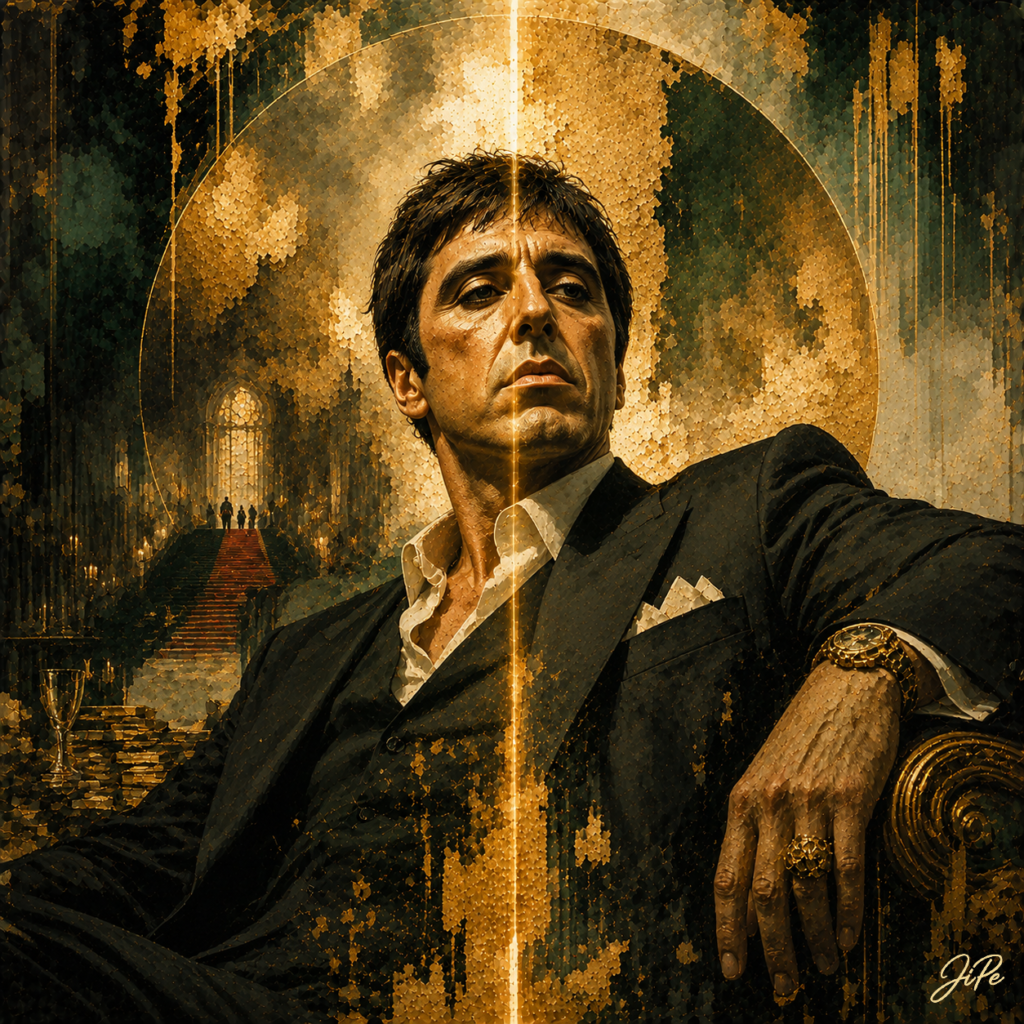
Here, however, triumph feels strangely suspended. The monumental presence is surrounded by an atmosphere of ceremony and distance, while light divides the image with an almost fateful precision. Luxury and authority remain visible, yet silence has entered the spectacle. The figure appears elevated but not liberated, commanding his surroundings while seeming increasingly enclosed by them.
The title Scareface intensifies this tension between persona and consequence. What appears to be an image of dominance can also be read as a meditation on appetite: the desire to possess more, become more, and finally to exceed the limits of the self.
Behind the enduring cultural icon lies a darker uncertainty. When ambition has transformed everything into a measure of power, what remains when there is nothing left to conquer except the emptiness surrounding it?