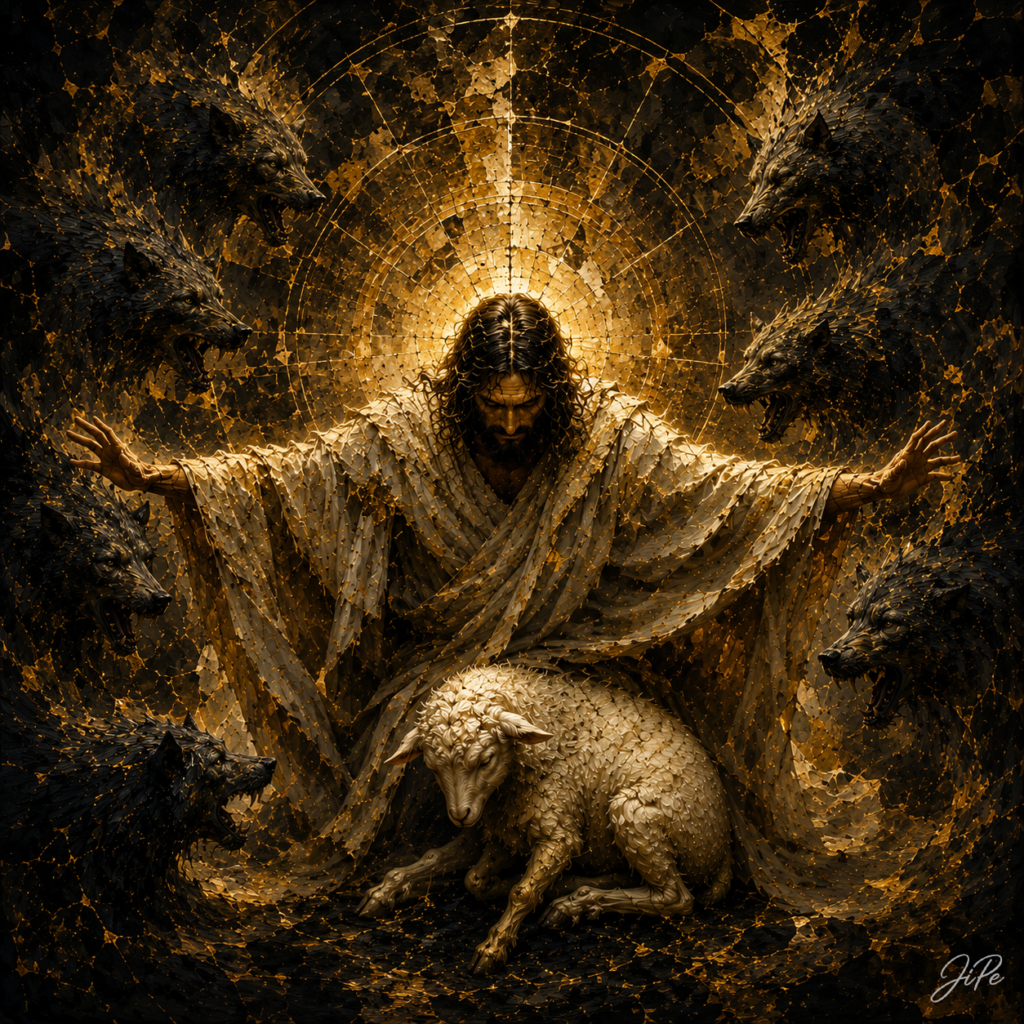
Where Mercy Meets the Beast holds compassion at the center of a gathering force. The central presence does not retreat from what surrounds him, nor does he appear intent on conquering it. Instead, his stillness creates a fragile interval in which aggression remains suspended, as though violence itself has been asked to wait.
The title places mercy not beyond darkness, but directly before it. Mercy becomes meaningful precisely because destruction remains possible. The surrounding threat is neither erased nor transformed into something harmless; it retains its intensity, making the gesture of protection feel less like certainty than a choice continually being made.
Light gathers around this encounter with solemn restraint. It separates vulnerability from darkness without fully dividing them, suggesting that innocence and ferocity may occupy the same moral landscape. The figure’s outstretched form creates a boundary, yet it is unclear whom that boundary protects—or from what. Perhaps the danger exists outside him; perhaps it also belongs to the territory within.
The work leaves mercy in its most difficult form: not as forgiveness after violence has passed, but as presence before it begins. And what remains unresolved is whether the beast must be defeated at all—or simply met without becoming one.