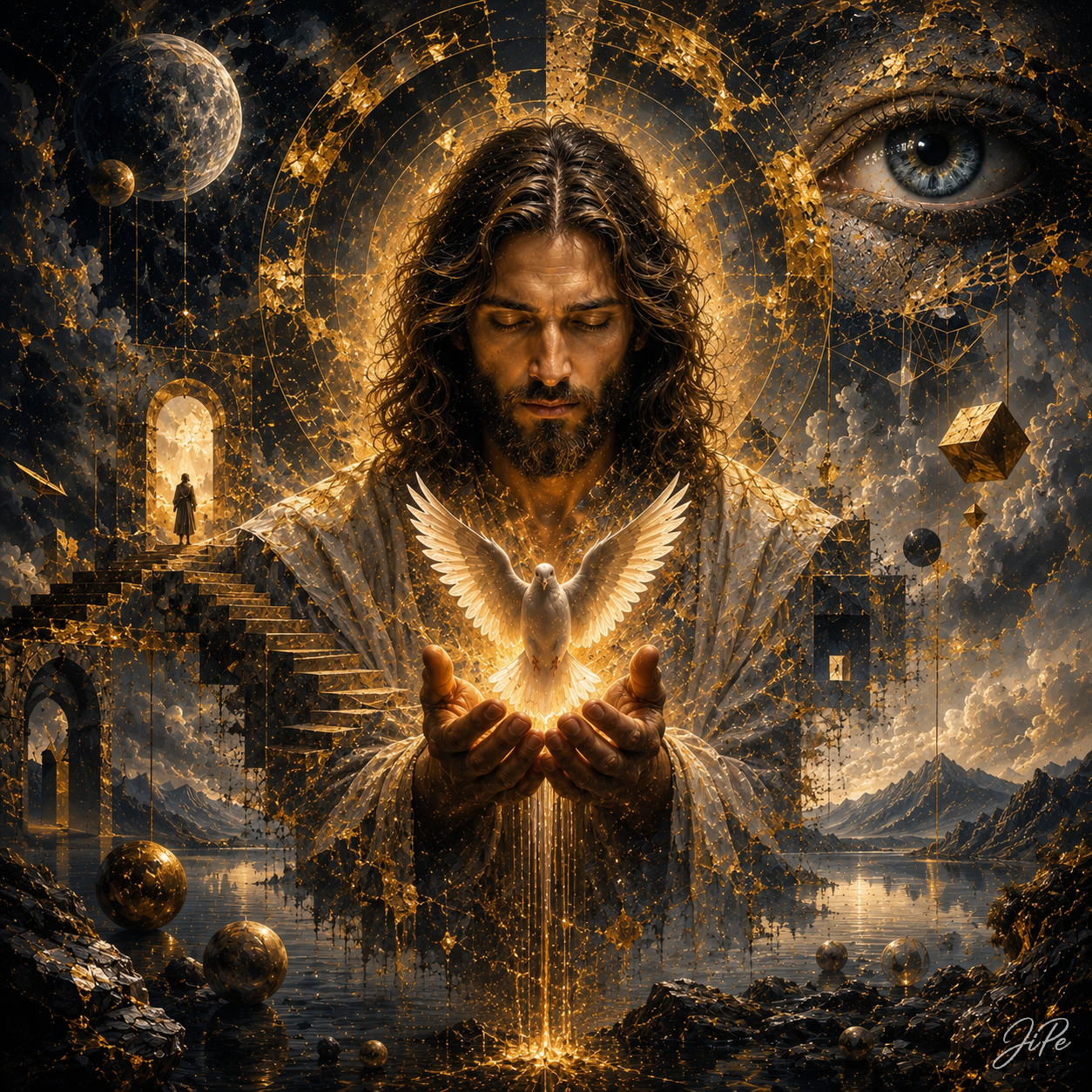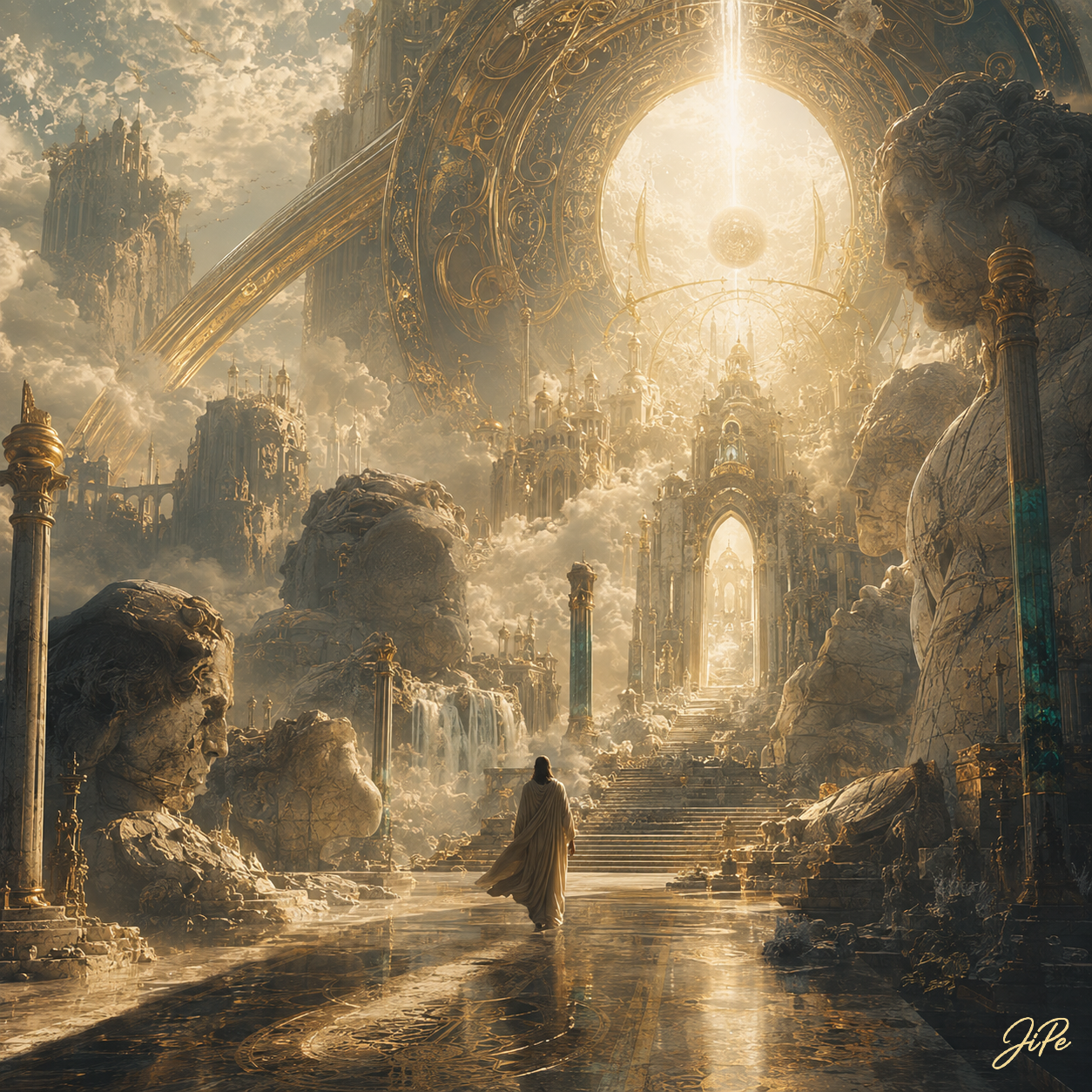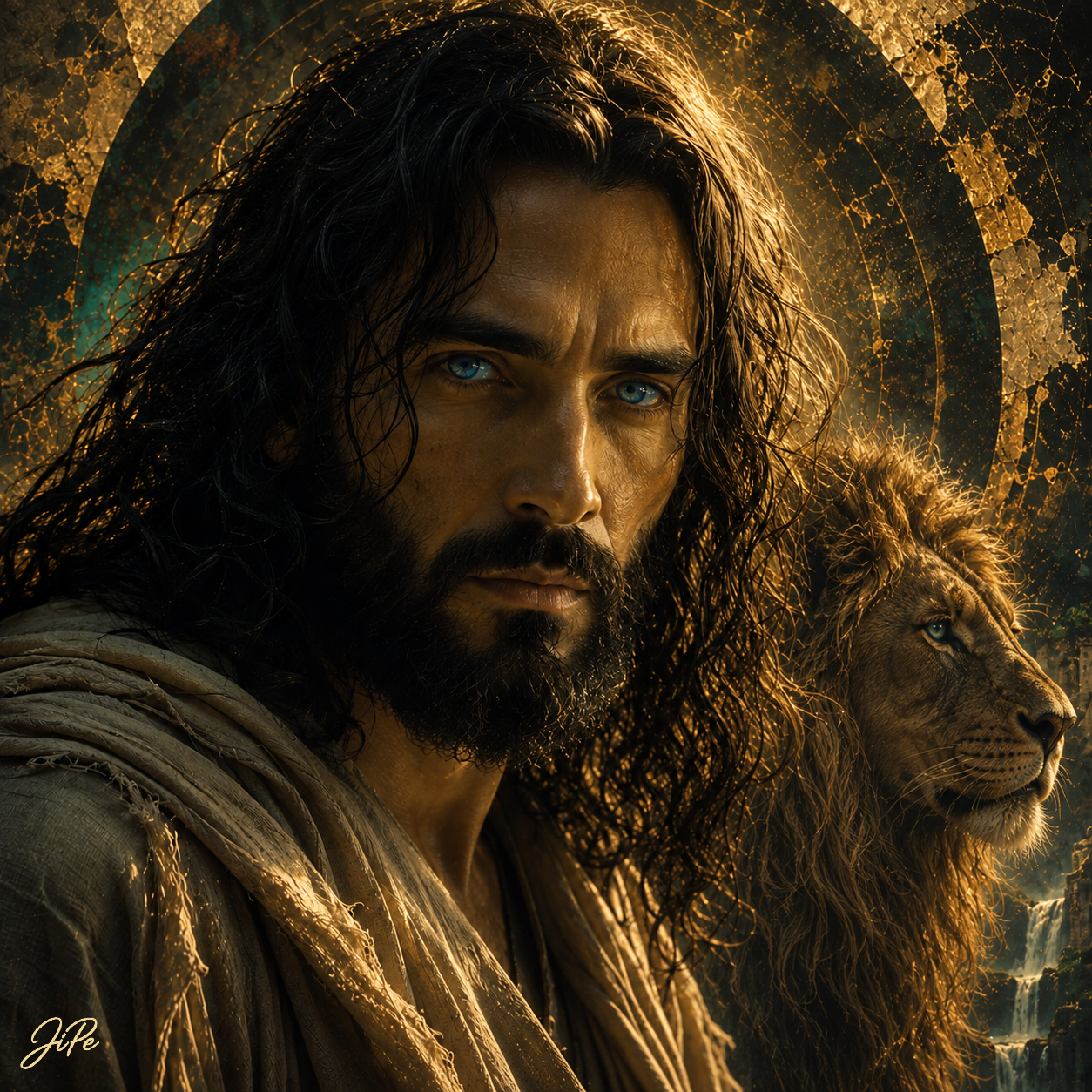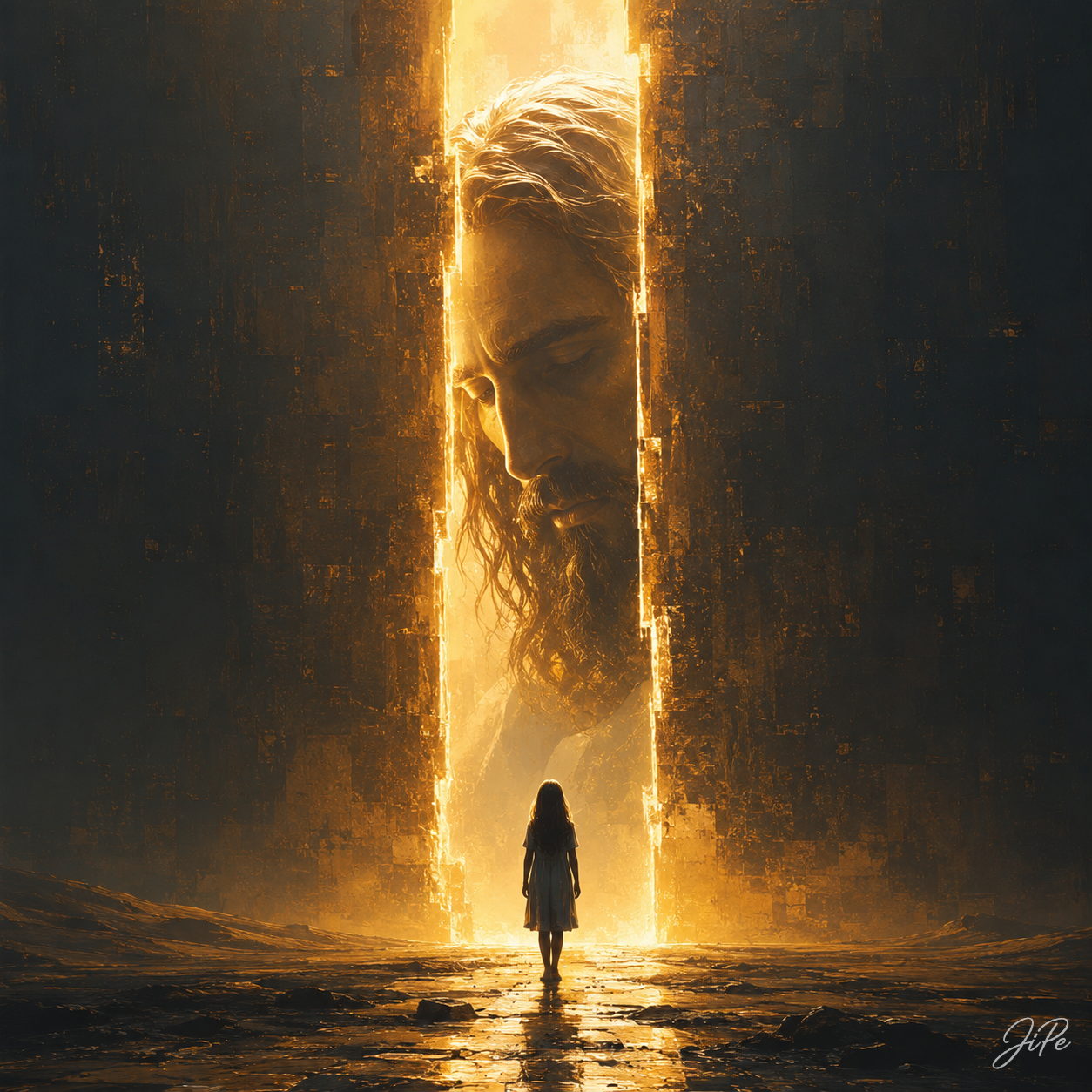

The Last Dream of the Fallen Angel unfolds in the fragile interval between remembrance and surrender, where celestial grandeur gives way to an unexpectedly intimate sorrow. Beneath an immense and darkened sky, a solitary presence seems suspended outside the ordinary passage of time. There is no violence in this fall, no spectacle of destruction. Instead, the atmosphere carries the quiet exhaustion of something once eternal confronting the possibility of an ending.
The surrounding vastness intensifies the figure’s vulnerability. Light gathers at the edges of darkness, neither offering redemption nor withdrawing entirely. Its warmth feels almost like a distant memory, a remnant of belonging that continues to illuminate what has been lost. The stillness of the water introduces another dimension of uncertainty, where reflection and disappearance become difficult to distinguish.
The title suggests a consciousness lingering between two states of existence. Perhaps the deepest consequence of falling is not exile itself, but the inability to forget what preceded it. Beauty remains, yet it seems inseparable from an awareness of impermanence. Even the suggestion of companionship cannot entirely dissolve the solitude at the center of the work.
And if this truly is the angel’s final dream, what remains uncertain is whether it mourns a heaven forever lost, or imagines a freedom that heaven could never offer.