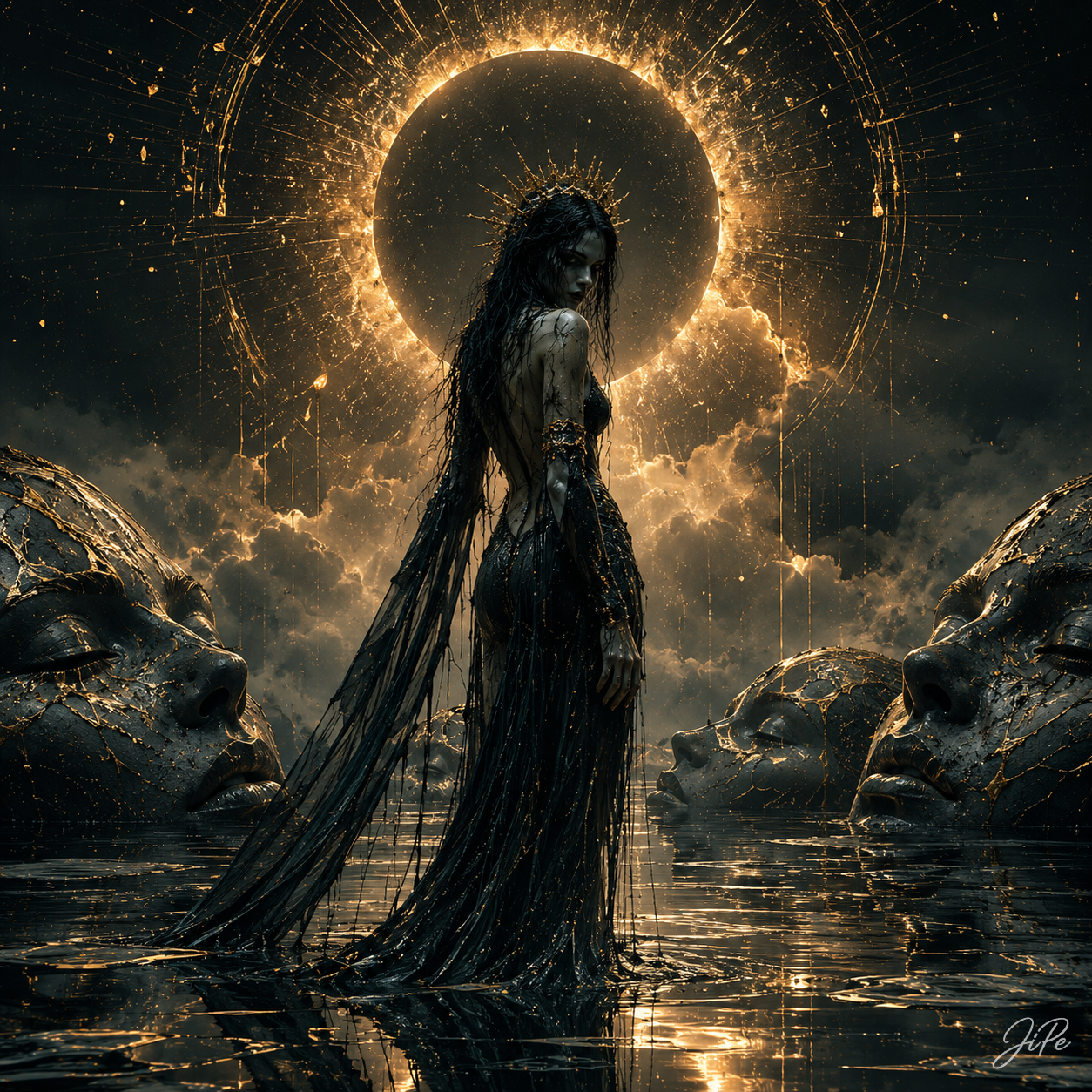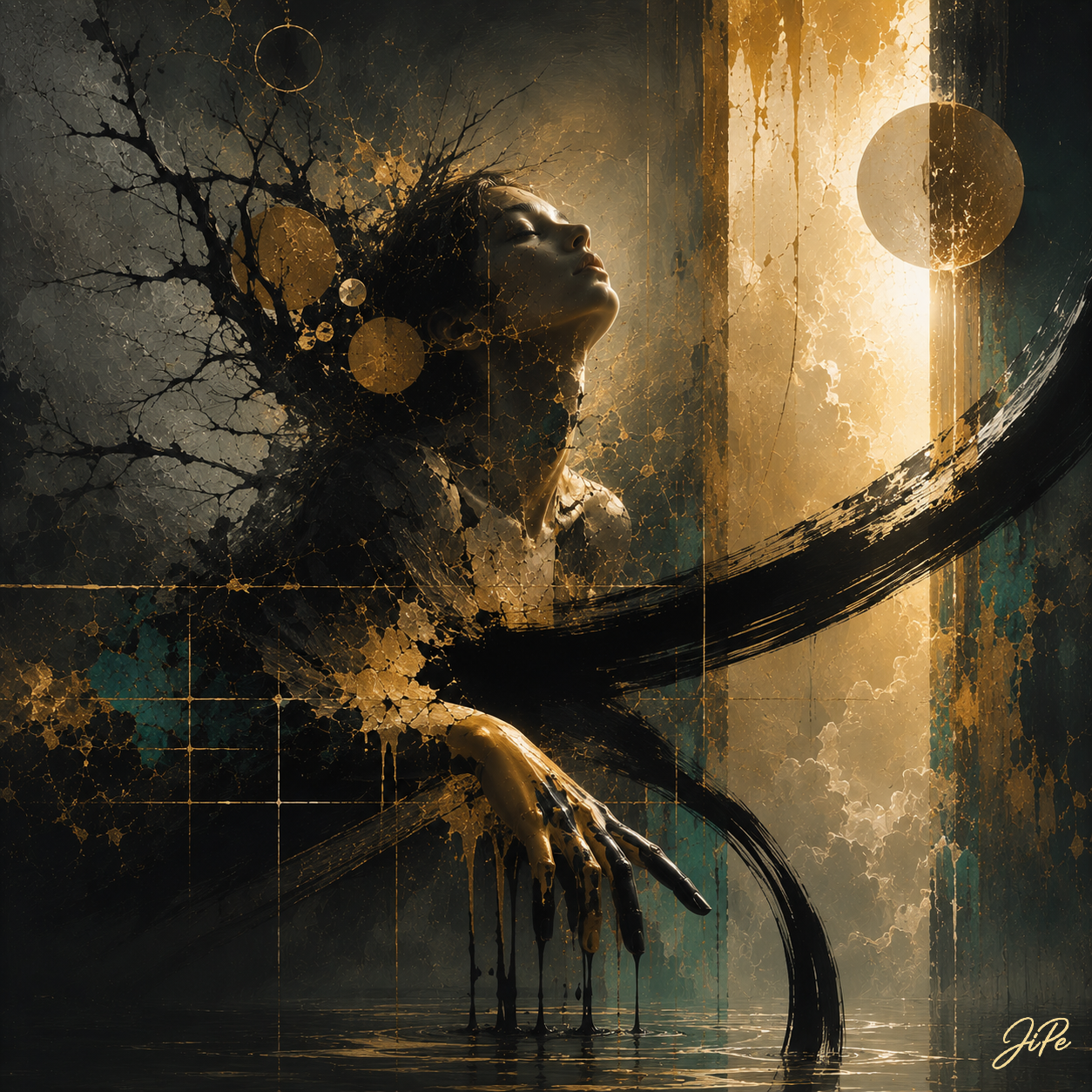

The Game Was Already Won inhabits the charged stillness that follows certainty—or perhaps precedes its collapse. At its centre sits a presence defined less by action than by composure, surrounded by a world whose immense scale seems to have been drawn into orbit around an unreadable state of mind. Power is suggested everywhere, yet its source remains deliberately unstable.
The work holds strategy and fate in quiet tension. Signs of calculation coexist with forces too vast to be controlled, while the boundary between cultivated order and the immeasurable world beyond appears almost impossibly thin. Light enters as both revelation and disturbance, opening the space toward a horizon that seems available yet fundamentally unreachable. The resulting silence is not peaceful; it carries the density of decisions already made.
The title introduces its most unsettling possibility. If the game was already won, then perhaps the visible contest was never the true one. Victory may reside in foresight, detachment, acceptance—or in recognizing that certain outcomes are determined long before they become apparent.
What remains uncertain is whether this apparent mastery represents freedom from the game or complete submission to its logic. And if the decisive move has already occurred, who among those present understands that the game is over?