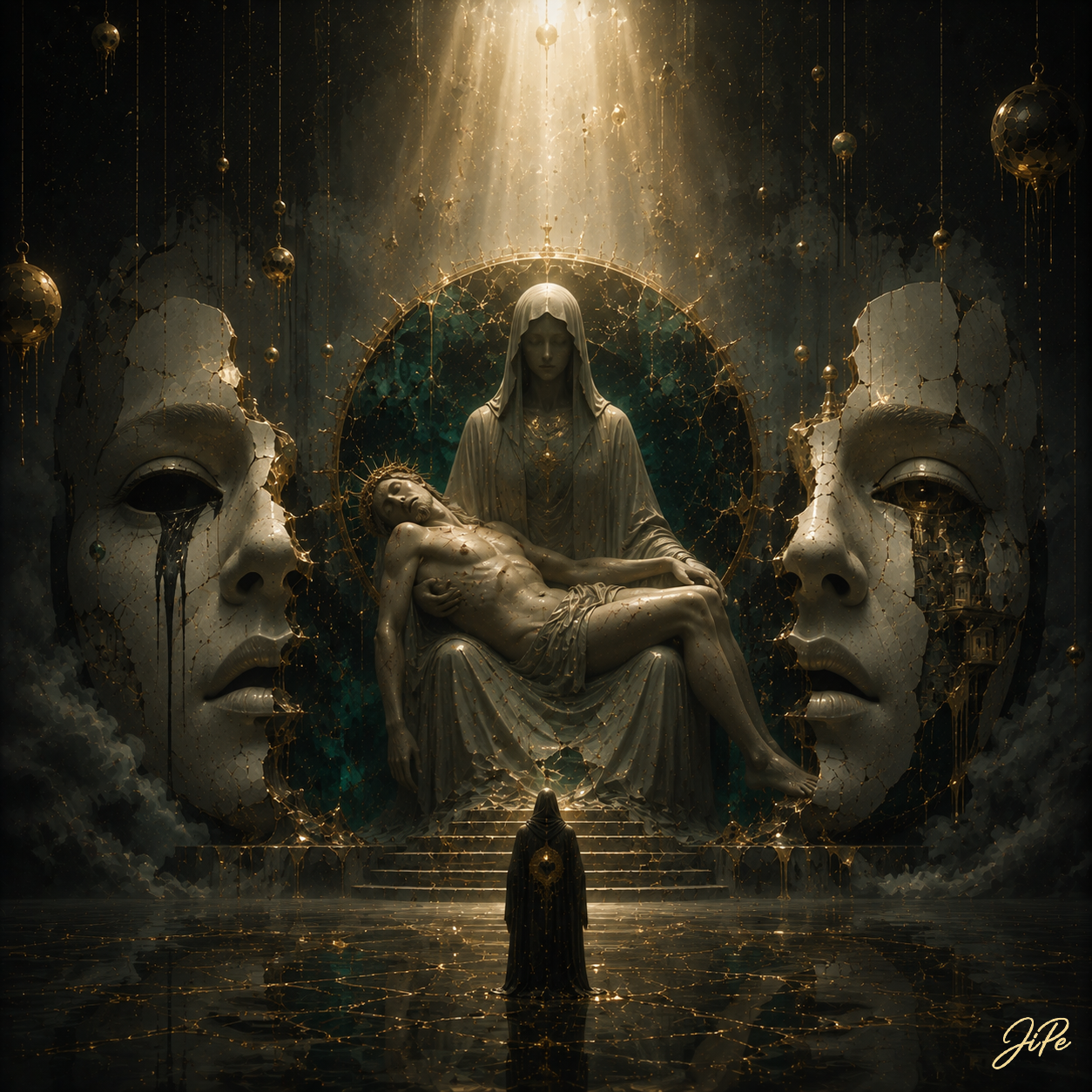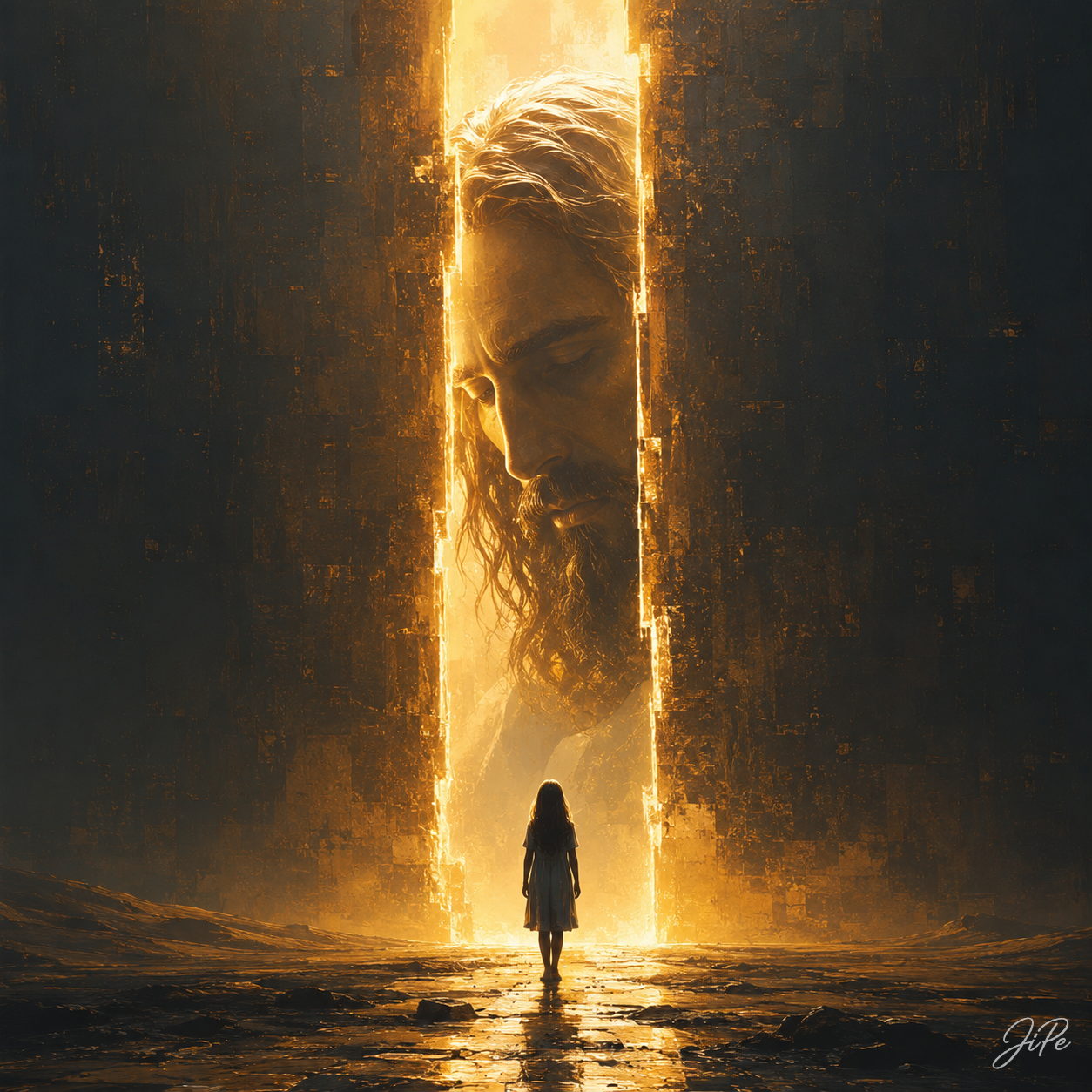
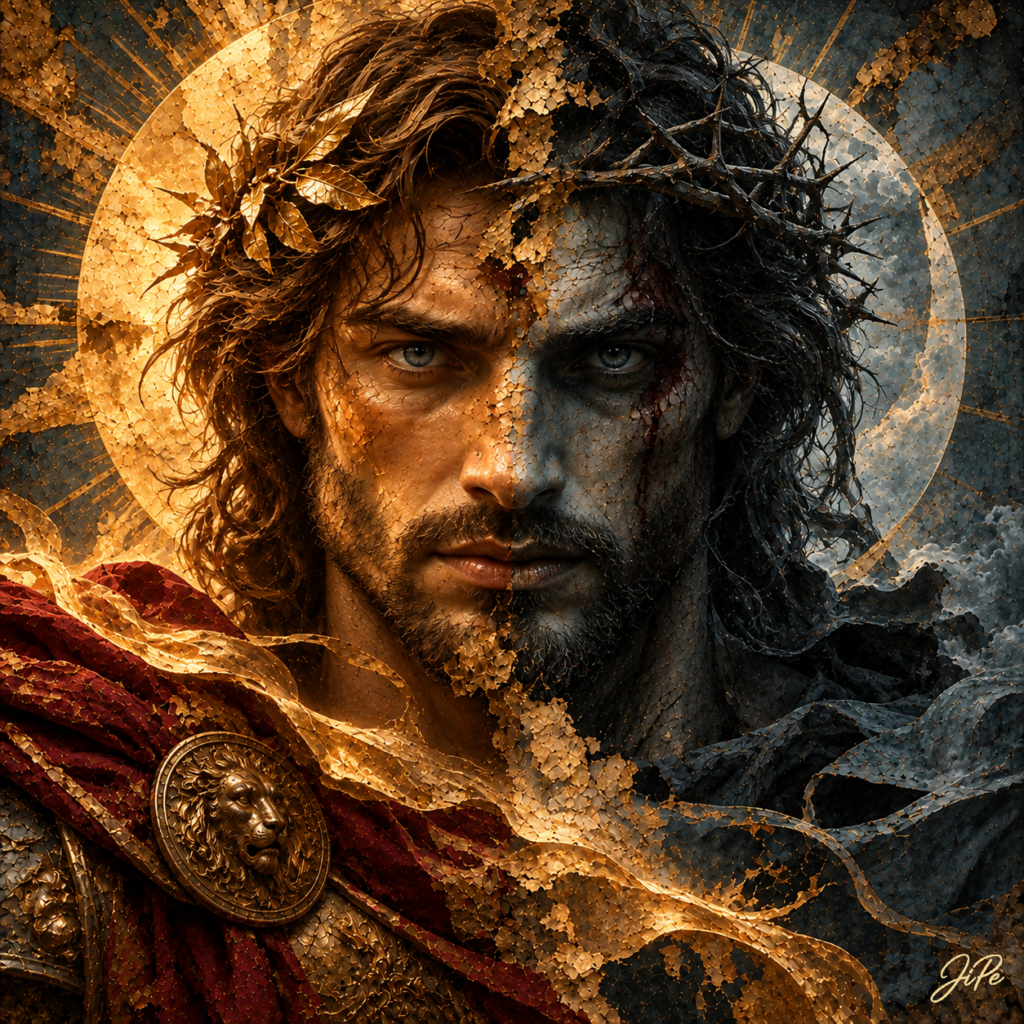
In The Crown of Divided Faith, a singular presence confronts the viewer with an unwavering gaze, suspended between two seemingly irreconcilable states of being. His expression carries both authority and vulnerability, suggesting a consciousness shaped by convictions that have become inseparable from their contradictions. There is no visible surrender, yet neither side offers the certainty of triumph.
The composition creates an extraordinary intimacy within a space of almost cosmic magnitude. Warmth and coldness meet along a fragile division, while light assumes an ambiguous presence, capable of suggesting both revelation and judgment. The figure’s monumental scale intensifies his isolation, as though the conflict he embodies belongs not merely to an individual life but to something enduring within the human condition.
The title, The Crown of Divided Faith, introduces the possibility that belief may be both a source of strength and an unbearable inheritance. What appears sacred is touched by suffering, while what seems wounded retains an unsettling dignity. Neither condition can be understood entirely without the other.
Perhaps the deepest tension lies not between faith and doubt, but between competing truths that demand equal devotion. The figure offers no reconciliation, only the silence of someone who has looked toward opposing horizons and found something compelling in both. What becomes of conviction when the soul can no longer choose which truth to betray?