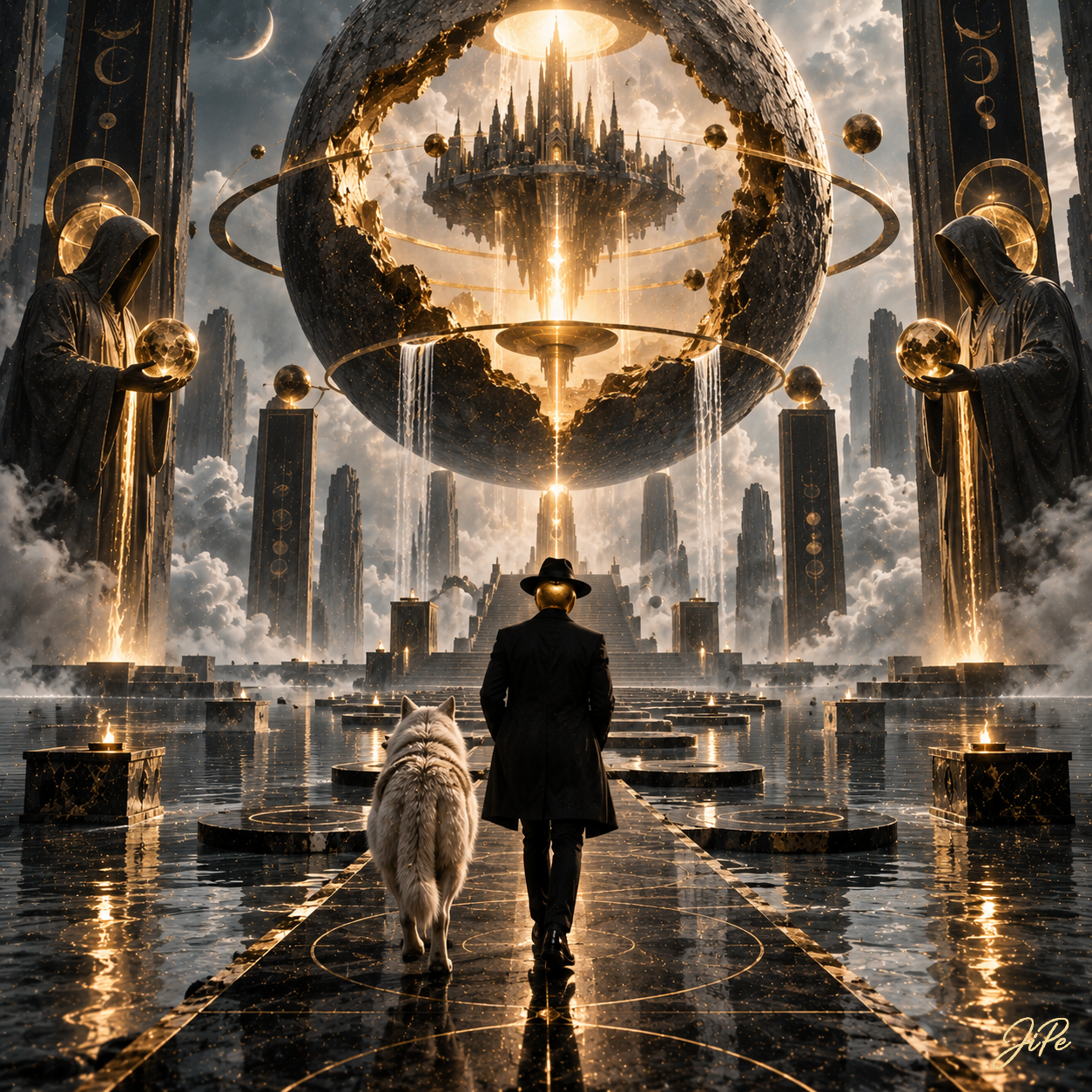

In The Architecture of Lost Dreams, a monumental human presence rises within a world whose dimensions seem governed by memory rather than physical law. The surrounding structures suggest an intricate order, yet their pathways lead toward destinations that remain uncertain. An atmosphere of solemn expectancy pervades the composition, as though something once deeply desired continues to exist long after the possibility of its fulfilment has passed.
The relationship between the figures and the immense spaces surrounding them creates a tension between inward experience and outward permanence. Their stillness contrasts with the restless movement of the landscape, where distance appears to fold upon itself and familiar notions of beginning and arrival lose their certainty. Light gathers in the depths with an almost private tenderness, illuminating a passage whose significance remains elusive.
The title suggests that abandoned aspirations may possess an architecture of their own, enduring in forms that consciousness can no longer fully recognize. What has been relinquished is not necessarily destroyed; it may continue to shape the invisible contours of the present.
Yet the composition offers no assurance that these distant passages lead toward recovery. Perhaps the most enduring dreams are not those we remember, but those whose absence continues to determine the paths we take. And somewhere within this vast, silent order, might a forgotten possibility still be waiting for someone who no longer knows to seek it?