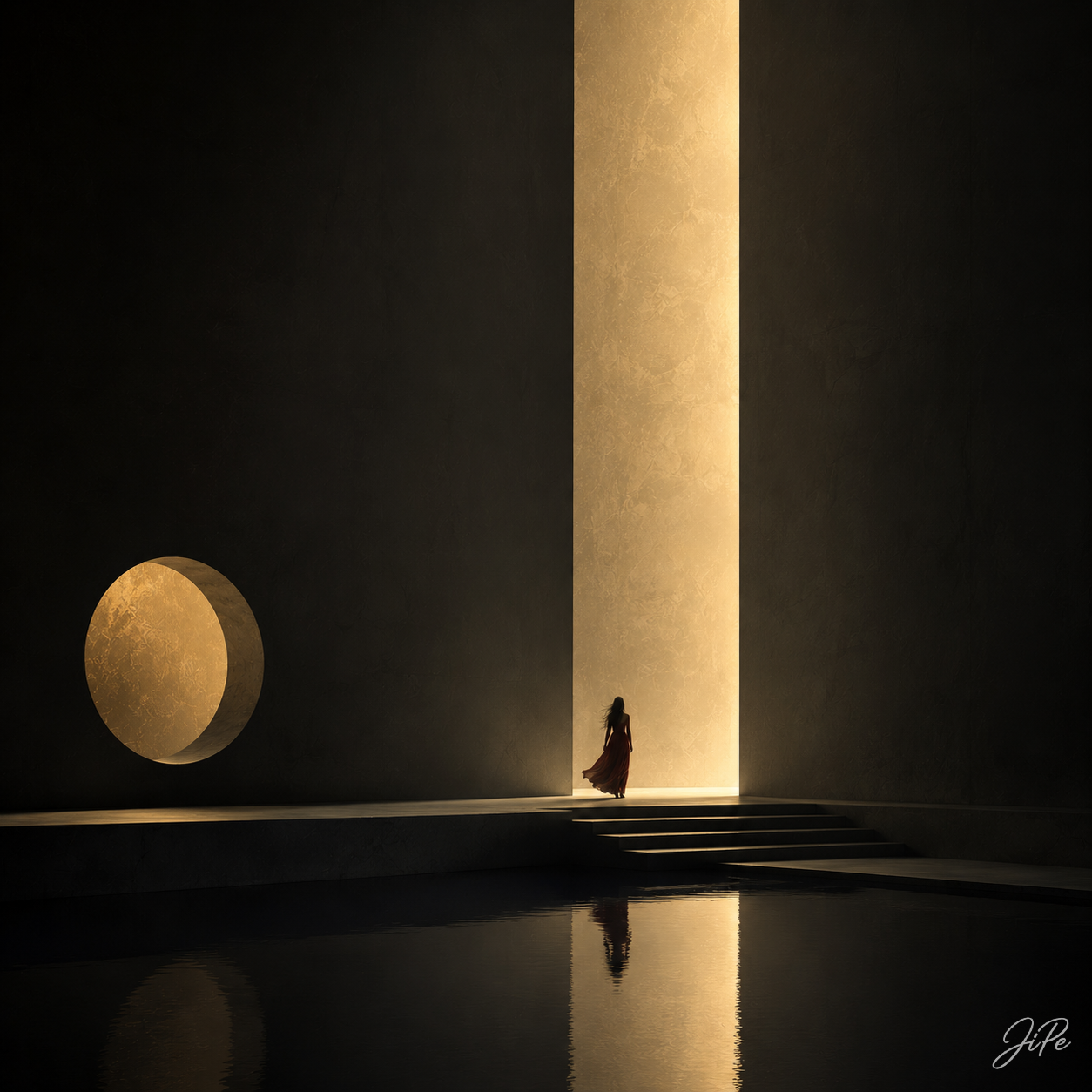
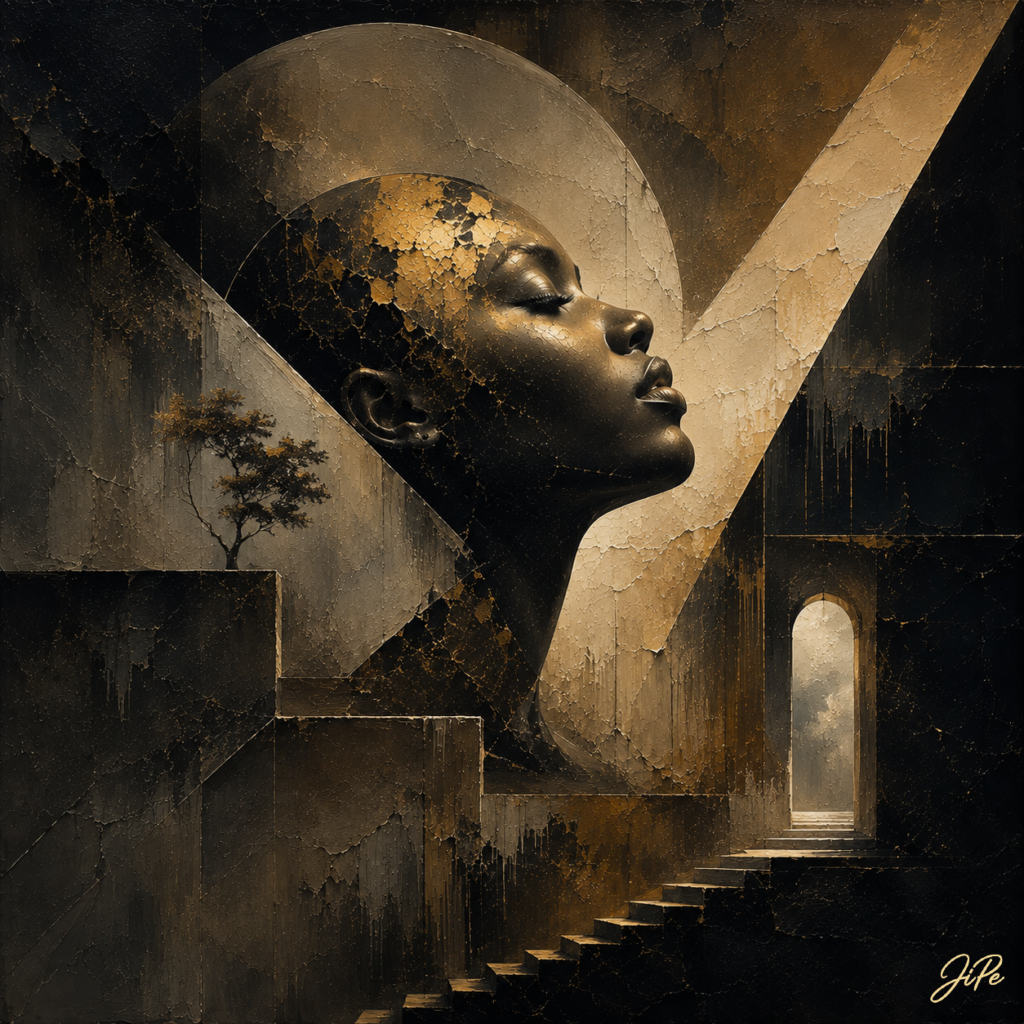
The Architecture of Ascension holds its central presence between stillness and becoming. The figure appears less contained by the surrounding structure than suspended within a larger order whose logic remains only partially visible. Monumentality is tempered by inwardness; what might seem imposing instead carries the silence of concentration, as though transformation were occurring beyond the reach of language.
The surrounding geometry establishes a tension between enclosure and release. Forms intersect, divide, and open, while the movement toward light suggests passage without guaranteeing arrival. Ascension here does not necessarily imply escape. It may speak instead to an altered state of perception—a gradual reordering of the self in relation to what lies beyond it.
Light occupies the work as both presence and distance. It reveals without fully disclosing, drawing attention toward a threshold that remains deliberately unresolved. The solitary tree and the upward path introduce a quieter scale of existence within the monumental field, making the vastness feel simultaneously external and deeply interior.
What is being approached may be a destination, a memory, or simply another condition of being. The greater uncertainty is whether ascent means moving toward something beyond ourselves—or becoming capable of seeing what was already there.