The Silence of the Red Earth
The Silence of the Red Earth is shaped by a presence that seems inseparable from the vastness surrounding it. The…


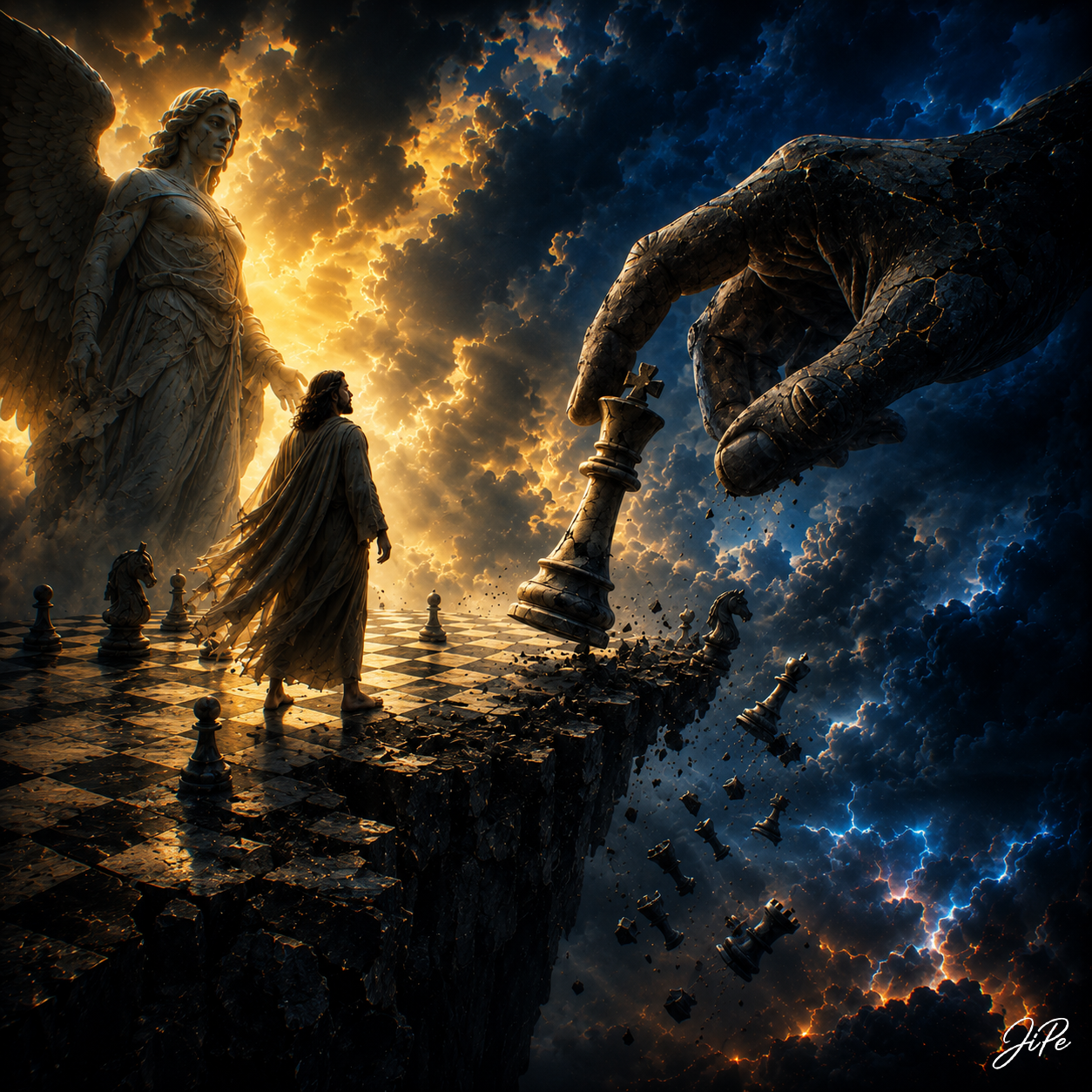
Narrative Art uses visual storytelling to create images that suggest events, journeys, emotions, and hidden meanings. Every artwork can become the beginning of a story.
Unlike purely decorative art, narrative art invites the viewer to search for connections. Figures, landscapes, objects, light, and symbols can all become part of the visual narrative.
However, the complete story is not always revealed. Mystery often makes the experience more powerful.
Storytelling has been part of art for thousands of years. Artists have used images to preserve myths, describe historical events, and explore human experience.
Today, contemporary Narrative Art continues this tradition through a modern visual language. Realism can merge with symbolism, surrealism, mythology, and imaginative worlds.
A solitary figure may stand before an unknown gateway. Elsewhere, a traveler might cross a vast landscape toward a distant light.
These scenes immediately raise questions.
Who is the figure? What happened before this moment? Where does the journey lead?
As a result, viewers begin creating their own interpretations.
Symbolism plays an important role in many forms of Narrative Art. A simple object can carry meaning far beyond its physical appearance.
Doors and portals may represent transformation or passage. Mountains can suggest struggle, discovery, or spiritual ascent.
Similarly, water can symbolize memory, renewal, reflection, or change. Circles and celestial forms may evoke eternity, unity, and the unknown.
Human figures provide another emotional connection. Their posture, direction, and relationship with the environment can reveal important parts of the story.
Therefore, even a silent figure can become a powerful storyteller.
Light can transform the emotional character of an artwork. A distant glow may suggest hope, while deep shadows can create uncertainty.
In addition, dramatic illumination can guide the viewer through the composition. Important figures or symbols emerge while other elements remain hidden.
Atmosphere also shapes the narrative. Mist, storms, darkness, ruins, and vast skies can suggest that something has happened or will happen.
Consequently, the environment becomes more than a background. It becomes part of the story itself.
Many contemporary narrative artworks exist between reality and imagination. Recognizable subjects may appear within environments that could never exist in the physical world.
This freedom allows visual storytelling to move beyond ordinary experience. Mythology, dreams, memory, and symbolism can exist within the same composition.
Ancient structures may appear beside impossible landscapes. Meanwhile, human figures can encounter monumental forms or mysterious celestial phenomena.
Such combinations create stories without fixed beginnings or endings.
Instead, each image captures a single moment within a larger imagined world.
This collection of Narrative Art explores journeys, transformation, identity, mythology, spirituality, nature, memory, and the mysteries of existence.
Some works suggest moments of discovery. Others portray solitude, confrontation, awakening, or passage between different worlds.
Yet the viewer is never given every answer.
Instead, visual clues encourage personal interpretation. A symbol may carry one meaning for one person and something entirely different for another.
That openness is central to the experience.
Ultimately, Narrative Art turns viewing into discovery. The artwork becomes a meeting place between the artist’s vision and the viewer’s imagination.
Explore this collection of contemporary Narrative Art and discover visual stories shaped by symbolism, atmosphere, mystery, and timeless human experience.