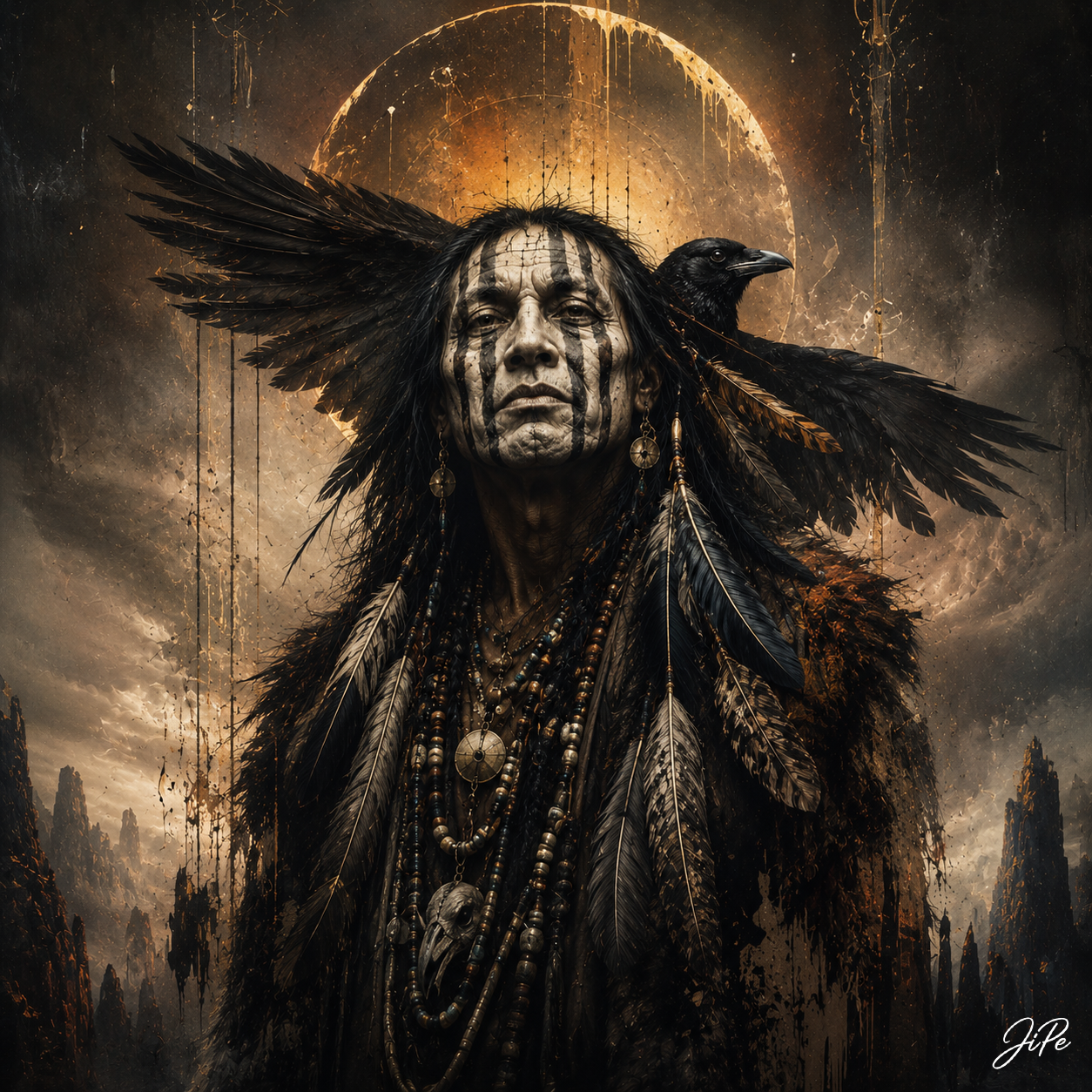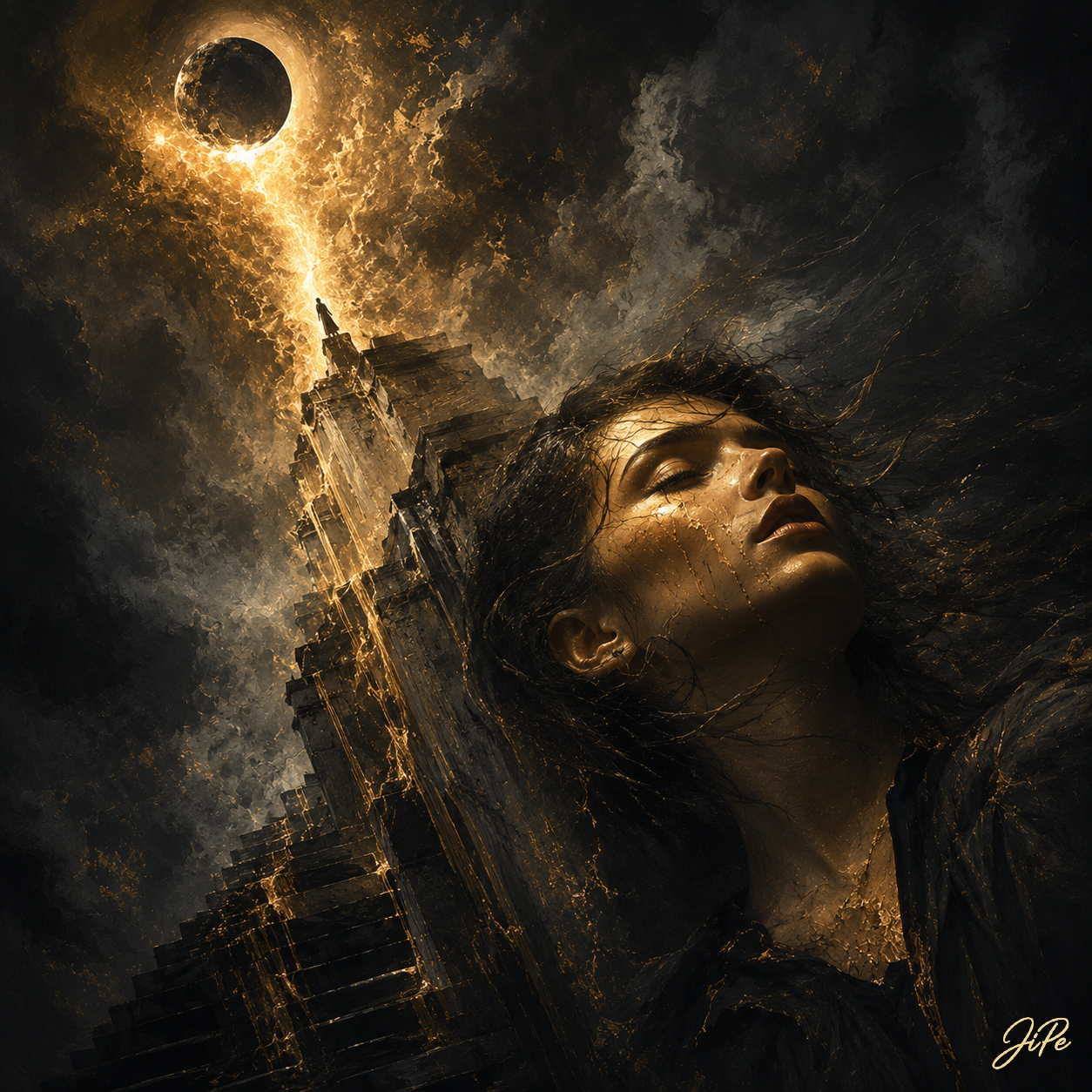
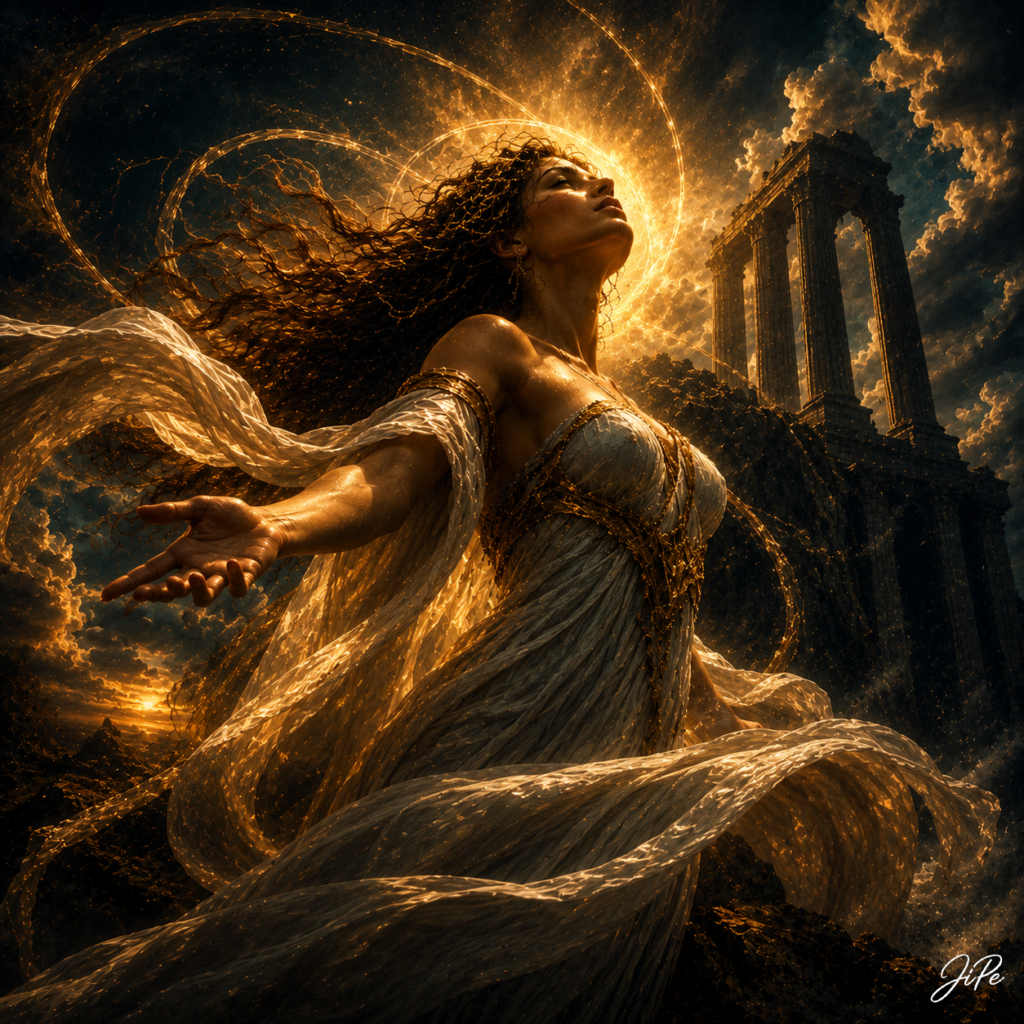
She Who Carried the Dawn holds a moment of emergence in which radiance feels less like an arrival than a burden willingly borne. The central presence possesses an unusual stillness despite the forces gathering around her. Her openness suggests neither simple surrender nor triumph, but a state suspended between receiving and releasing something larger than the self.
The surrounding scale intensifies this tension. Human presence and monumental space seem briefly brought into alignment, while light occupies the distance between them as an almost psychological force. It offers revelation without certainty. Darkness remains close, not as its opposite, but as the condition from which illumination acquires consequence.
The title introduces a quiet distinction between witnessing the dawn and carrying it. To carry light implies duration, responsibility, perhaps even sacrifice—the preservation of something fragile through a world capable of losing it. Yet the work leaves uncertain whether this radiance belongs to a beginning, a memory of one, or the final brightness before another kind of darkness.
There is no assurance that dawn will endure. What lingers instead is the possibility that beginnings survive only because, somewhere between darkness and becoming, someone carries their light forward.