Monumental Visionary Fine Art exploring mythology, consciousness, sacred light, and timeless visual storytelling.

Monumental Visionary Fine Art exploring mythology, consciousness, sacred light, and timeless visual storytelling.

Surreal Paintings

Majestic Ruin with a Statue and a Silhouette

Majestic Ruin with a Statue and a Silhouette

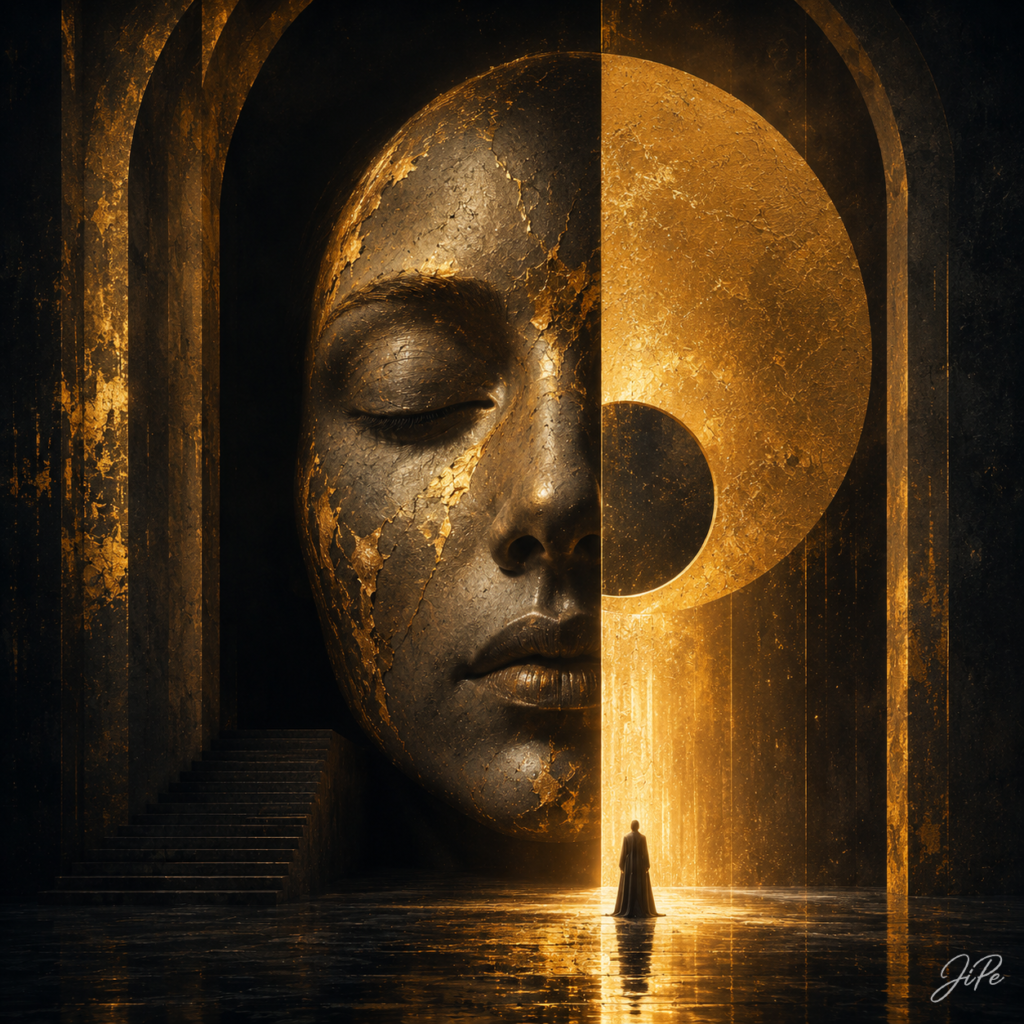
Majestic Ruin with a Statue and a Silhouette is a monumental exploration of memory, identity, and transcendence. Existing at the intersection of visionary symbolism, contemporary figurative art, and metaphysical architecture, the work transforms a seemingly silent interior into a timeless psychological landscape. Rather than depicting a physical ruin, the painting presents the human soul as an ancient sanctuary—weathered by experience, fractured by time, yet illuminated from within by an enduring source of light.

At the centre of the composition stands an immense sculptural face whose closed eyes evoke profound introspection and inner stillness. The figure is neither portrait nor deity. Instead, it functions as an archetype of universal consciousness, embodying the countless lives, memories, and emotions carried within every human existence. Its monumental scale immediately shifts the viewer’s perception, suggesting that the true architecture of the self is vast, sacred, and immeasurable.

The surface of the face bears visible fractures, weathered textures, and luminous golden fissures that speak of endurance rather than decay. These cracks become visual records of transformation, suggesting that identity is not shaped despite adversity, but because of it. The gold flowing through these fractures recalls the philosophy of kintsugi, where brokenness is not concealed but honoured as evidence of history, resilience, and renewal. In this work, imperfection becomes the highest expression of beauty.

Dividing the composition is a magnificent vertical shaft of golden light that transforms the monumental portrait into both a gateway and a revelation. Rather than separating two worlds, the luminous opening unites them, dissolving the distinction between material reality and spiritual awareness. It functions as the central symbolic axis of the painting—a threshold where silence becomes illumination and where the visible world gives way to deeper understanding.

Standing before this radiant portal is a solitary human figure whose presence introduces both scale and emotional intimacy. The silhouette remains deliberately anonymous, allowing every viewer to recognise themselves within the composition. The figure is not portrayed as a conqueror or a pilgrim reaching a destination, but as an individual standing at the precise moment before transformation. This quiet encounter between humanity and the infinite becomes the emotional heart of the work.

The architectural environment surrounding the central figure reinforces this atmosphere of contemplation. Monumental arches rise into darkness with cathedral-like grandeur, their elegant geometry creating a rhythm of repeating forms that evokes both sacred architecture and metaphysical space. These structures appear timeless, existing beyond any identifiable civilisation. They suggest that the search for meaning is itself an eternal architecture built within human consciousness.

The circular form suspended within the radiant opening introduces an additional symbolic layer. It recalls celestial bodies, eclipses, sacred geometry, and the cyclical nature of existence. Positioned within the golden field of light, the circle functions as a visual meditation on unity and duality, presence and absence, beginning and completion. Its simplicity contrasts beautifully with the rich complexity of the surrounding textures, allowing abstract geometry to coexist harmoniously with expressive figurative imagery.

Light is unquestionably the dominant narrative force throughout the painting. It is not employed merely to illuminate surfaces but to construct meaning. Brilliant gold radiates across the composition, dissolving darkness while preserving its emotional depth. Rather than eliminating shadow, the light gives it purpose, creating a dialogue between concealment and revelation. This dramatic interplay echoes the traditions of chiaroscuro while embracing a distinctly contemporary visual language rooted in symbolism rather than realism.

Materiality plays an equally significant role in the painting’s expressive power. The richly textured surface suggests weathered stone, aged plaster, oxidised metals, and layered mineral deposits accumulated over centuries. Every crack, abrasion, and painterly imperfection contributes to the illusion that the monument has existed outside ordinary time. Gold appears embedded within the structure rather than applied to it, reinforcing the impression that illumination emerges from the work’s very foundation.

The composition demonstrates exceptional formal discipline. Strong vertical divisions establish stability and monumentality, while the soft curves of the face and the circular celestial form introduce balance and visual harmony. The reflective floor subtly extends the luminous architecture downward, creating the impression that the sanctuary continues beneath the visible world. This careful orchestration of geometry and atmosphere allows the eye to move naturally between stillness and movement, detail and infinity.

Art historically, Majestic Ruin with a Statue and a Silhouette occupies a compelling position within contemporary visionary symbolism. It draws inspiration from the emotional grandeur of Romanticism, the philosophical ambitions of Symbolism, the timeless stillness of metaphysical painting, and the monumental clarity of sacred architecture. Yet it ultimately establishes its own distinctive visual language, where portraiture becomes architecture, ruins become memory, and light becomes the primary vehicle for spiritual experience.

Perhaps the work’s greatest achievement lies in its embrace of silence. There is no explicit narrative, no historical reference, and no prescribed interpretation. The anonymous figure, the closed eyes, and the radiant threshold invite contemplation rather than explanation. The painting offers no answers because it is fundamentally concerned with the questions that define human existence: Who are we beneath the identities we construct? What remains after memory fades? Where does true transformation begin?

Ultimately, Majestic Ruin with a Statue and a Silhouette is a meditation on the enduring resilience of the human spirit. It proposes that the soul is not a finished monument but a living sanctuary continually shaped by experience, loss, renewal, and hope. The ruins depicted are not symbols of collapse but of evolution—evidence that every fracture carries the possibility of illumination and that every ending conceals the architecture of a new beginning.

Standing before this work, the viewer enters a space where time seems suspended and silence becomes profoundly eloquent. The monumental face does not ask to be admired, nor does the solitary figure ask to be followed. Together, they invite a deeper act of seeing—one that moves beyond appearance into reflection, beyond certainty into wonder, and beyond the visible threshold into the vast cathedral of the inner self.

Lämna ett svar