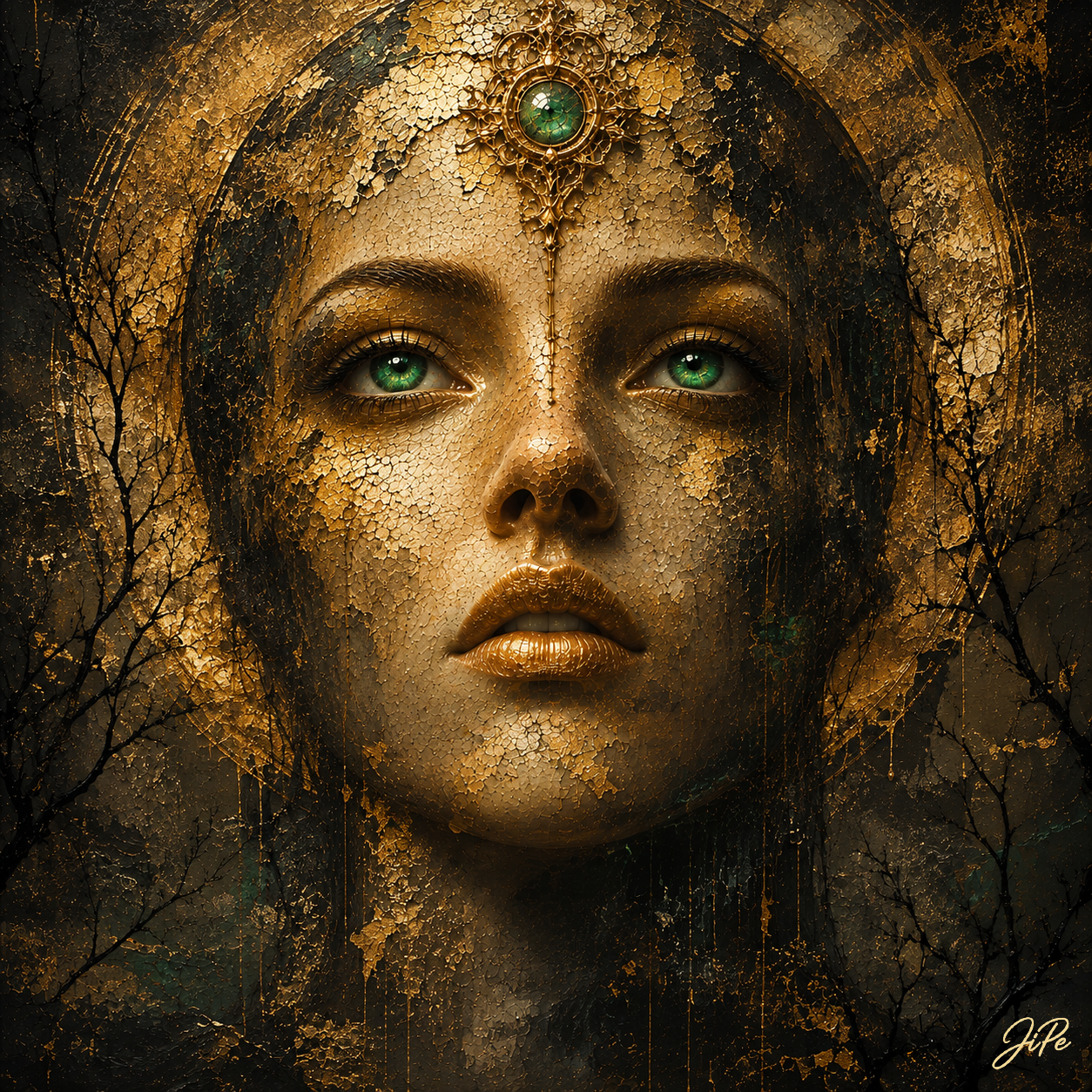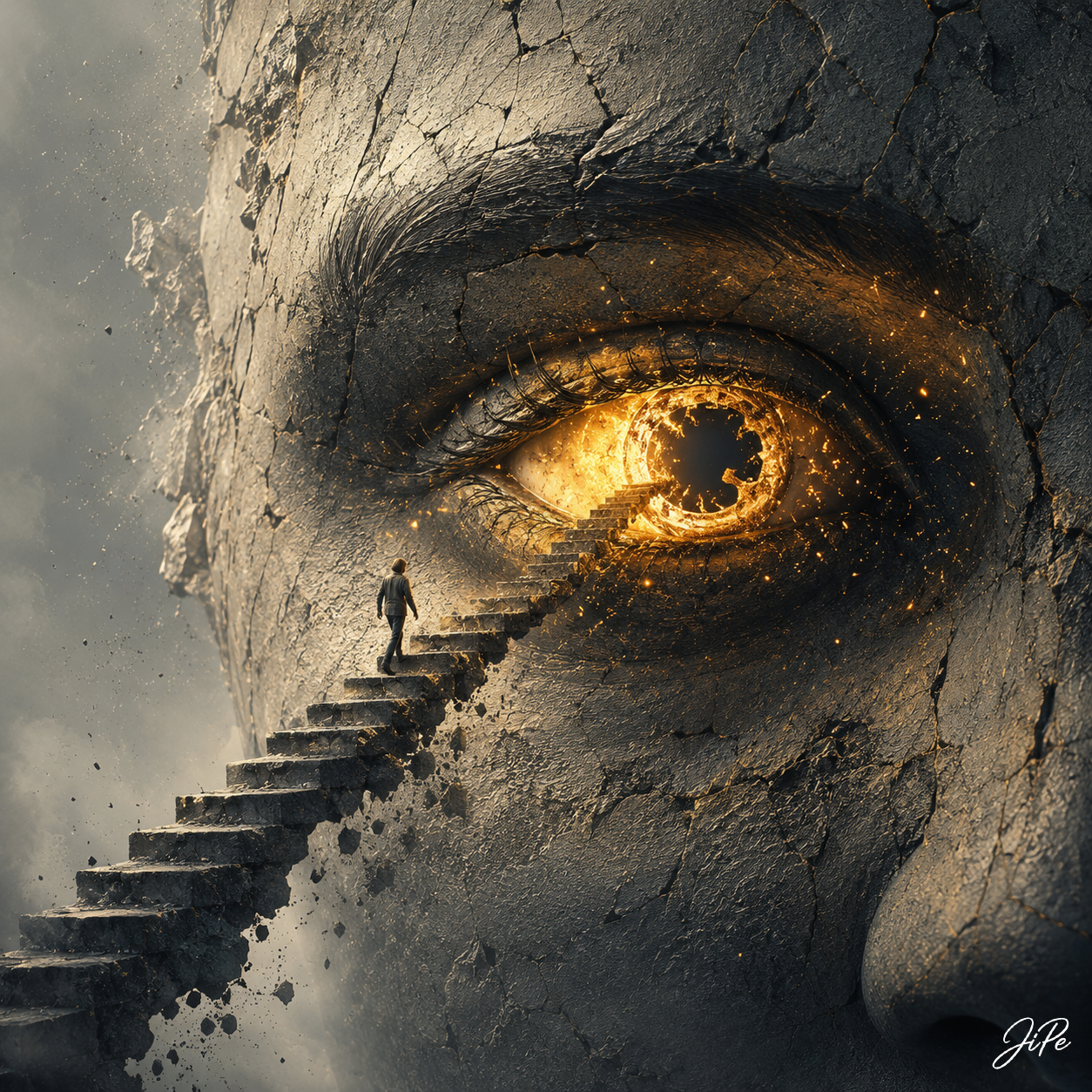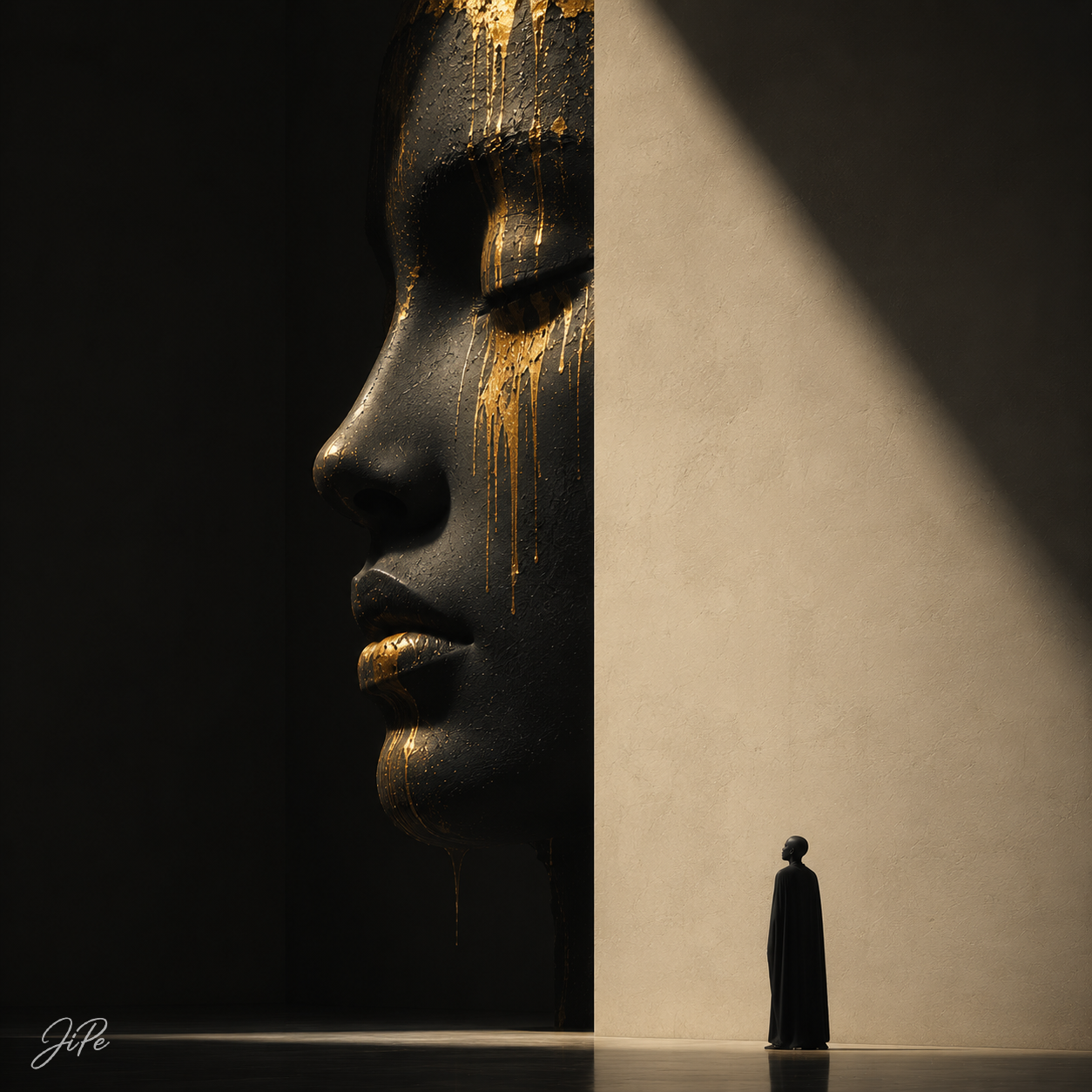

Interior Landscape dissolves the boundary between presence and place, allowing the human figure to become both inhabitant and terrain. Her stillness carries the weight of an inner architecture—vast, layered, and only partially accessible. What surrounds her seems less external than remembered, as though distance, structure, and atmosphere have gathered within the same private field of consciousness.
The work is held between containment and expansion. Forms rise from the figure and recede into an uncertain elsewhere, while moments of colour interrupt the subdued luminosity with an almost visceral immediacy. Light does not clarify this interior world; it exposes fragments, leaving the spaces between them unresolved. Beauty and unease remain closely bound.
The title shifts the idea of landscape away from geography toward a more elusive territory. Memory, desire, loss, and imagination may occupy the same ground here without becoming distinguishable from one another. The self appears not as something singular, but as a place continually built from what has endured and what has disappeared.
What remains uncertain is whether this interior landscape belongs to her—or whether she is merely passing through it.