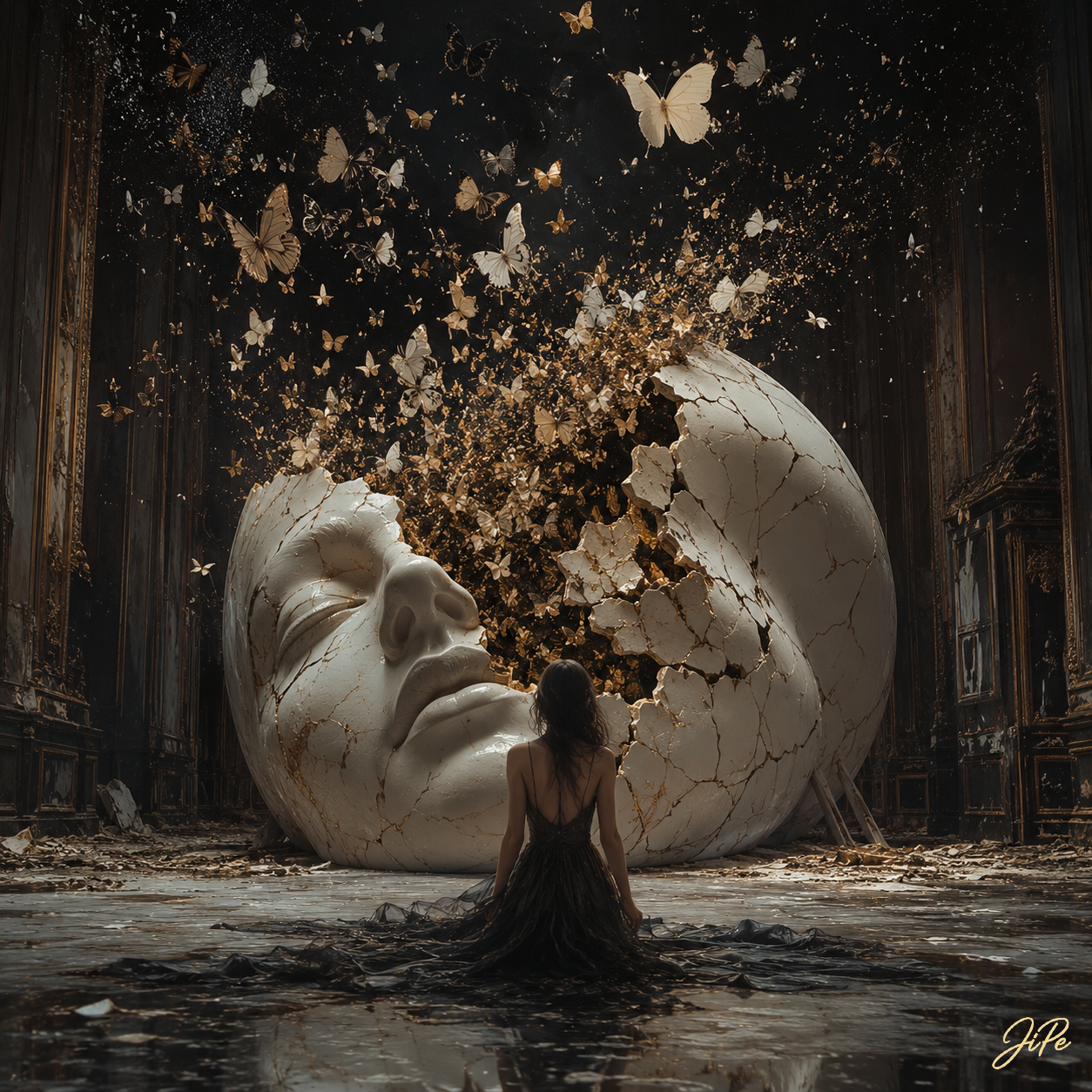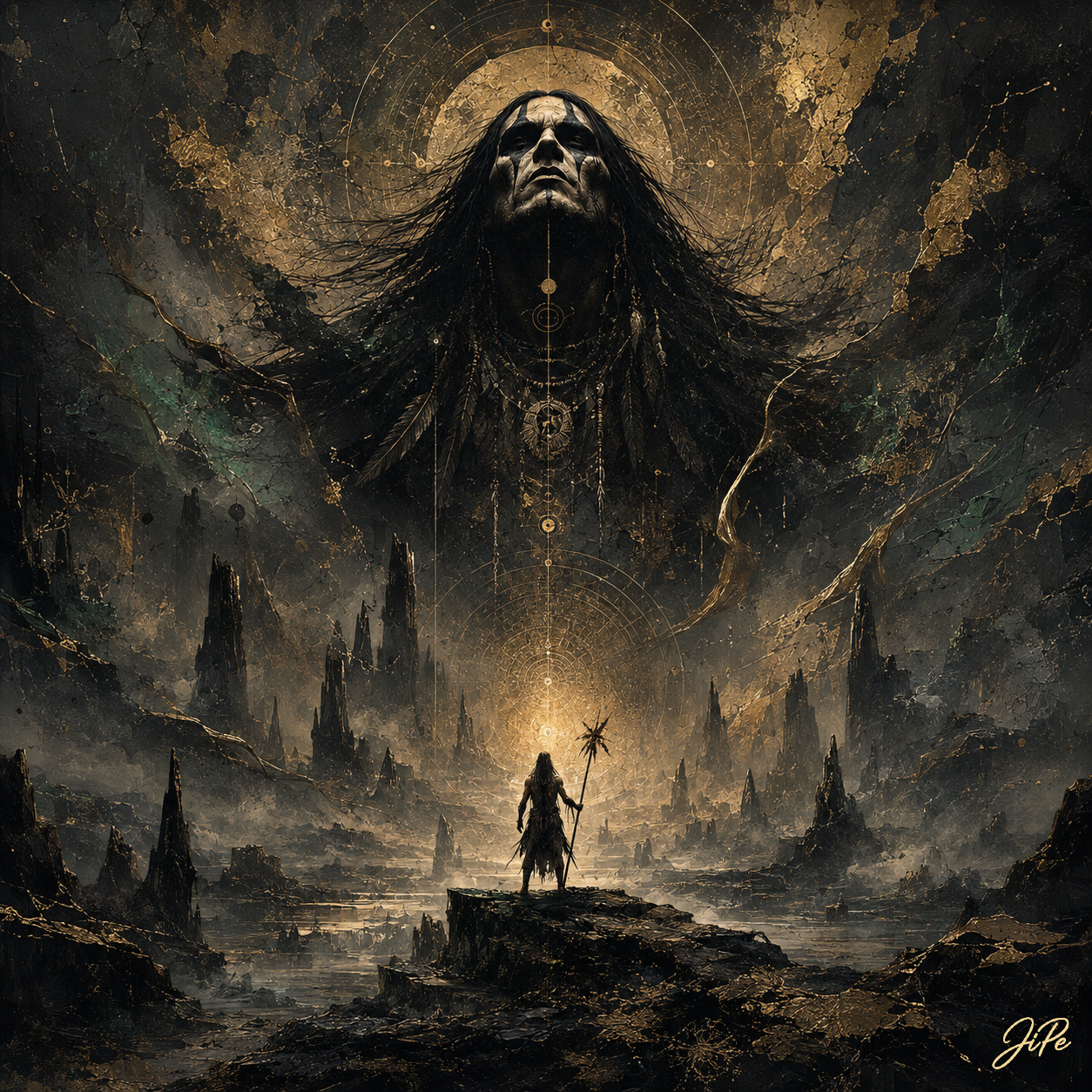

In Beneath the Wings of Oblivion, a solitary presence occupies the threshold between two worlds, neither entirely belonging to the light above nor the darkness below. Her gaze carries an unsettling composure, as though she has witnessed something beyond the reach of ordinary memory. Around her, an immense and ancient landscape recedes into uncertain distances, while the closeness of her figure creates an intimacy that feels almost impossible within such vastness.
The division between surface and depth introduces a quiet disturbance. What appears luminous and enduring above becomes fragile and remote beneath, where another presence seems suspended in a silence untouched by time. Light gathers along this boundary with an almost sacred intensity, suggesting revelation while withholding whatever might be revealed. The surrounding darkness offers no clear distinction between protection and captivity, remembrance and disappearance.
There is something profoundly unresolved in the relationship between the woman and the world she inhabits. She appears both witness and participant, held within a moment that may precede departure or follow an irreversible loss.
The title carries the possibility that oblivion is not simply an ending, but a condition through which certain fragments of existence continue to endure. Yet which presence belongs to memory, and which has already begun to vanish?