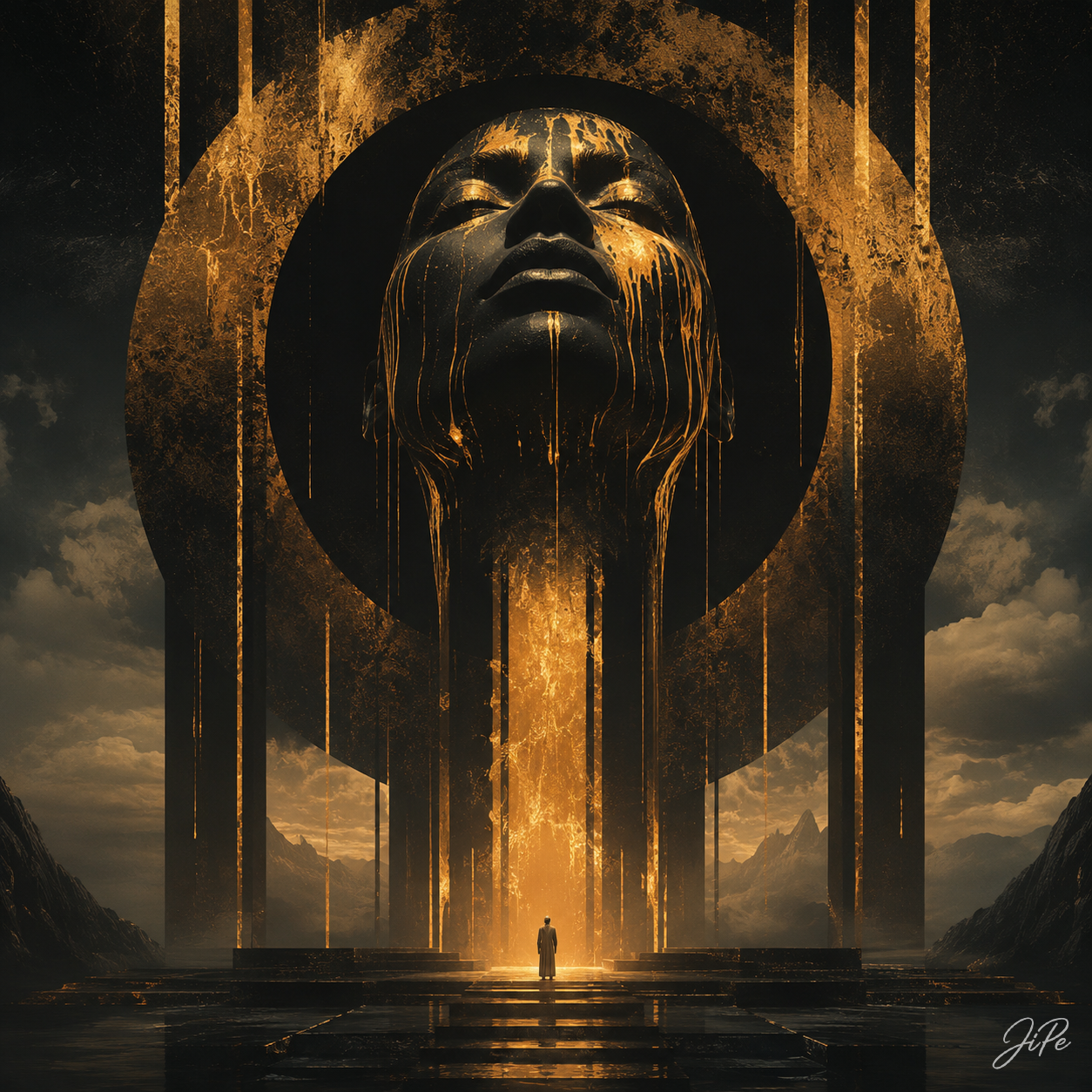
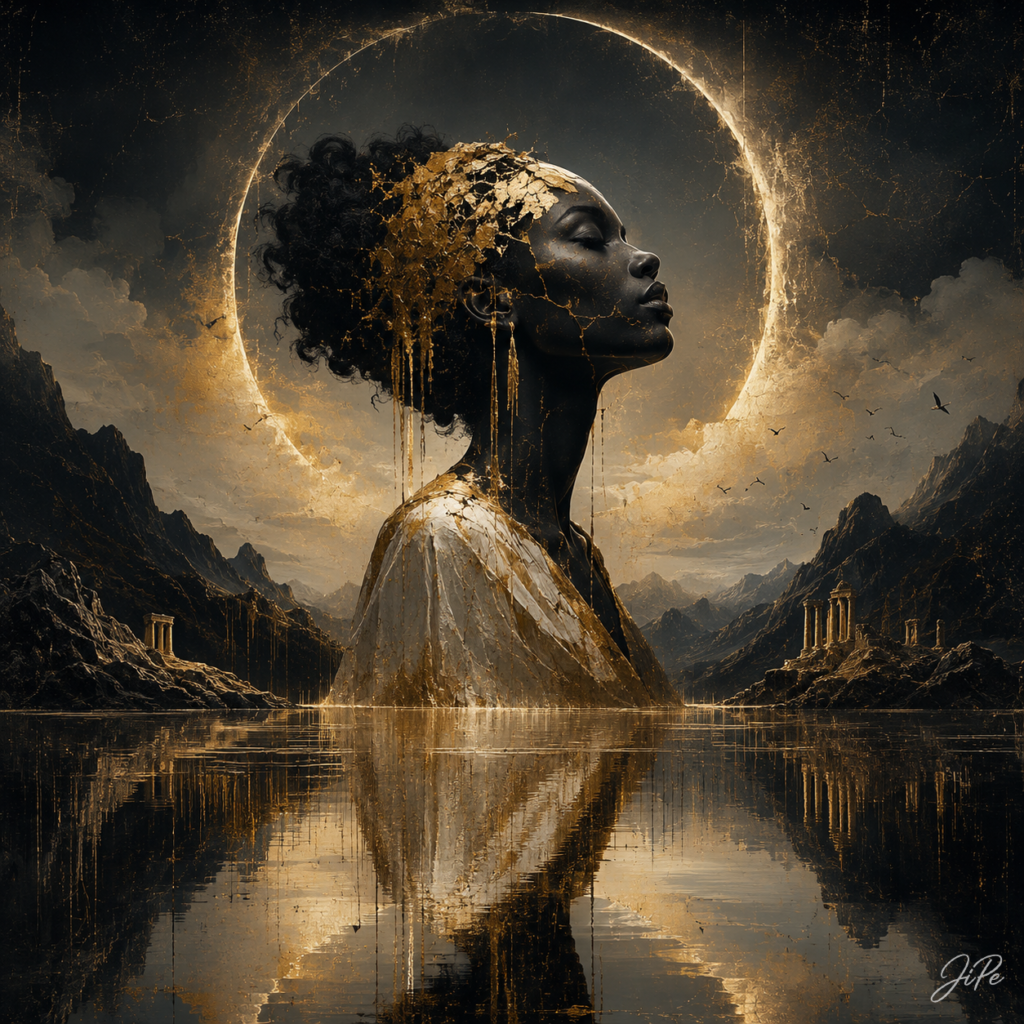
She Who Wears the Dawn stands within a silence that feels older than the landscape surrounding her. Her presence is neither entirely human nor monumental, but poised between the two, as though identity has expanded beyond the limits of the body. The vastness around her does not diminish her; instead, figure and horizon seem to share the same inward stillness.
Light gathers at the threshold of darkness without fully entering it. It traces the edges of her presence, revealing fracture and radiance as simultaneous conditions. There is no simple passage from shadow into illumination here. The dawn suggested by the title feels less like a moment in time than a state carried within—a fragile brightness that persists despite what has been broken.
The surrounding emptiness deepens this tension. Distance, reflection, and remnants of another order create the sense of a world suspended between endings and beginnings, where transformation has occurred but remains incomplete.
To wear the dawn may be to carry the possibility of renewal before renewal itself has arrived. Yet the work leaves a quieter uncertainty: is she awaiting the first light of a new world, or remembering the last light of one already gone?