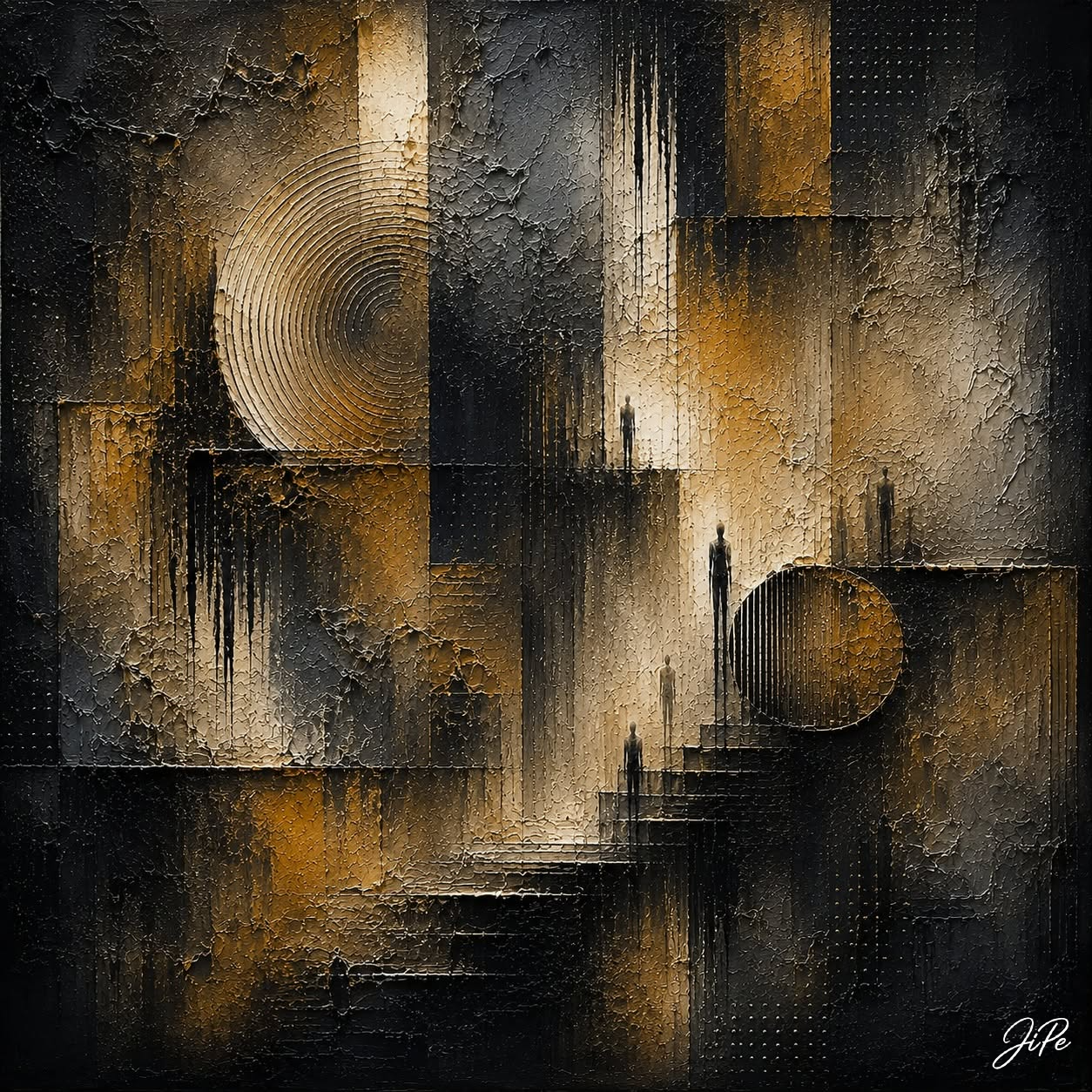
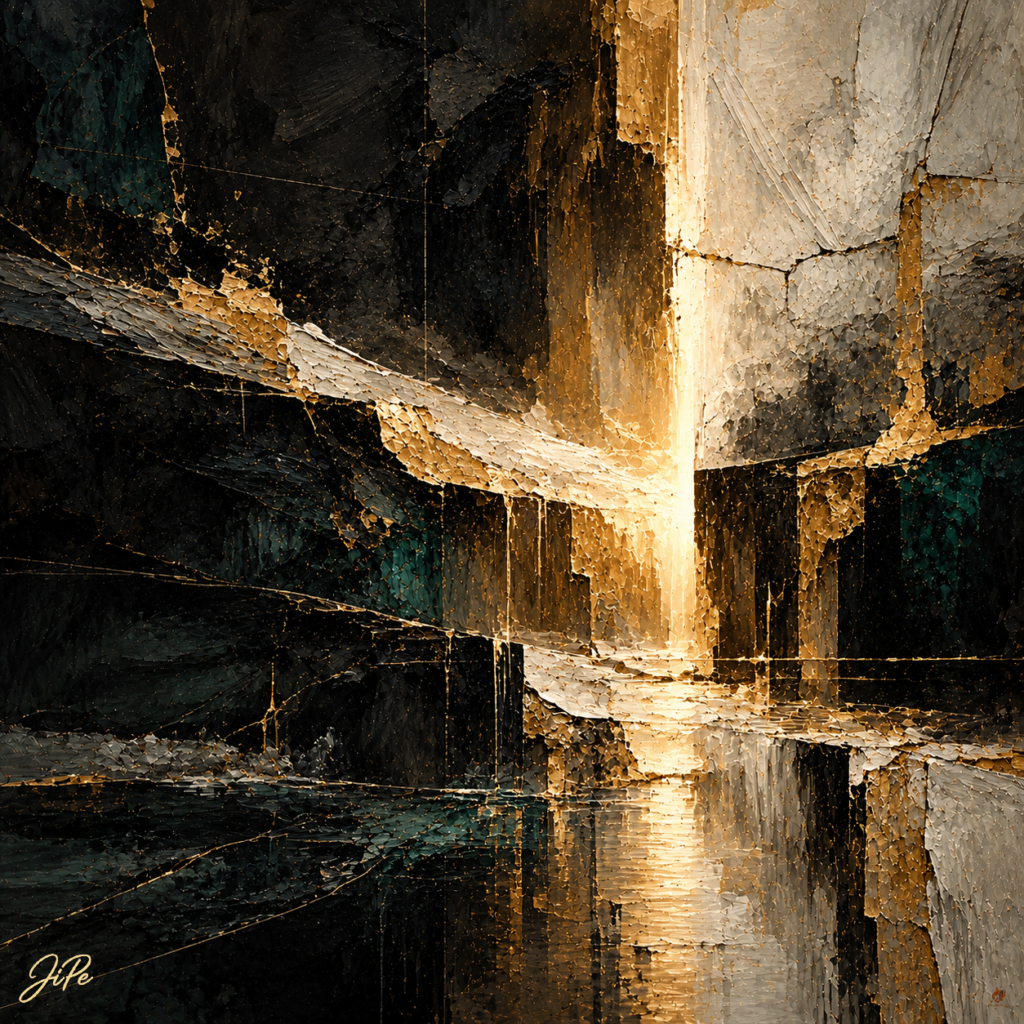
Where the Walls Surrender inhabits a place of restrained intensity, where the certainty of solid boundaries begins to yield to an unfamiliar presence. An immense, almost impenetrable stillness surrounds a passage of light, creating an atmosphere in which resistance and release seem inseparable. The space feels both ancient and strangely immediate, as though something long concealed has reached the threshold of becoming visible.
There is no suggestion of violent destruction. Instead, the composition holds the quieter drama of gradual surrender, when structures once believed permanent reveal their capacity to change. The light possesses an ambiguous authority: neither entirely gentle nor threatening, it moves through the surrounding darkness with the inevitability of something that can no longer remain contained.
The work’s emotional resonance lies in this delicate uncertainty. What appears to be an opening might equally be understood as a fracture, a separation, or the beginning of an unexpected reconciliation. The distinction between protection and confinement becomes increasingly difficult to maintain.
Within this suspended moment, the monumental seems unexpectedly vulnerable. The walls have not disappeared, yet their power to divide has been quietly altered. What remains uncertain is whether the light has finally found its way inside, or whether it has been waiting there all along.