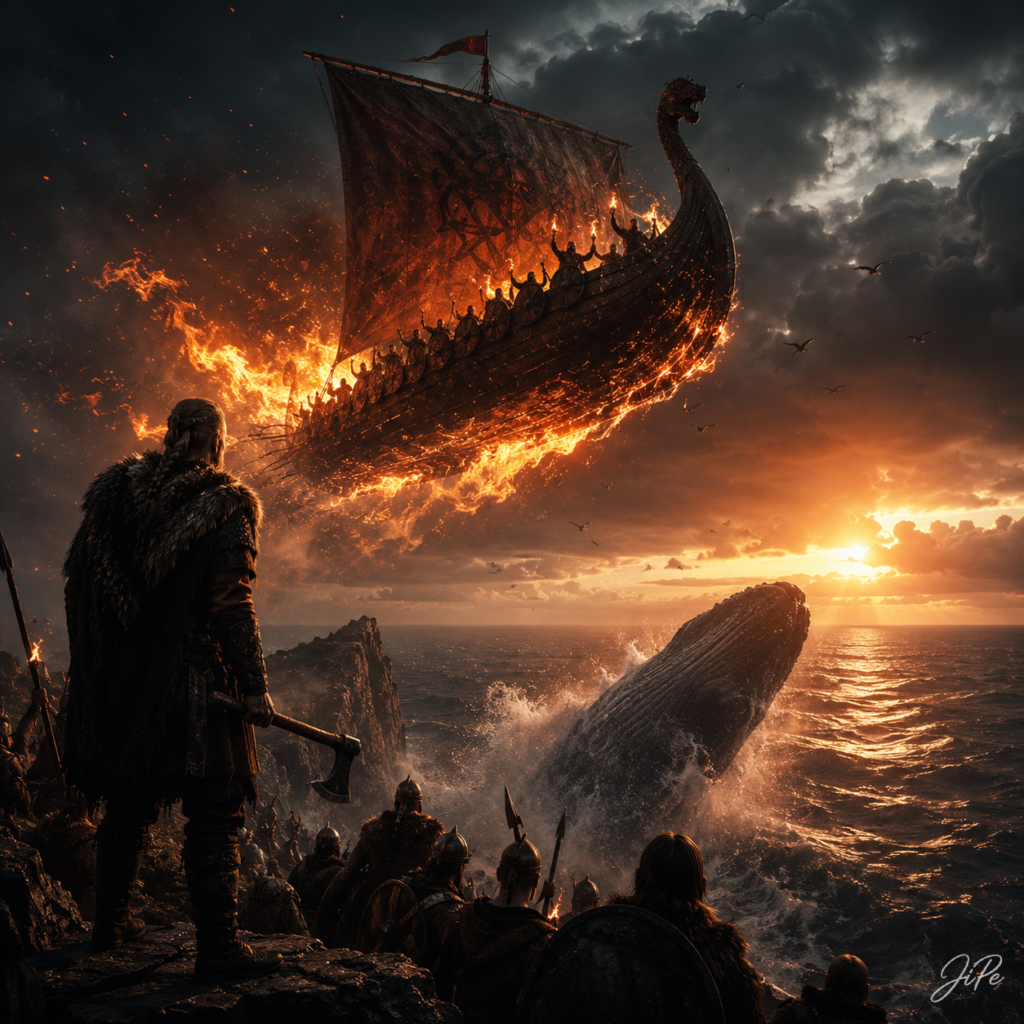
When the Longship Took Flight suspends a moment in which departure becomes something stranger than leaving. The familiar logic of sea, horizon, and gravity has been disturbed, yet the figures below remain grounded within a silence that gives the impossible event an unexpected solemnity. Wonder and foreboding occupy the same instant.
The vessel’s ascent creates a tension between collective destiny and those who remain behind. Distance opens not gradually but suddenly, turning separation into a threshold that cannot easily be crossed again. Fire carries this rupture without settling into destruction alone; it seems equally capable of consuming, transforming, or carrying something beyond the limits of the known world. Against the fading light, the scene acquires the emotional weight of a final sighting.
The title places the impossible in deceptively simple terms. Flight may suggest liberation, but every liberation contains an abandonment, and every departure alters those who witness it.
What remains uncertain is where the true voyage begins: aboard the ascending ship, beyond the horizon, or within those left watching from the shore. Perhaps the most consequential journey is the one that begins only after something believed permanent has disappeared from sight.