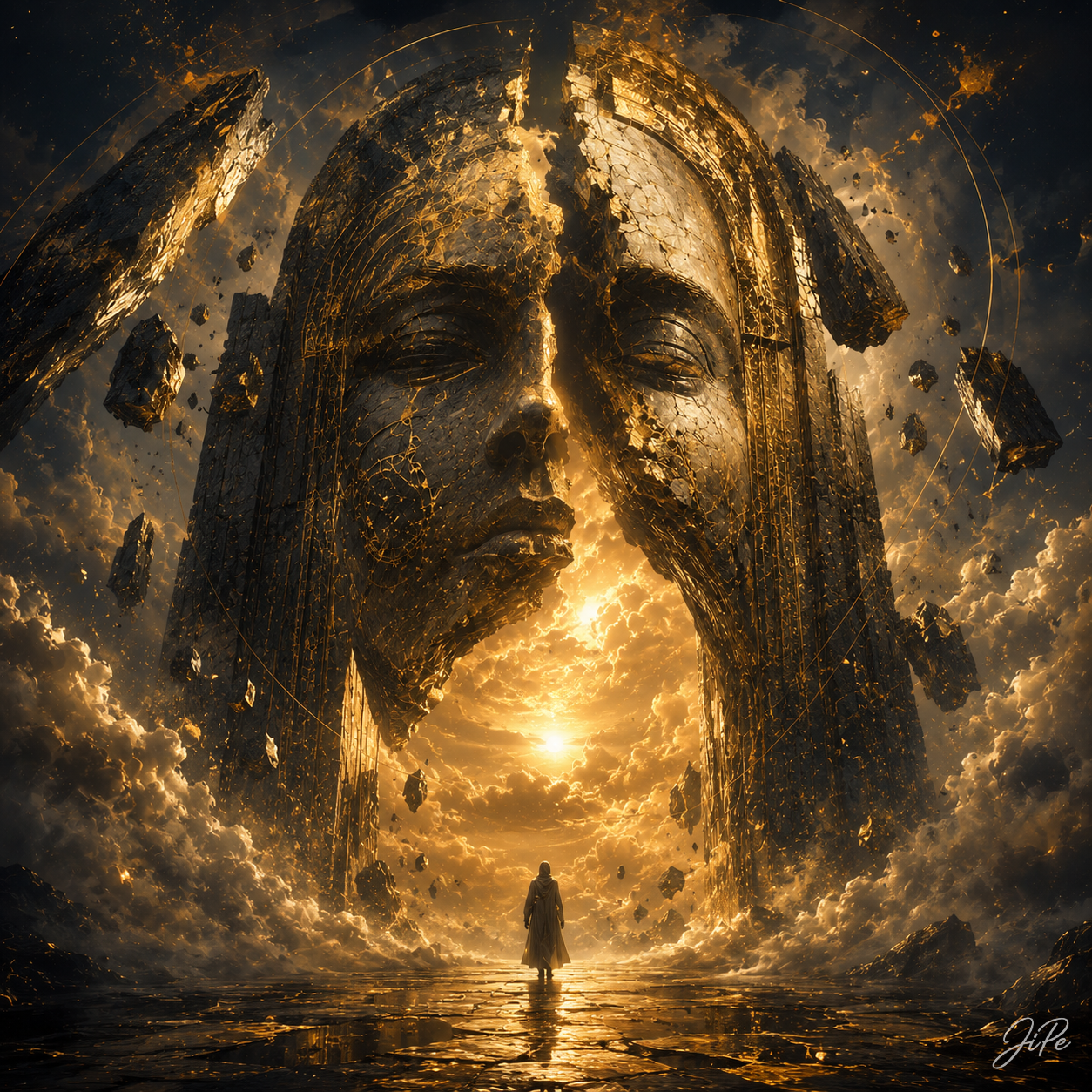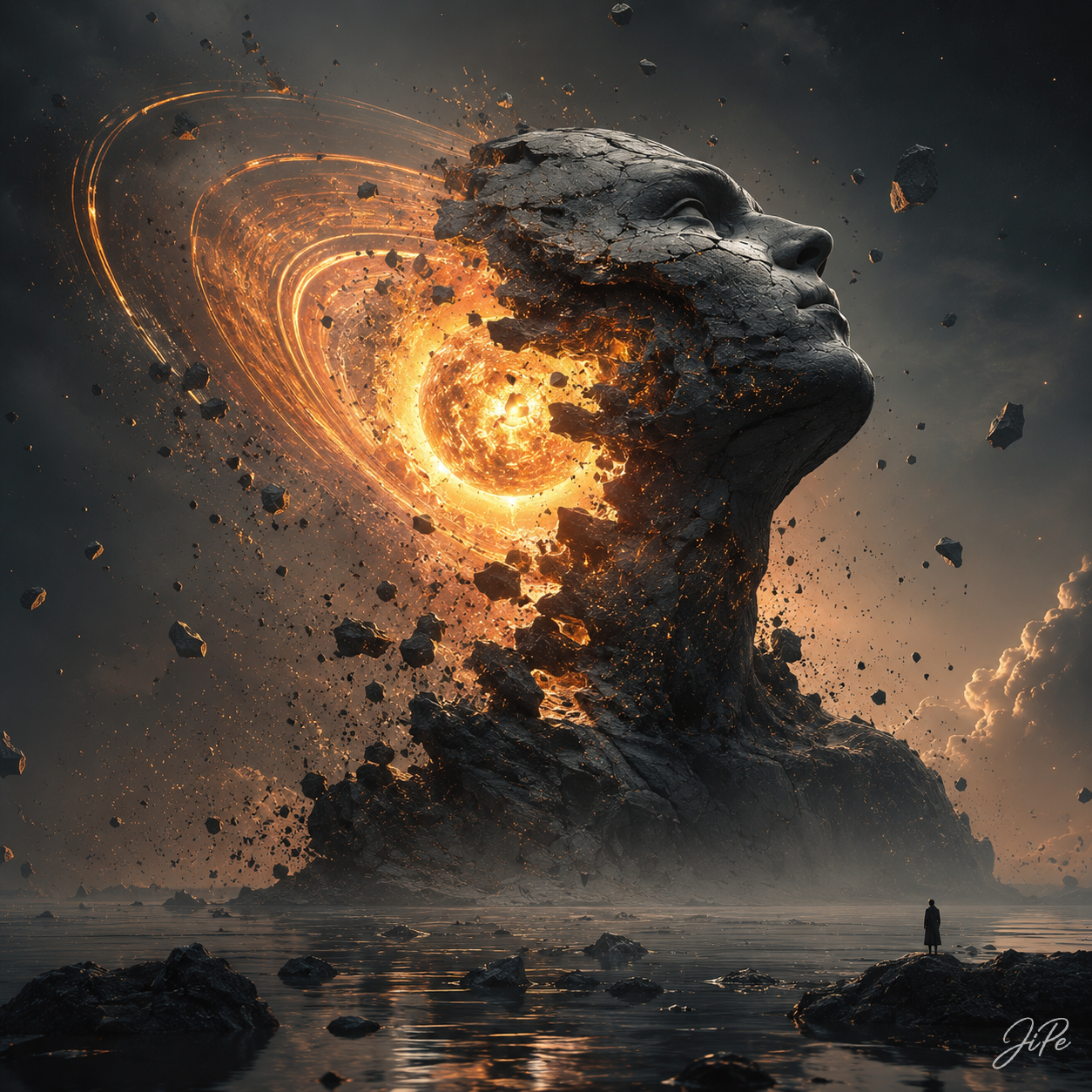
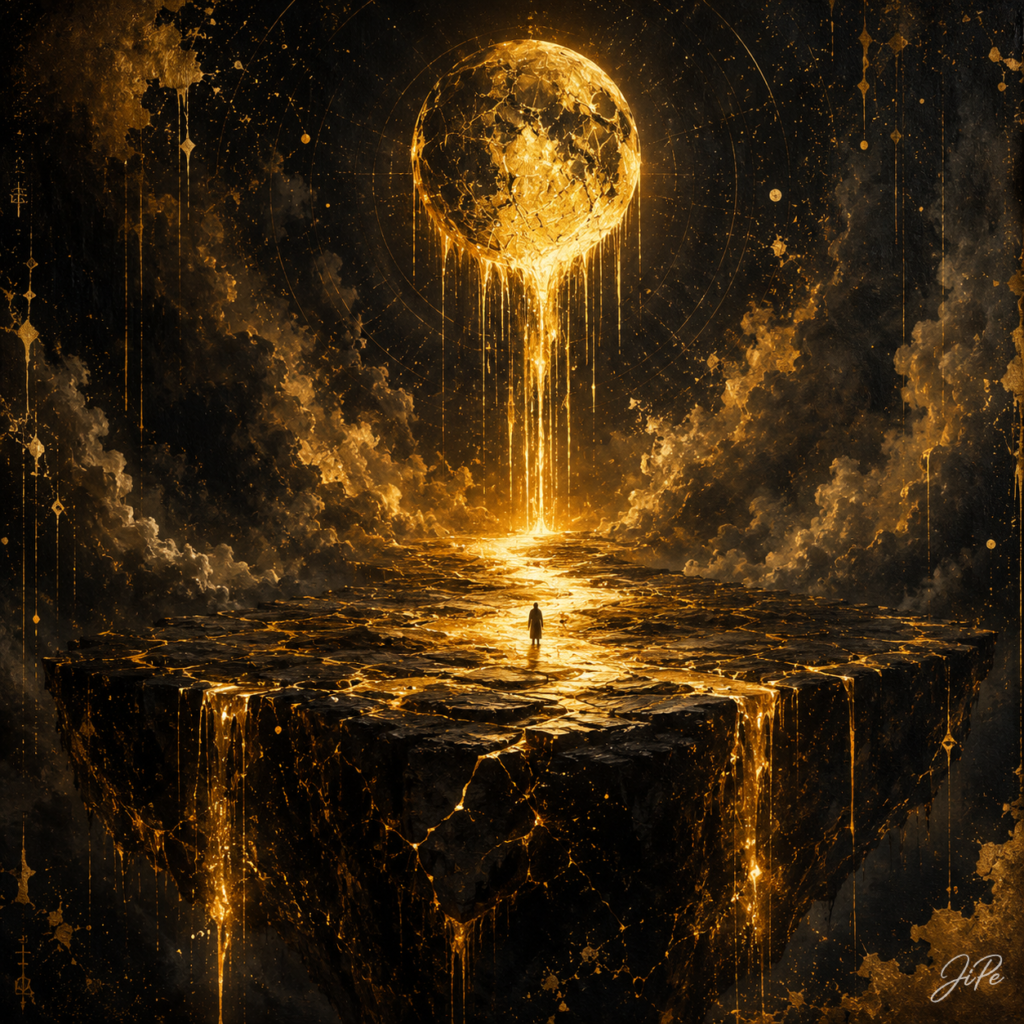
When the Golden Moon Wept suspends a solitary presence beneath a scale of sorrow that seems almost beyond human measure. The distance between figure and celestial body is immense, yet the descending radiance collapses that separation, creating an unsettling intimacy between the individual and something vast enough to belong to another order of existence.
Here, light carries weight. It falls rather than shines, gathering across the fractured expanse as though illumination itself had become subject to gravity. What might ordinarily suggest transcendence instead feels vulnerable, its brilliance inseparable from rupture. The surrounding darkness deepens this contradiction: beauty persists, but without the assurance of permanence.
The title introduces grief into the cosmic realm, subtly reversing the familiar relationship between humanity and the heavens. Perhaps the distant world is no longer indifferent. Perhaps mourning has become too large to belong to any single life. The small figure, neither fleeing nor reaching upward, occupies the uncertain space between witness and participant.
What has been lost remains unnamed. And perhaps that absence is essential: the moon may be grieving for the figure below—or the figure may have arrived to discover that even the eternal has something it cannot keep.