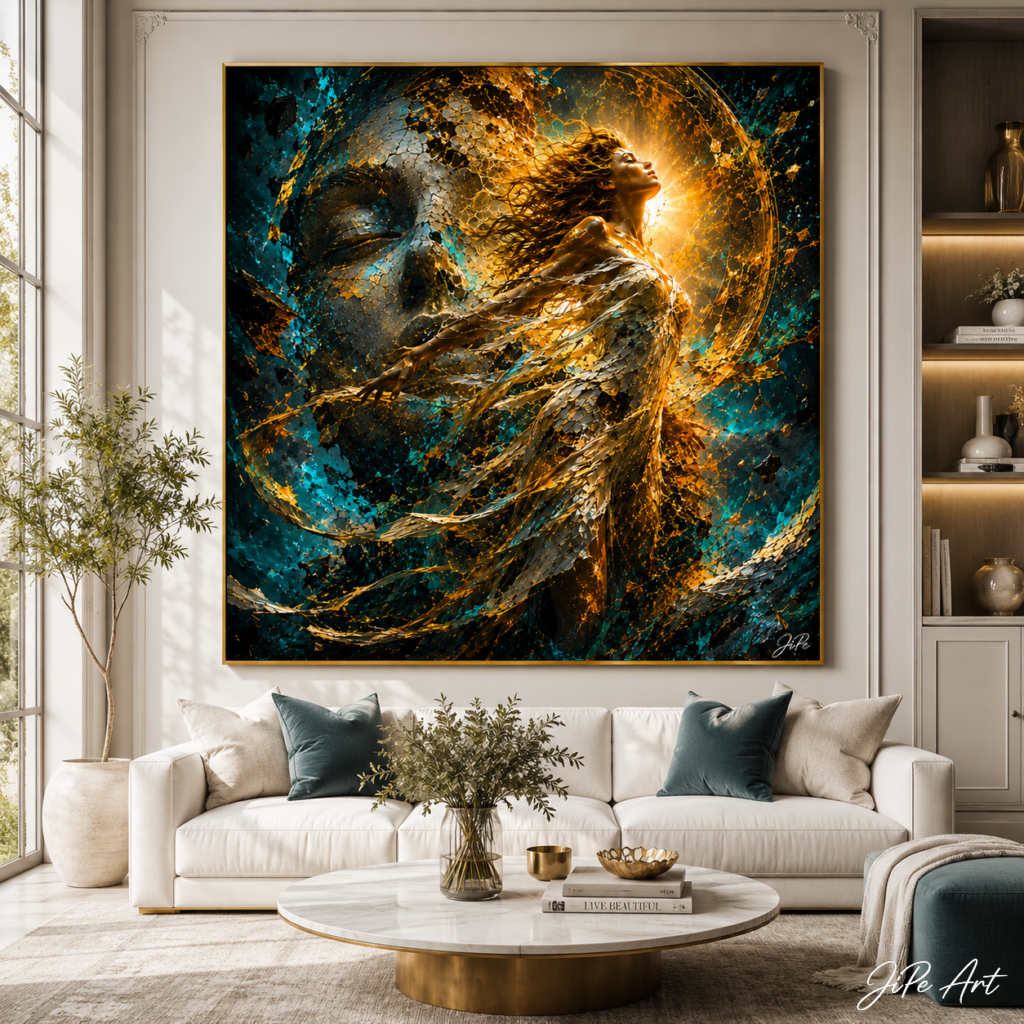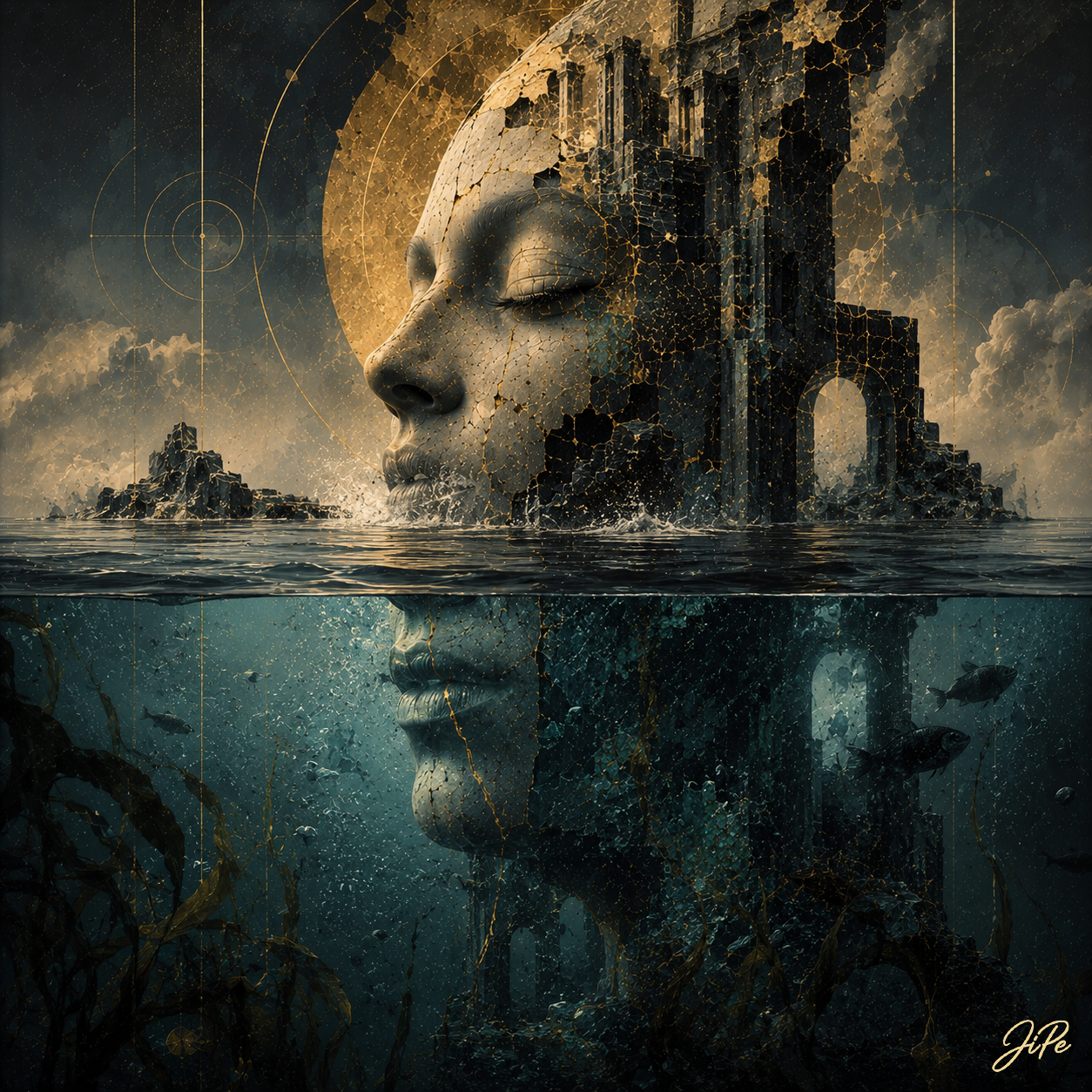
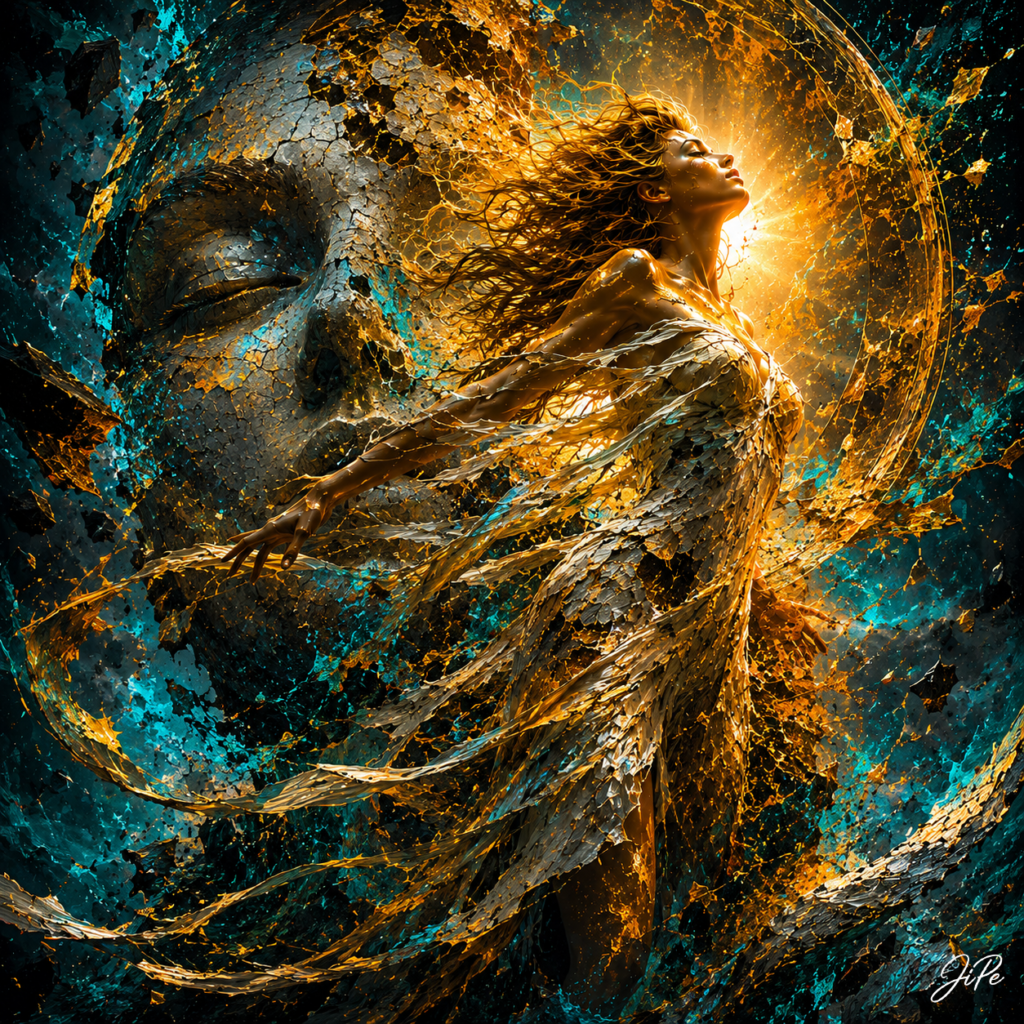
When Stone Learned to Breathe holds transformation at the edge of recognition. A monumental, silent presence occupies one register of the work, while another seems to emerge from it with sudden vitality. Between them lies a charged interval where stillness becomes movement, weight becomes release, and what appeared permanent begins to surrender its certainty.
The title suggests an impossible awakening, yet the work leaves unclear what has truly come alive. The tension between the enduring and the ephemeral gives the image its psychological force. One presence seems shaped by time; the other appears almost liberated from it. Light gathers around this transition not as reassurance, but as an elemental pressure—something capable of exposing hidden life while simultaneously threatening the forms that contain it.
There is an intimacy within the immense scale. The emerging figure may be understood as memory, consciousness, desire, or a self separating from an older self, but none of these possibilities remains stable for long. Creation and dissolution seem to share the same gesture.
Perhaps the work does not ask when stone became alive, but whether it had ever been entirely lifeless. And if something within it has begun to breathe, what must now be left behind?