
The Well of Eternal Light
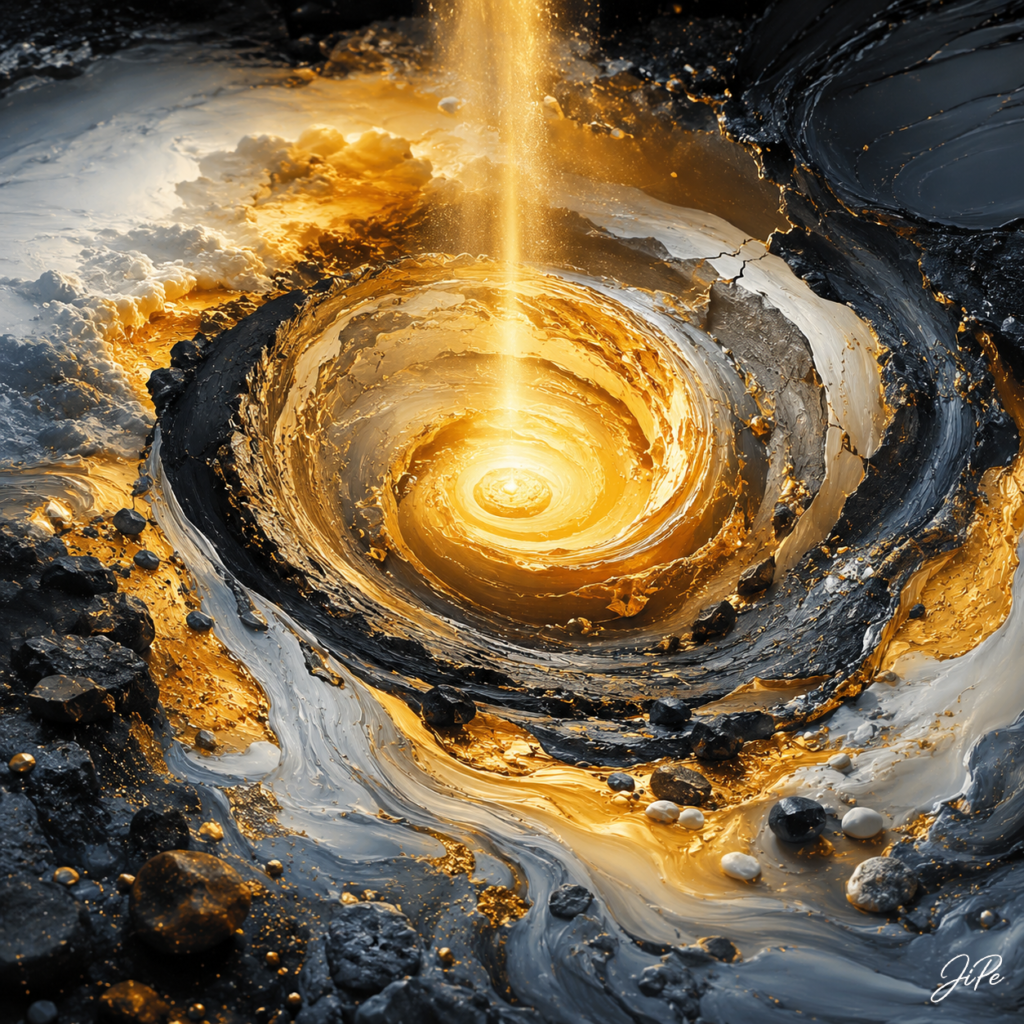
The Well of Eternal Light gathers the surrounding world toward a luminous center that feels at once intimate and immeasurable. The space appears caught between descent and emergence, as though depth itself has become radiant. Darkness does not retreat from the light; it curves around it, giving the illumination weight, resistance, and a sense of something held in precarious equilibrium.
There is a profound stillness within this convergence. The light seems neither entirely earthly nor remote, but present with an almost physical intensity—less a source of visibility than a force capable of altering what approaches it. Its apparent depth unsettles the distinction between origin and destination: one cannot be certain whether the radiance is entering the world or being drawn from somewhere beneath it.
The title carries the paradox further. Eternity suggests continuity, yet the well implies an inaccessible depth from which something might endlessly rise. Perhaps what appears inexhaustible depends upon what remains hidden.
The work leaves that exchange unresolved. Is the darkness surrounding the light being transformed by it—or is the darkness precisely what allows the eternal to become visible?