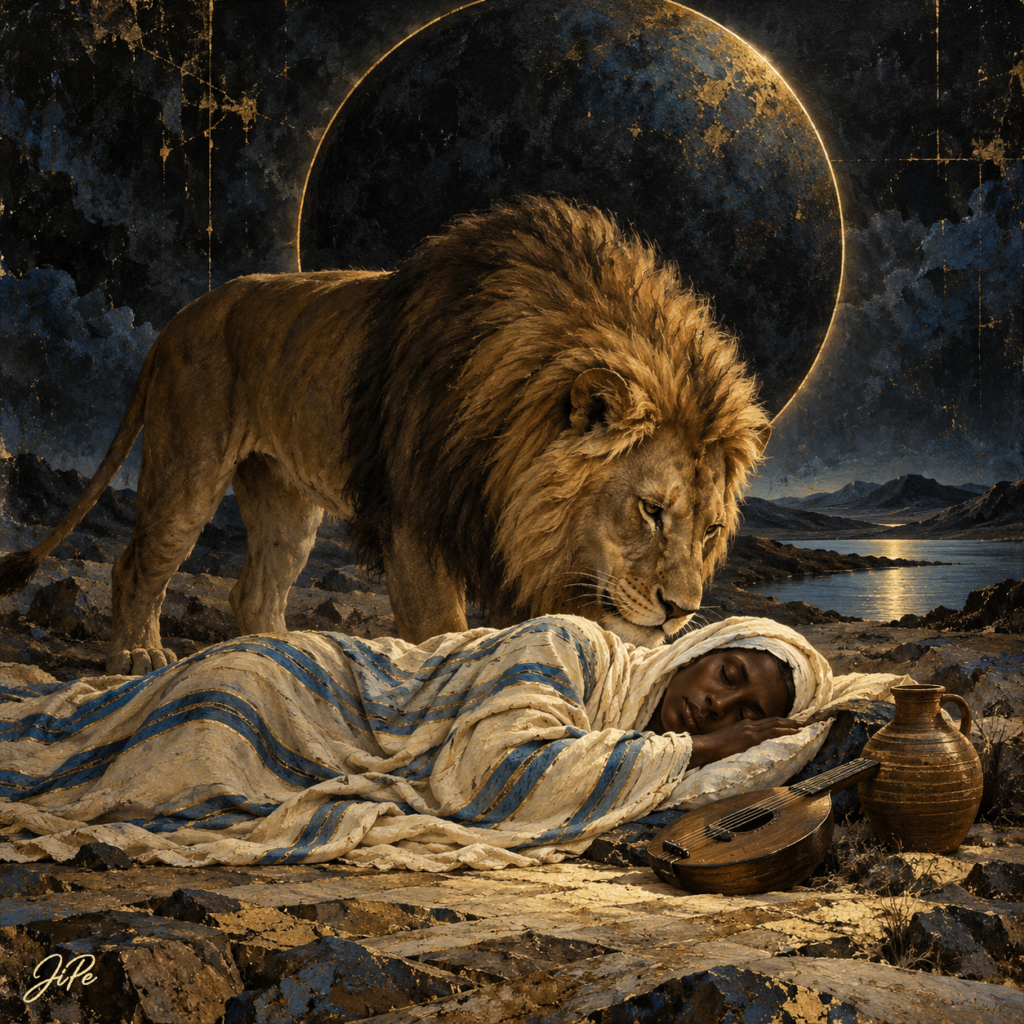
In JiPe’s reinterpretation of Henri Rousseau’s The Sleeping Gypsy, rest continues in the presence of a power it does not acknowledge. The sleeper’s ease and the lion’s lowered attention hold the scene in a delicate balance. Their closeness allows tenderness to be felt without making safety certain.
The lion’s immense scale gives its restraint an almost physical weight. Every moment of stillness seems consequential, while the sleeping figure remains beyond the reach of that awareness. We alone must reconcile the peaceful face with the possibility carried by the body above it. The silence becomes difficult to disturb, even in thought.
Light touches both presences with the same warmth, withholding the distinctions that expectation might impose. Beyond them, the dark landscape offers neither witness nor intervention. Its openness leaves the encounter exposed, yet strangely private, as though distance itself were preserving this brief interval from the demands of the waking world.
Sleep introduces a form of vulnerability that cannot negotiate what approaches it. Whether the lion’s nearness belongs to curiosity, watchfulness, or an impulse still undecided remains unknown. For now, the sleeper’s breathing seems sufficient to occupy the night, and the creature beside her has yet to break its rhythm.