
The Passage Through the Unseen
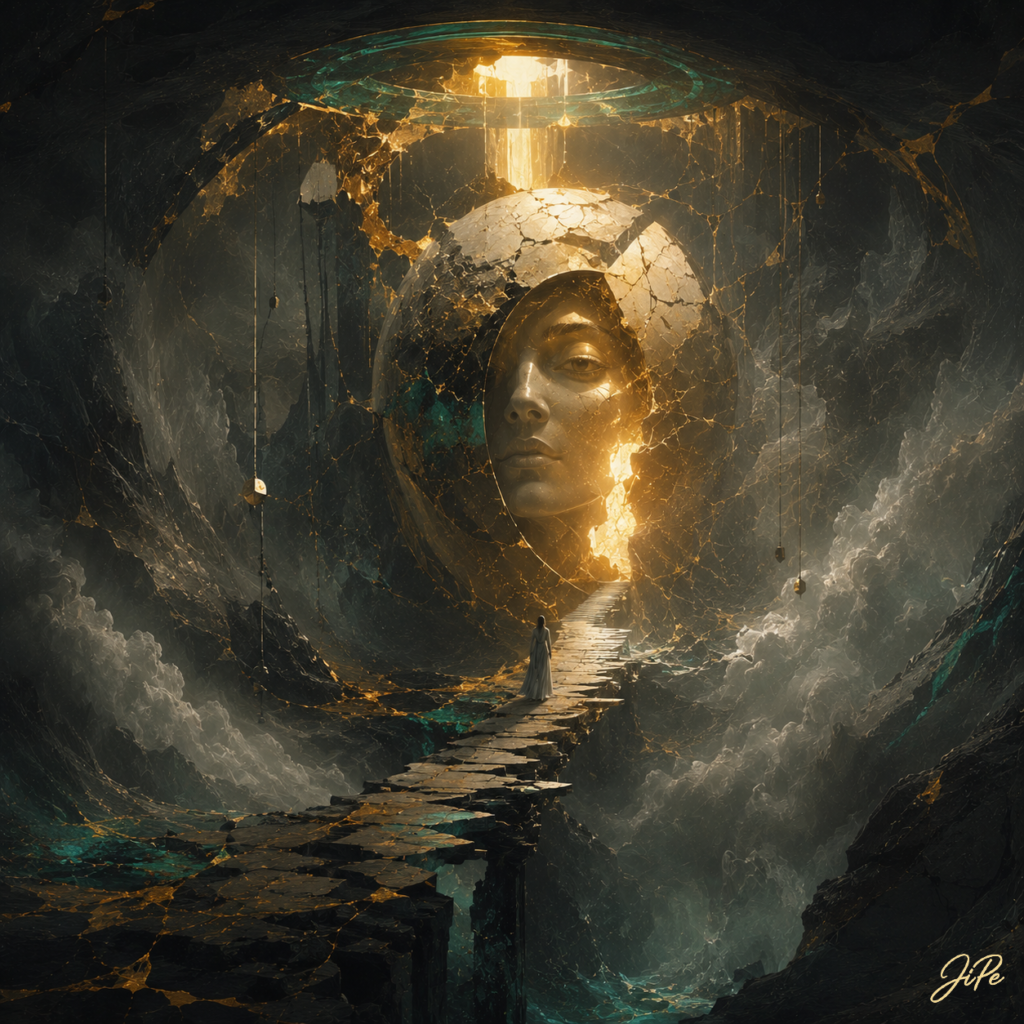
The Passage Through the Unseen opens upon a realm in which distance feels psychological rather than physical. A solitary presence moves toward an immensity that seems at once external and strangely familiar, as though the landscape has assumed the proportions of an interior life. Silence fills the space between them, giving the encounter the gravity of recognition without revealing what, precisely, has been recognized.
The passage itself carries an uneasy promise. It offers direction but not certainty, narrowing the vastness into a fragile line of possibility. Light appears ahead with extraordinary force, yet illumination does not abolish mystery; it deepens it. What becomes visible seems only to expose another threshold beyond comprehension.
The title suggests that passage may require entering what cannot first be understood. The unseen is not presented simply as darkness or absence, but as a territory that surrounds perception—perhaps memory, consciousness, mortality, or those dimensions of the self that remain inaccessible until something familiar begins to fall away.
There is no clear destination here, only proximity to something immense. Perhaps the final threshold is crossed not when the unknown reveals itself, but when the need for revelation is finally relinquished.