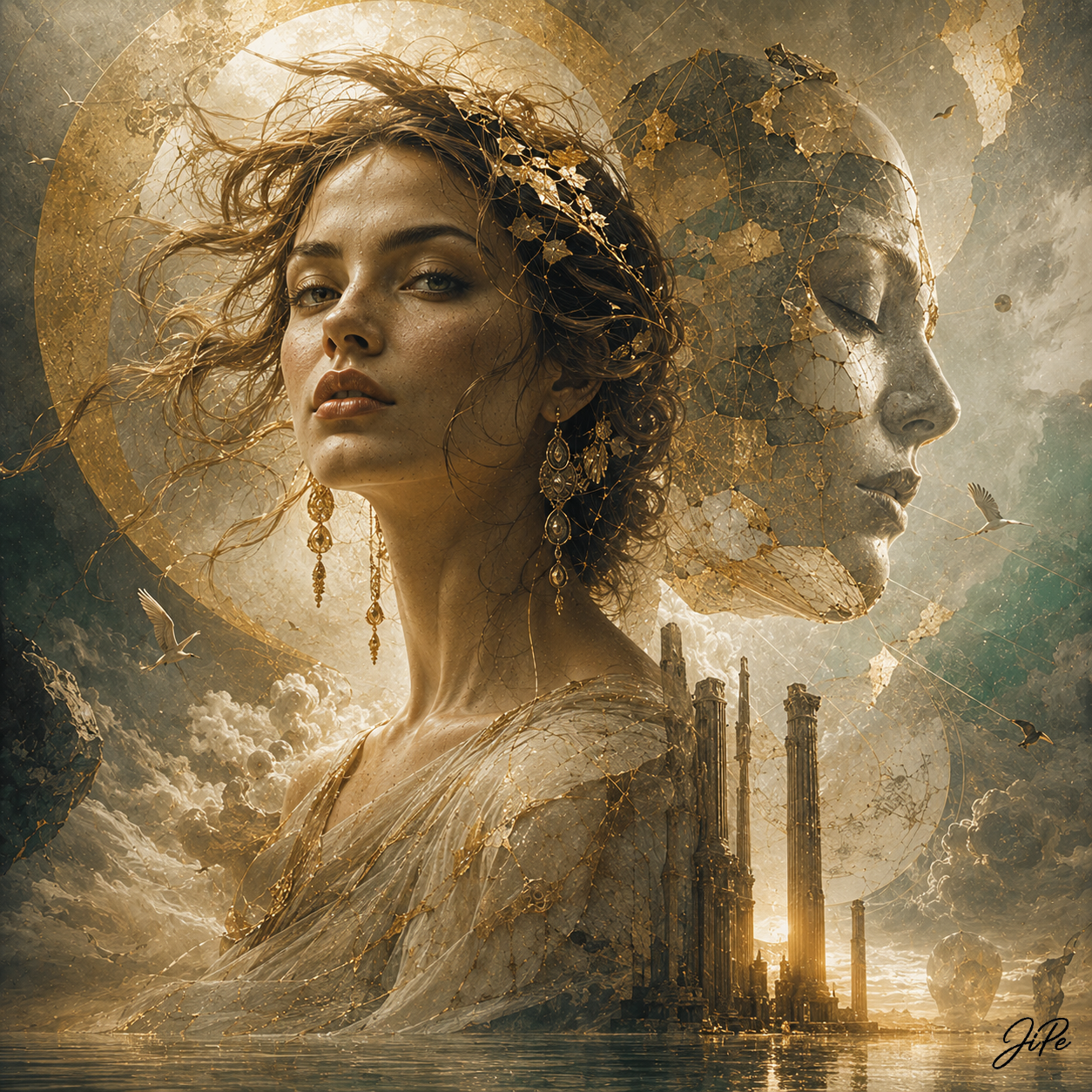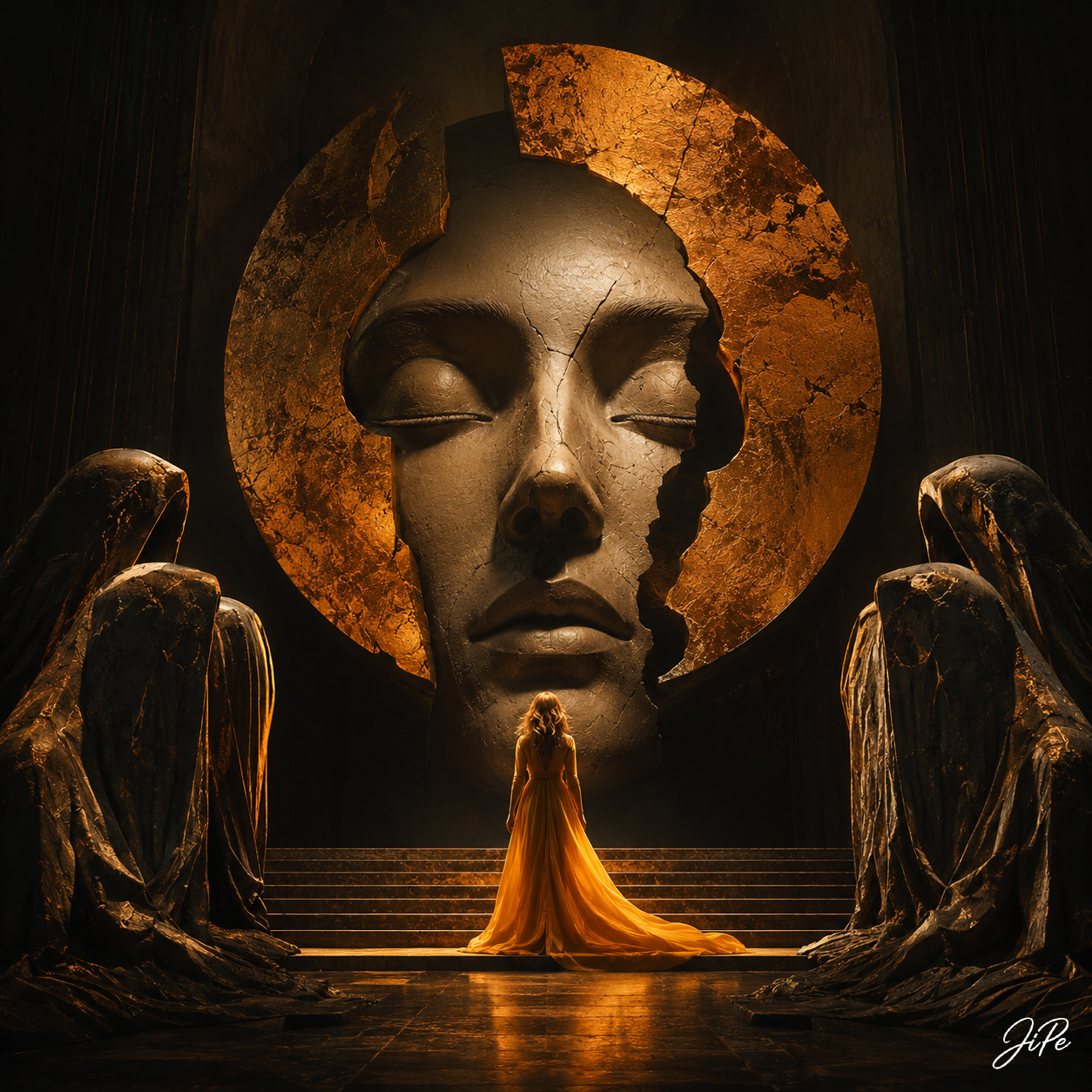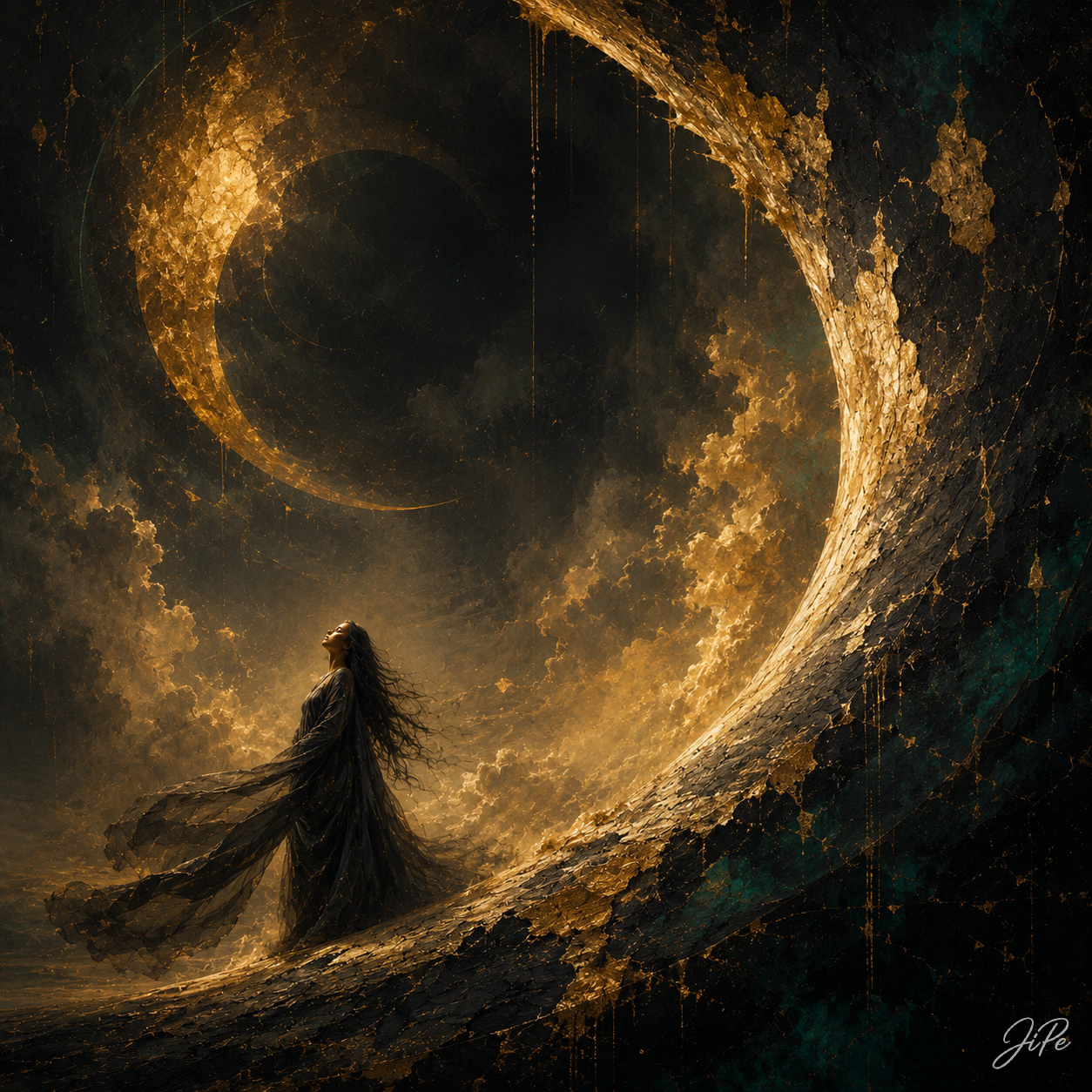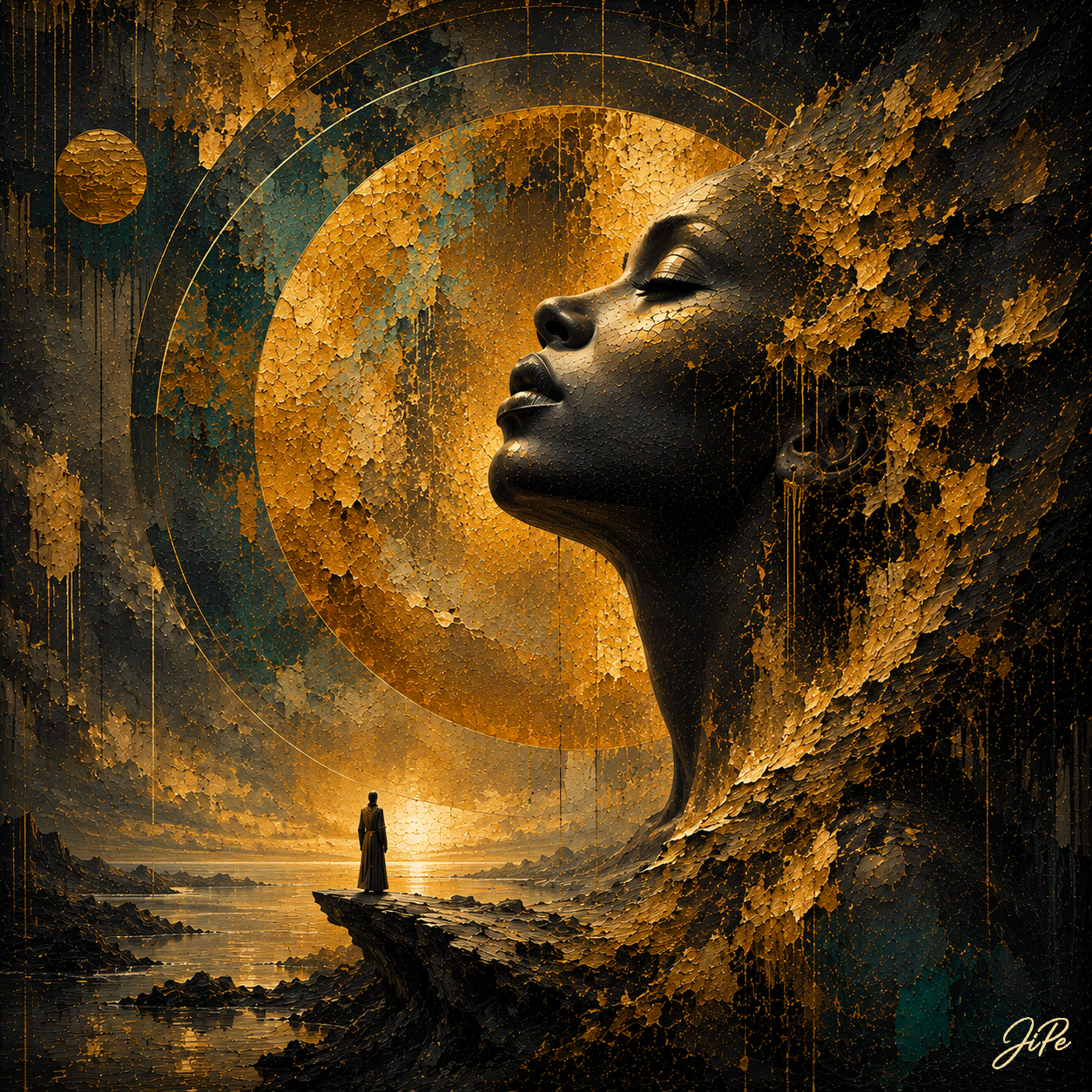
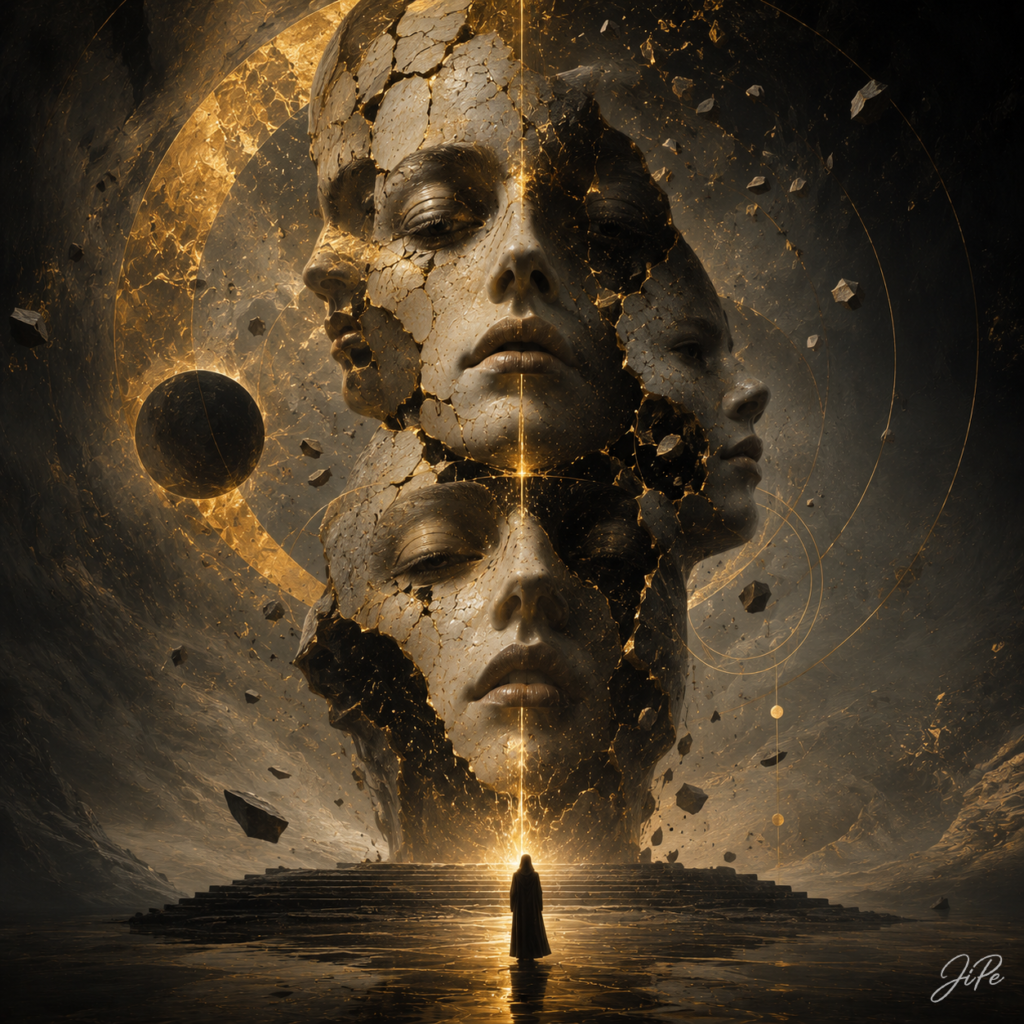
The Oracle of Many Faces confronts the instability of identity with monumental stillness. A solitary presence stands before an intelligence that appears at once singular and divided, as though no single countenance could contain the full weight of what is being encountered. The silence between them feels ceremonial, but also deeply psychological: recognition seems possible without ever becoming complete.
Scale transforms the encounter into something beyond ordinary perception. Light rises through the distance like a moment of disclosure, yet what it reveals remains fractured. Darkness occupies the spaces between forms, preserving the possibility that absence may hold as much knowledge as presence. Here, illumination does not resolve uncertainty; it makes uncertainty visible.
The title suggests an oracle whose authority may lie precisely in multiplicity. The many faces could belong to memory, time, unrealized selves, or contradictory truths existing simultaneously. Perhaps prophecy is not a glimpse of one inevitable future, but an awareness of everything that might still become.
The figure remains before this impossible plurality without receiving an obvious answer. What if the oracle’s revelation is not which face is true, but that none of them can exist alone?